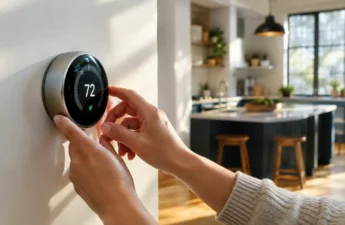
Cash home improvements remain a practical choice for many owners in 2026, especially for smaller repairs, finish updates, and staged smart-home upgrades. The appeal is clear: paying from savings can avoid interest costs and reduce payment paperwork. The risk is just as real. A project that drains emergency reserves can leave a household exposed when a roof leak, HVAC failure, or medical bill arrives before the next savings cycle.
The strongest cash plan starts with scope control. For smart homes, that means separating low-risk purchases, such as plug-in sensors or smart bulbs, from work that touches electrical panels, hardwired controls, gas appliances, plumbing shutoffs, or structural openings. Cash can simplify buying decisions, but it should not blur safety boundaries. A cautious plan keeps high-risk work with qualified trades, builds in contingency, and avoids assuming every upgrade can be handled in one spending push.
Why Cash Home Improvements Still Lead
Cash remains a major funding source for home improvement, though the picture changes by project size. The Joint Center for Housing Studies reported that, in 2023, cash funded 63.8% of all U.S. homeowner improvement spending; equity-based financing accounted for 11.7%, insurance for 9.7%, and credit cards for 4.2% Harvard remodeling funding data. That pattern fits what I see in practical project planning: owners often prefer savings for smaller work because it is direct and predictable.
Cash Home Improvements Under $10,000
The same Harvard analysis found that projects under $10,000 were paid in cash about 73.9% of the time, while projects costing $50,000 or more were cash-funded about 57.0% of the time. That difference matters. A $1,500 smart thermostat, lighting, and sensor package is not the same funding decision as a kitchen remodel, service-panel upgrade, or whole-home automation plan tied to new wiring.
For smaller work, cash home improvements should be sorted into three groups: safety repairs, efficiency or comfort upgrades, and optional design enhancements. Safety repairs belong first. Examples include fixing damaged stair lighting, replacing failed exterior locks, or addressing water intrusion before installing new smart devices. Efficiency and comfort upgrades can follow if savings remain intact. Decorative or convenience items should wait if they would reduce the reserve needed for urgent repairs.
What Cash Does Not Solve
Cash does not verify that a project is safe, code-compliant, or properly scoped. A homeowner may have the funds for a smart switch installation, but that does not mean the existing box has the correct wiring, capacity, or conditions for DIY work. Hardwired electrical devices, load calculations, service equipment, gas appliance controls, and plumbing shutoff devices deserve professional review. The safest cash plan is not the cheapest plan; it is the one that assigns each task to the right skill level.
Funding Choices For Bigger 2026 Projects
Large projects often move beyond savings alone. In the April-June 2026 quarter, cash-out refinances reached their highest level in nearly three years, and the Associated Press reported that U.S. homeowner equity had reached $17.8 trillion, with $11.6 trillion in available equity AP housing equity report. That does not make borrowing suitable for every household. It does show why many owners were comparing savings, home equity borrowing, and refinancing after years of home-price gains.
For a design or smart-home project, the funding method should follow the risk profile and timing of the work. A single-room lighting update may fit savings. A multi-room renovation with electrical, drywall, cabinetry, and networking may require phased contracts and a deeper reserve. If borrowing is considered, homeowners should compare total costs, fees, repayment terms, and the risk of using the home as collateral with a qualified lender or advisor. This article is not financial advice; it is a planning framework for safer project decisions.
Use Phasing Before Stretching The Scope
Phasing is often more useful than forcing every desired feature into one contract. A smart-home plan can start with infrastructure: safe wiring paths, reliable Wi-Fi placement, exterior lighting locations, and space for future low-voltage equipment. Devices can be added later as budgets recover. This approach is less exciting than buying every control, hub, and camera at once, but it reduces rework and helps owners avoid spending cash meant for maintenance.
Project phasing also gives households time to review how the first round performs. A homeowner may learn that motion lighting at entries matters more than voice control in every room. Another may find that leak sensors near a water heater and washing machine offer more day-to-day value than another display screen. Cash planning improves when early spending teaches what should come next.
Smart-Home Priorities That Fit A Cash Plan
For smart-home work, cash home improvements make the most sense when the upgrade has a defined safety, maintenance, or daily-use purpose. Good candidates include plug-in leak sensors, battery-powered contact sensors, improved task lighting, smart plugs used within manufacturer ratings, and basic indoor air monitors. These items still require careful product selection, but they do not usually require the same trade work as hardwired systems.
Hardwired lighting controls, panel work, exterior circuits, EV charging equipment, built-in security wiring, and devices that connect to plumbing or gas systems should be treated differently. Even if the cash is available, the scope should include licensed labor where required, permits where applicable, and manufacturer instructions. A bargain installation that creates shock, fire, water, or insurance risk is not a savings strategy.
Tools, Rentals, And The DIY Line
Before diving into a new project, consider the balance between tool ownership and rental options. Homeowners exploring tool options for basic tasks, such as hand tools and safety gear, can find valuable information on HighProTools for product research, but final decisions should account for project specifics.
DIY work is most defensible where the failure consequences are modest: painting, furniture assembly, installing non-hardwired sensors, replacing cabinet hardware, or setting up plug-in smart devices within rated loads. The line should move quickly toward professional help for ladders at height, masonry drilling near utilities, concealed wiring, plumbing connections, roof work, and structural changes. For budget discipline, treat pro labor as part of the project cost from the start, not as an emergency add-on after a stalled DIY attempt. For a deeper planning angle, our note on home repair budgeting explains why contingencies matter before work begins.
Practical Budget Rules Before Work Starts

A cash-funded plan should protect the household first and the project second. Start by setting aside an emergency reserve that is not part of the remodel budget. Then price the project with real quotes, taxes, delivery, disposal, permit costs if needed, and a contingency for small changes. If the project cannot fit after those items are included, reduce scope rather than assuming the overage will be manageable later.
- Keep safety repairs ahead of convenience upgrades.
- Separate device costs from labor, permit, repair, and finish costs.
- Use written scopes so cash spending does not expand through casual add-ons.
- Delay optional features if they would reduce emergency savings.
- Hire qualified pros for electrical, gas, plumbing, roof, structural, and high-ladder work.
Contract structure also matters. Cash payment should not mean informal payment. Homeowners should use written agreements, clear milestones, proof of licensing where required, and receipts. Avoid paying the full amount before work is complete. Local rules vary, so owners should confirm permit and contractor requirements with their city or county before approving work.
Cash Home Improvements In 2026
Cash home improvements work best as a controlled method, not a default answer. The evidence shows cash has been the leading funding source, especially for smaller projects, while larger renovations often bring equity-based options into the discussion. For smart-home planning, the safer path is to pay cash for well-defined, lower-risk upgrades while reserving professional labor for systems that can affect fire safety, water damage, structural performance, or occupant security.
The practical test is simple: if paying cash leaves the household stable, the scope clear, and the work assigned to qualified people, the project has a stronger foundation. If it empties reserves, encourages unsafe DIY work, or hides the true cost of permits and labor, waiting or phasing the project is usually the more responsible design decision.