Recent data on outdoor renovations points to a practical shift: many homeowners are planning yards, patios, and decks around personal comfort rather than a future listing. That does not mean resale value has disappeared from the decision. It does suggest that the strongest projects are being judged first by how well they support everyday routines: sitting outside after work, eating with family, reading in a quiet corner, or using lighting safely after sunset.
What Outdoor Renovations Are Being Asked To Do
A Practical Reading Of Outdoor Renovations Data
The 2026 Houzz outdoor trends report found that 15% of homeowners cited improving resale value as a motivation for outdoor work, down from 18% in 2024, while 25% wanted to make outdoor areas more accommodating, up from 22% in 2024, according to the Houzz outdoor trends report. The same research found lounge or seating areas in 83% of outdoor projects, making seating the most common outdoor living addition.
Those numbers are useful because they move the design conversation away from vague upgrades. A seating area is not just furniture on a patio. It is a decision about shade, circulation, weather exposure, lighting, privacy, storage, and where people naturally gather. For homeowners planning outdoor renovations, the question is less “What will impress a buyer?” and more “What will still be useful on a Tuesday evening?”
Personal Use Still Needs A Budget Filter
Personal enjoyment should not become a reason to skip cost discipline. A project can be built for daily use and still be planned in phases. Seating, surface repair, lighting, and drainage concerns usually deserve attention before highly specific features. A fire feature, outdoor screen, or cooking station may be appealing, but each adds equipment, maintenance, and safety responsibilities. The better planning sequence starts with how many people will use the space, how often, and during which parts of the day.
Comfort Comes Before Decorative Features
Seating Is The Functional Baseline
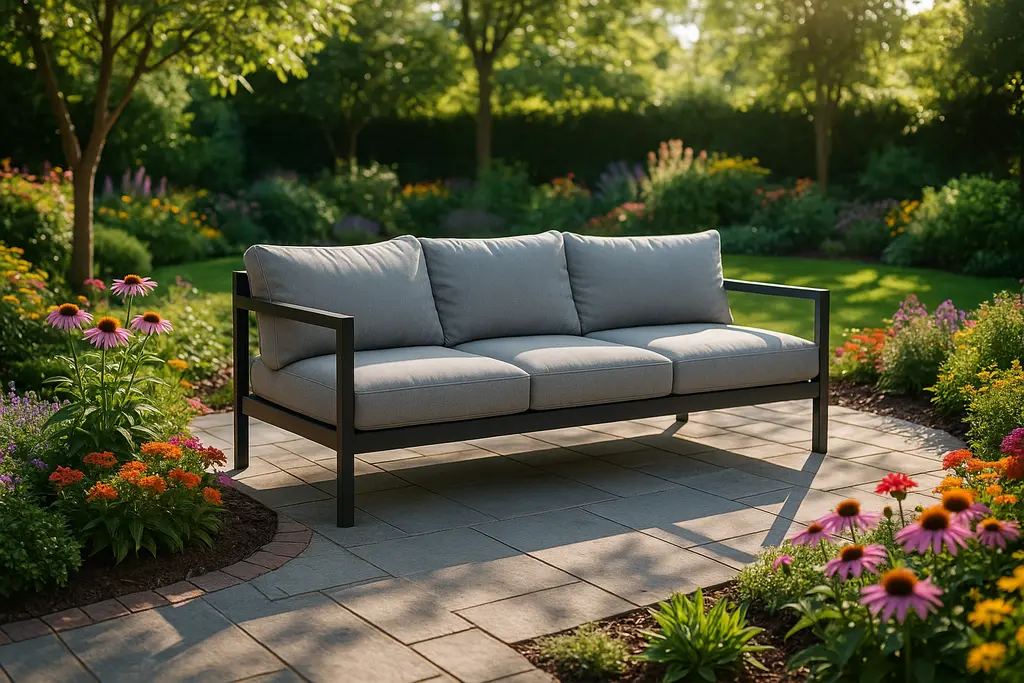
Because lounge areas dominate the reported projects, they deserve careful planning. A useful outdoor lounge needs stable walking paths, shade or weather protection where possible, and enough side-table space for ordinary use. Sofas and chairs may create the look of an indoor room, but outdoor materials face sun, moisture, and temperature swings. Homeowners should read manufacturer care guidance before buying cushions, rugs, or composite furniture, especially if the space is uncovered.
Dedicated activity zones also appear in the research. Homeowners reported creating areas for dining at 55%, quiet retreats or reading at 53%, gardening at 49%, and outdoor cooking at 48%. These percentages support a mixed-use approach. Instead of one oversized patio, many homes benefit from a few clear zones: a dining spot near the kitchen, a calmer seat away from traffic, and planting areas that can be reached without dragging tools through the main lounge.
Plan Zones Around Real Movement
Before committing to hardscape or built-ins, map how people will move from the house to the grill, table, garden beds, and storage. Doors, steps, and narrow side yards often limit what is comfortable. If a home has a compact city lot or close neighbors, privacy screens and careful furniture placement may matter as much as the feature list. For more ideas on zoning, shade, and durable materials, the related discussion of D.C. outdoor living spaces offers a useful planning parallel.
Smart Planning For Outdoor Renovations
Smart Lighting Should Start With Safety
Outdoor lighting is one of the clearer smart-home opportunities in outdoor renovations. The Houzz research found that 66% of lounge areas included outdoor lighting. In practical terms, lighting helps define steps, seating edges, cooking zones, and paths back to the house. Smart controls can make that lighting easier to use, especially where homeowners want timed evening scenes or motion-based path lights.
The caution is that outdoor electrical work is not a casual DIY category. Fixtures, outlets, transformers, and controls used outdoors need to be suitable for exterior conditions and installed according to applicable rules. Homeowners can choose the desired lighting effect and control style, but a qualified electrician should handle new circuits, exterior wiring, and work tied to the home’s electrical system. The smart-home goal is dependable use, not novelty.
Keep Controls Simple Enough For Guests
A good outdoor control plan should be easy for household members and visitors to understand. Wall controls, app controls, and voice controls can coexist, but the basic lights should not become unusable if a phone is missing or a network is down. This is especially relevant for patios used by children, older relatives, or guests. For homeowners planning hidden wiring, discreet controls and less visual clutter, the principles in invisible smart systems apply outdoors as well, provided the equipment is rated for the location.
Low-Maintenance Choices Are Gaining Weight

Plants Are Part Of The Workload
Plant selection is not only an aesthetic decision. The reported preference for low-maintenance plants reached 73%, while 55% chose native varieties, and 56% chose pollinator-friendly options. Those figures point to a homeowner desire for yards that look cared for without requiring constant intervention. A lower-care planting plan can also make a lounge or dining area more pleasant because maintenance tasks do not compete as heavily with relaxation.
Still, “low-maintenance” is not the same as “no maintenance.” Plants need establishment time, irrigation decisions and periodic pruning. Native or pollinator-friendly choices should be selected for the specific site conditions rather than used as a label. Sun exposure, soil, drainage, and local climate all affect whether a plant choice will reduce work or create new problems.
Grass Replacement Signals A Broader Preference
The same report found that the share of homeowners replacing original lawn with natural grass dropped to 63%, down 9 percentage points since 2024. That does not prove one replacement strategy is best for every home. It does indicate interest in alternatives that may reduce mowing or support different uses. For some households, that might mean planting beds, a sitting area, a path, or a smaller lawn paired with more purposeful outdoor rooms.
Surface choices should be evaluated with drainage, heat, traction, and maintenance in mind. Large paved areas may be convenient for furniture, but they can change how water moves across a property. Artificial turf, gravel, decking, and pavers each bring tradeoffs. Where grading, drainage, or retaining elements are involved, homeowners should consult qualified professionals rather than rely on a visual plan alone.
Professional Help And Tool Boundaries
Know Which Work Is Not A Weekend Project
Outdoor renovations often cross into trades that require training. The research found that 71% of homeowners hired professionals for outdoor projects in 2026, up from 65% in 2024. That increase makes sense given the rise of outdoor rooms with lighting, cooking, structures, and built-in features. DIY work may be reasonable for movable furniture, container planting, or simple cleanup, but gas lines, new electrical service, structural shade systems, and plumbing should be handled by licensed or qualified trades where required.
Outdoor kitchens are a good example. Among homeowners upgrading outdoor structures, 12% added or renovated an outdoor kitchen, and 95% of those projects were built from scratch. A built-from-scratch cooking area can involve ventilation, weather exposure, fuel, surfaces, clearances, and utility connections. Those are not just style decisions. They affect safety and long-term usability.
Tools Should Match The Risk Level
Homeowners who plan modest outdoor tasks should buy or rent tools based on the job, material, and personal experience level. Eye protection, hearing protection, and manufacturer instructions are basic requirements, not optional extras. For tool comparisons and project gear research, a related resource such as High Pro Tools can provide valuable information, ensuring safe use within limits.
- Use professionals for electrical, gas, structural, major drainage, and permitted work.
- Keep DIY tasks limited to work you can complete safely with the correct tool and instructions.
- Plan smart controls so the outdoor space remains usable without a phone or app.
- Choose materials and plants based on maintenance capacity, not photos alone.
Outdoor Renovations That Serve Daily Life
A Better Test Than Resale Appeal Alone
The shift toward personal enjoyment is not a rejection of value. It is a more direct way to define value. If a patio becomes the regular place for dinner, a shaded chair supports quiet reading, and lighting makes the route back to the house safer, the project is doing useful work. That usefulness can be measured in routines rather than speculation.
The most durable planning approach is cautious and specific: start with seating, shade, lighting, access, and maintenance. Add smart-home features only where they reduce friction or improve safety. Bring in professionals before the project touches power, fuel, structure or water management. In that sense, the strongest outdoor renovations are not the most elaborate ones. They are the spaces that fit the household well enough to be used often, cared for realistically and adjusted as needs change.