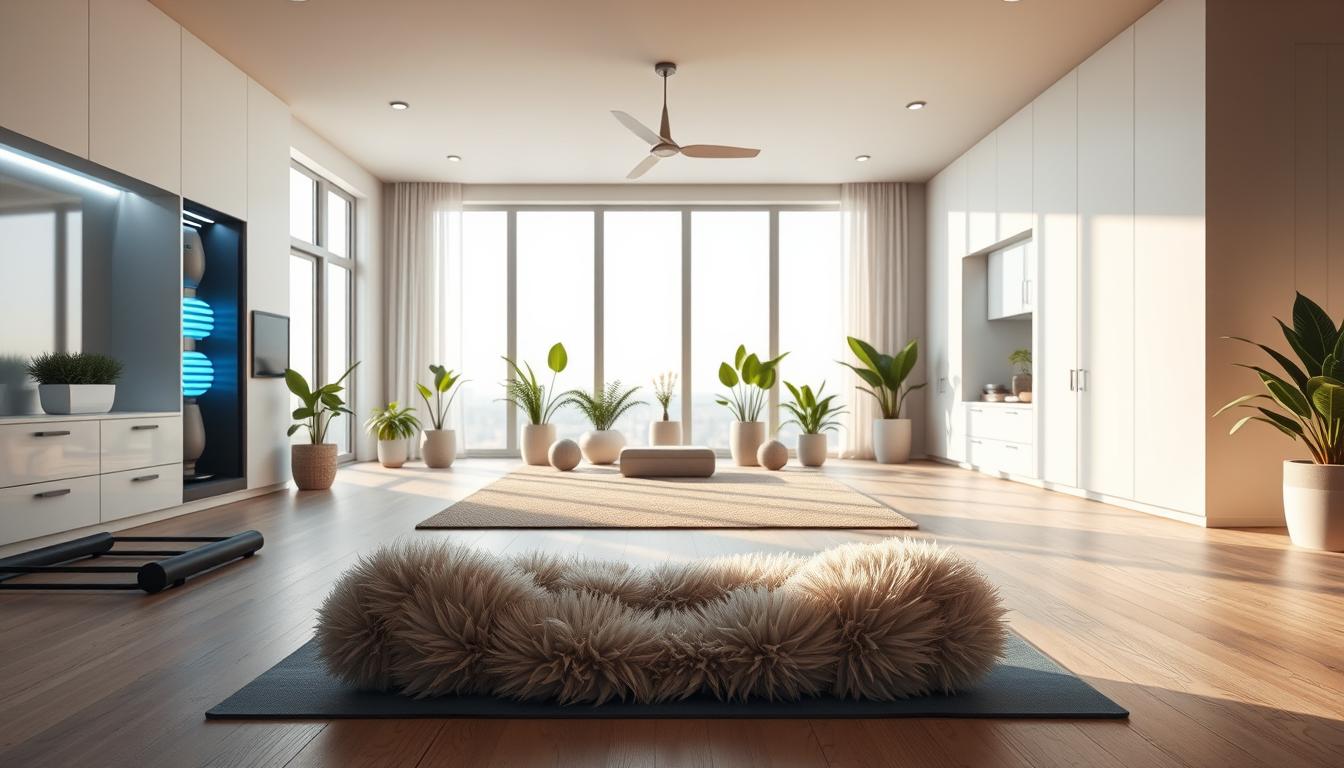
Let’s be honest about most home wellness technology. It often feels like buying a yoga mat with Bluetooth. Impressive? Maybe. Actually transformative? Hardly.
I’ve seen many Silicon Valley trends come and go. I know the difference between marketing hype and real impact. This isn’t about getting likes on Instagram or pretending to be something you’re not. It’s about real results you can feel.
We’re focusing on four key areas of true well-being at home. If you’re spending money on your living space, you should get real benefits.
Imagine air quality as clean as a Swiss hospital. Water so pure it would make Evian jealous. Light that matches your body’s natural rhythm. And acoustic comfort that blocks out all noise.
Remember, what we measure, we can manage. And what we manage, we can talk about at dinner parties.
Air: filtration, ERVs, IAQ sensors, VOC alerts
Remember when “fresh air” meant cracking a window? That was simpler times. Now, we have advanced air systems that NASA would approve of.
HEPA filters are not just for show. They catch tiny particles, like dust mites, with 99.97% efficiency. This means less pollen, pet dander, and that pesky gray dust.
ERVs are the heroes of indoor air. They bring in fresh air and remove stale air without raising your energy costs. It’s like having a fresh environment without the energy loss.
Air quality sensors are the real stars. They watch for pollutants and even detect chemicals from new furniture. These sensors are like the canaries in your coal mine.
When these systems talk to each other, magic happens. Your ERV and filters work together with air quality sensors. They adapt to smoke, perfume, and more.
VOC alerts make your home smart. It notices when air quality drops and acts fast. You get alerts that actually help you.
This isn’t just about feeling good. It’s about making every breath count for your health. The air you breathe is part of your health plan.
Water: whole‑home filtration, remineralization, leak control
That crystal clear water from your faucet? It’s hosting more uninvited guests than a college dorm party during spring break. Pharmaceuticals, microplastics, heavy metals – they’re all crashing your hydration party without an invitation.
Modern water purification transforms every droplet that touches your skin, cleans your dishes, and waters your plants. It’s not just about drinking water anymore. It’s about creating a holistic water environment throughout your entire home.
Whole-home filtration systems act as bouncers for your water supply. They remove contaminants you didn’t even know were there. Think of it as a VIP treatment for your plumbing. These systems tackle everything from chlorine to agricultural runoff.
The magic happens with multi-stage filtration. Sediment filters catch the big particles. Carbon filters handle chemicals and odors. Then advanced reverse osmosis systems remove up to 99% of dissolved solids. It’s like giving your water a spa day before it reaches your glass.
But here’s where most systems fail: they strip water too clean. Proper water purification includes remineralization. This process adds back essential minerals like calcium and magnesium. It transforms flat, dead water into something that actually tastes alive.
Remineralization does more than improve taste. It creates alkaline water that’s better for hydration. Your body absorbs mineral-rich water more efficiently. It’s the difference between drinking something and drinking something that works for you.
Now let’s talk about the silent threat: leaks. Water damage costs homeowners billions annually. Smart leak detection systems monitor your entire plumbing network. They can detect a leak as small as a drop per minute.
These systems send alerts to your phone before damage occurs. They automatically shut off water when major leaks are detected. It’s like having a plumber on duty 24/7 without the overtime pay.
Advanced leak control includes:
- Flow rate monitoring throughout your home
- Temperature sensors to prevent frozen pipe bursts
- Automatic shut-off valves that activate during emergencies
- Water usage analytics to identify wasteful patterns
Comprehensive water purification combines filtration, remineralization, and protection. It’s about creating water that supports wellness, not compromises it. Because nothing ruins your home’s vibe faster than discovering your basement has become an indoor pool.
The right system transforms water from a utility into a wellness tool. It’s an investment that pays dividends in health, home protection, and peace of mind. After all, your water should work for you – not against you.
Light: circadian schedules, daylighting, glare control
Our bodies are wired for ancient times, but we live in a world that never sleeps. It’s like trying to run old programs on new systems – it just doesn’t work. This mismatch affects our sleep, making it as rough as a YouTube video with buffering issues.
Circadian lighting systems are here to help. They don’t just turn lights on and off. Instead, they create a light schedule that follows the sun’s natural rhythm. They start with cool blue tones in the morning and switch to warm amber hues at night. This helps our bodies stay in sync with the day.

Daylighting solutions aim to use natural light wisely. They use windows, light shelves, and reflective surfaces to spread sunlight evenly. The goal is to create a soft, even light that makes you less reliant on artificial lights during the day.
Glare control is important for comfort at home, not just in offices. Modern glare control technology uses smart sensors and adjustable lights. It helps prevent the squinty-eyed look we get when sunlight hits our TV screens. It makes sure our space is bright without being too harsh.
These three elements work together to create a perfect light environment:
| Lighting Element | Morning Function | Evening Function | Wellness Impact |
|---|---|---|---|
| Circadian Lighting | Blue-enriched light for energy boost | Amber-toned light for melatonin production | Regulates sleep-wake cycles |
| Daylighting | Maximizes natural morning light | Softens harsh afternoon sunlight | Reduces eye strain and headaches |
| Glare Control | Prevents screen glare during work hours | Minimizes TV reflection during evening viewing | Enhances visual comfort and reduces fatigue |
Getting the right circadian lighting is more than just buying smart bulbs. It’s about understanding your daily life and designing light that supports it. The right system can make a big difference in how you feel when you wake up.
Your sleep shouldn’t suffer because of bad lighting. With the right mix of circadian technology, smart daylighting, and glare control, you can create a space that’s good for your body and meets your modern needs. It’s time to take care of your sleep like your ancestors did, without the need for fancy mattresses.
Acoustic comfort and noise mapping
Have you ever felt like you’re stuck in a never-ending bad conference call at home? It’s like the refrigerator hums, the neighbor’s lawnmower buzzes, and that ticking clock is always there. They all seem to be working against our peace.
True acoustic comfort isn’t about complete silence. It’s about creating a soundscape that’s like a museum. You want the soft sound of leaves, not the loud buzz of electronics.
Noise mapping technology is like an audio detective. It finds the exact spots where sound leaks in, just like Sherlock Holmes finds clues. You’ll know exactly where the noise comes from and why your kitchen sounds like a busy highway.
Sound masking systems are not just white noise machines. They’re like audio curators that create custom soundscapes. Imagine changing traffic noise to ocean waves or construction sounds to forest ambiance.
Architectural solutions can turn echo chambers into quiet havens. By placing absorption panels in the right spots, a noisy living room can become a peaceful place. The switch from stress to serenity might just need two panels and some weather stripping.
| Noise Source | Common Annoyance Level | Recommended Solution |
|---|---|---|
| Refrigerator Hum | Moderate | Vibration pads + acoustic panels |
| HVAC System | High | Duct insulation + sound baffles |
| External Traffic | Severe | Triple-pane windows + sound masking |
| Household Echo | Moderate | Absorption panels + soft furnishings |
Your home should be a place of peace, not a source of noise. With the right noise mapping and solutions, you can enjoy a quiet home. It’s time to have the sound of silence – or at least, something peaceful.
Thermal comfort: radiant, humidity, and zoning
Do you remember those thermostat fights that ruined more date nights than bad sushi? Modern thermal comfort systems have moved beyond simple temperature control. They now offer sophisticated wellness technology that knows your body’s needs better than you do.
Radiant systems are a big step up from central heating. They warm objects and surfaces directly, not just the air. Your floors, furniture, and walls become gentle heat sources.
This leads to consistent warmth without dry, stuffy air. No more cold spots or overheating near vents.
Humidity control is key to true thermal wellness. It keeps winter air from drying you out and summer air from being too humid. Your skin stays hydrated, your sinuses are comfortable, and your wooden furniture stops cracking.
Zoning technology is like having separate bathrooms for each room. Your home office can stay cool while your bedroom is cozy. No more compromises.
These systems work together to create the perfect “just right” feeling in every room. The best part? You get this comfort without breaking the bank on energy bills.
| Thermal Feature | Traditional Approach | Modern Solution |
|---|---|---|
| Heating Method | Forced air that heats air | Radiant systems that warm objects |
| Humidity Control | Basic on/off humidifiers | Whole-home precision humidity systems |
| Temperature Zones | Single thermostat for entire home | Room-by-room climate customization |
The table shows how far thermal comfort has advanced. Modern systems offer personalized comfort while using less energy. You get better results using less power.
Radiant heating systems use 25-30% less energy than forced air systems. Humidity control prevents dry winter air and summer mugginess. Zoning technology ensures you only heat or cool occupied spaces.
These technologies work together seamlessly. Your system might use radiant floor heating while maintaining perfect humidity levels and keeping different zones at ideal temperatures. The coordination happens automatically.
The result is thermal comfort that adapts to your life, not the other way around. You win the temperature war without ever touching a thermostat.
Spa features: sauna, steam, cold plunge integration
The Romans loved communal baths, but today we have something better. Modern home wellness offers personal spa circuits that even athletes would love. It’s like having your own gym, but better.
Infrared saunas are a big step up from old heat therapy. They heat your body at a deep level, like a massage for your blood. It’s amazing how far we’ve come from basic steam rooms.
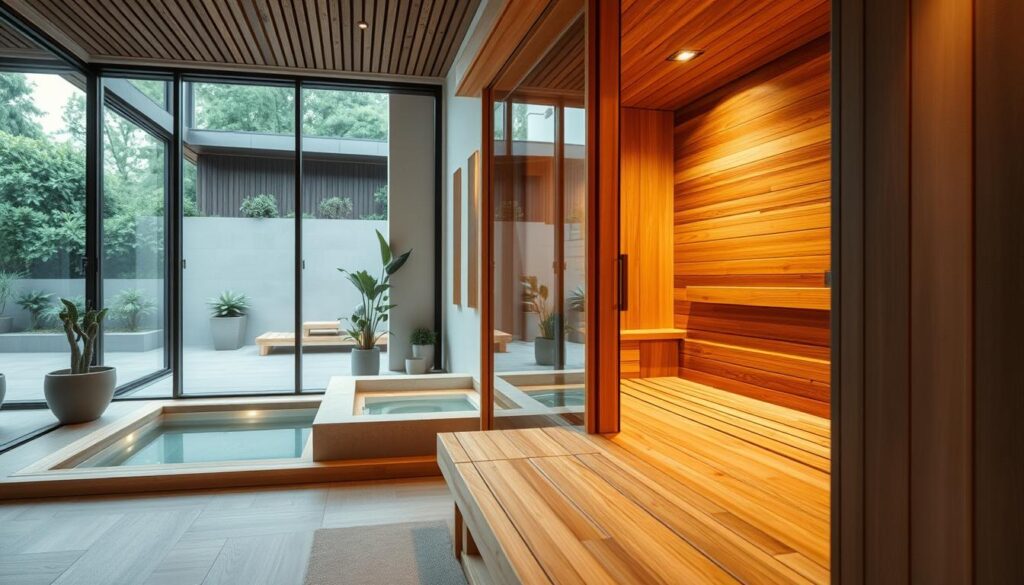
Steam rooms have also improved a lot. Now, you can control them with your phone and add scents and colors. You can set it up for any time of day, like morning meditation or after working out.
The cold plunge is the final piece of this wellness puzzle. It might shock you at first, but it’s really good for you. It helps with pain, blood flow, and thinking clearly. It’s like a quick fix for your body and mind.
To make a great thermal circuit, you need more than just fancy gear. Here are some key things to think about:
- Sequence planning: Start with 15-20 minutes in the sauna, then 2-3 minutes in the cold plunge. Do this 2-3 times.
- Ventilation systems: You need special systems to control moisture in steam rooms and air in saunas.
- Material selection: Choose materials that can handle moisture and look good, like special woods and surfaces.
- Control integration: Use smart systems that can manage everything, from temperature to timing.
Modern spa integration is all about making it look good. Your sauna can be a simple, stylish room. Steam rooms can have natural stone and soft lighting. Cold plunges can be beautiful copper tubs.
This isn’t just about being fancy. It’s about making wellness fit your life. The Romans were onto something, but we’ve made it even better. No need for togas here.
Fitness spaces: AV, flooring, ventilation, recovery tools
Your home gym should be more than just a place to exercise. It should be a dedicated wellness area. The pandemic showed us that good fitness spaces need more than just room and gear. They need smart design that gets four key things right.
Audio-visual integration makes a big difference. Bad audio or tiny screens can kill your motivation. Good AV means clear displays, loud sound without distortion, and easy controls.
Specialized flooring is often overlooked. That cheap mat from the store won’t do. Good flooring absorbs shock, reduces noise, and keeps smells out. It also provides the right grip for different activities.
Ventilation systems are key for fitness spaces. High-intensity workouts can fog windows and raise CO2. Good ventilation means fresh air, controlled humidity, and sometimes special exhaust systems.
Recovery tools should be part of the design, not an afterthought. That foam roller and percussion massager need a home. Good storage, lighting, and even cold plunge options can make recovery a special part of your routine.
The best fitness spaces are so well-designed, you hardly notice them. But when you try to work out elsewhere, you’ll see why good design is just as important as the workout itself.
Dashboards and alerts for family health
We’re in the age of tracking everything – steps, sleep, even caffeine. Yet, our homes are often a mystery when it comes to health. It’s like having a phone that only calls.
Modern wellness dashboards change this. They combine data from home systems into actionable insights. It’s like a Fitbit for your home, but smarter.
These systems send real-time family health alerts that matter. Get alerts when pollen counts rise and air quality falls. Also, get warnings about water quality changes before you taste anything off. It’s like having a health assistant that never sleeps.
The sleep environment tracking is brilliant. It checks temperature, noise, and light while you sleep. Wake up to a report on your night’s environment – because quality sleep shouldn’t be a guess.
What makes these home wellness monitoring systems powerful is their predictive abilities. They learn your family’s patterns and can spot issues before they happen. It’s like preventive healthcare for your home.
| Alert Type | Data Source | Recommended Action | Priority Level |
|---|---|---|---|
| Air Quality Drop | IAQ sensors, pollen counts | Activate filtration, close windows | High |
| Water Quality Change | TDS sensors, flow rate monitors | Check filters, run purification cycle | Medium-High |
| Sleep Environment Shift | Temperature, noise, light sensors | Adjust thermostat, activate white noise | Medium |
| HVAC Efficiency Drop | Energy consumption, airflow sensors | Schedule maintenance, check filters | Medium |
The best systems work with your family health tracking app. They create a complete picture of your wellness. It’s not just about data – it’s about connecting your environment to your health.
These dashboards turn numbers into clear actionable insights. They tell you what’s happening, why it matters, and what to do. It’s like having a home wellness consultant always ready to help.
The future of home wellness monitoring isn’t about more gadgets. It’s about smarter integration. Systems that learn, adapt, and improve your health without needing a PhD in data science.
Maintenance routines and service partners
Your wellness sanctuary needs more than just dusting. It’s like a high-performance car – neglecting maintenance turns it into a decoration. Modern wellness systems need regular upkeep to stay functional.
Air filters need to be changed every three months to prevent them from becoming breeding grounds for bacteria. Water filters also have specific replacement times, which should be tracked by your smartphone, not your memory. These routines are key to keeping your wellness home running smoothly.
Finding the right service partners is the hard part. You need HVAC experts who know about ERVs, not just air conditioning. Plumbers who understand water systems, not just fixing leaks. These professionals are out there, but finding them takes more effort than usual.
Smart home tech can send reminders for maintenance, but nothing beats human expertise. Proper care ensures your wellness system works as promised. A broken sauna on a busy Tuesday can really upset your peace.