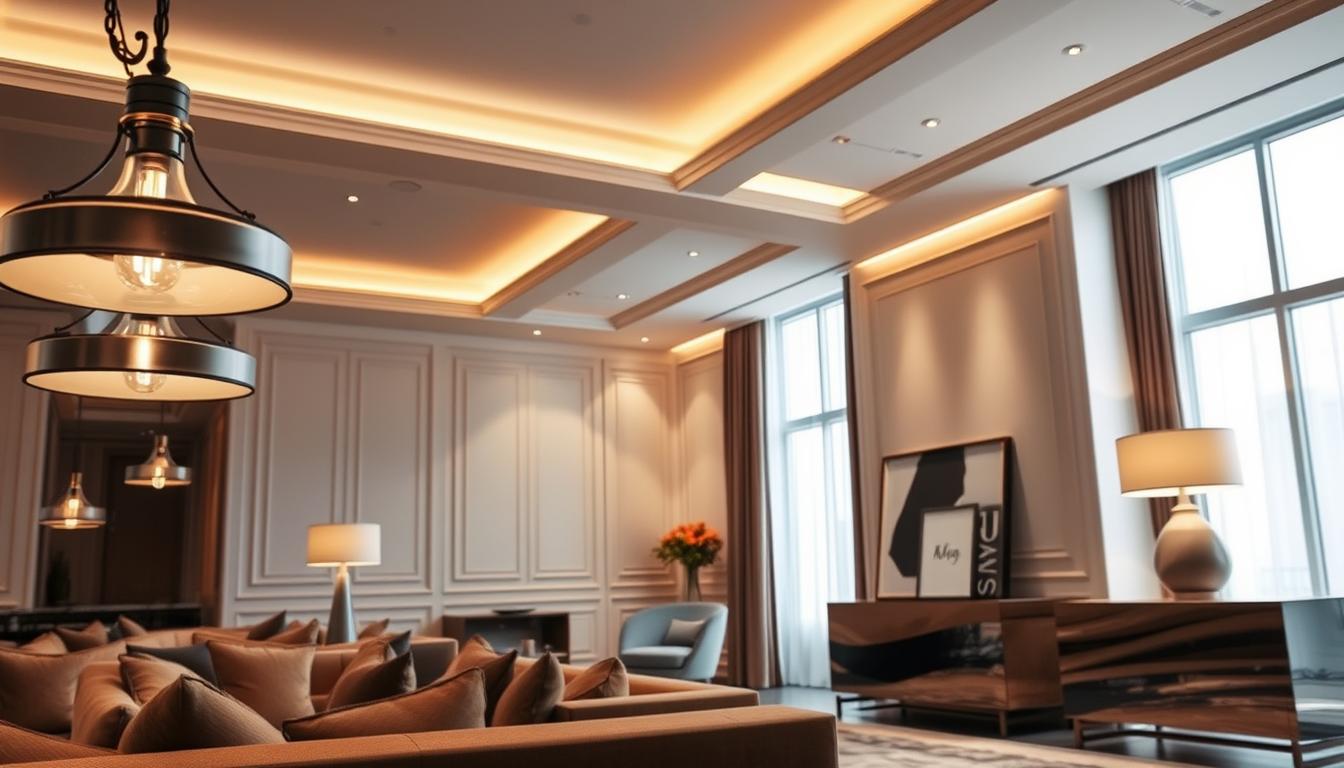
Imagine walking into a space that feels both welcoming and elegant. This is what a well-thought-out lighting plan can do. In luxury homes, the right lighting can turn a room from simple to stunning. It’s not just about how bright it is; it’s about creating a mood that brings your home to life.
Instead of just one light, a mix of ambient, task, and accent lighting works together. This mix adds depth and makes each area special. It’s like a symphony where every light has its own role. The outcome is a cozy, inviting light that makes you want to stay longer.
This strategy can really make your living space stand out. It’s the difference between a room that looks like a showroom and one that feels like your home. Who wants to feel like they’re in a waiting room? With the right lighting, your home can feel calm, cozy, and perfect for any moment.
Ambient cove slots downlights spacing glare UGR metrics
Imagine walking into a room where the light wraps around you warmly. This is the beauty of ambient lighting. In luxury homes, it’s not just an extra; it’s the key that makes every space special. It sets the overall light, creating the base of a layered lighting plan.
Soft and indirect, ambient light makes a room feel welcoming. Recessed ceiling lights, hidden LED coves, and edge lighting work together for a smooth glow. This glow is key, as it supports the room’s look without overpowering other lights like chandeliers and pendants. In a good design, ambient lighting should be subtle, not loud.
Cove lighting is a hidden gem in this lighting plan. It’s like the quiet but vital bass in your favorite band. A well-done cove lighting can make a ceiling seem to float, with light softly spreading around the edges. But, getting the slot placement and downlight spacing right is key.
Also, knowing UGR (Unified Glare Rating) metrics is important. If you get the spacing wrong, you might end up with harsh light. If glare is off, your guests might squint during dinner, like they’re looking at a solar eclipse. The aim is to create a soft, warm light that wraps the room in comfort.
When designing a space, I think about how light pools in corners and how shadows fall. If your ambient light is too strong, even the most beautiful decor can’t save it. It’s like a good foundation garment: you can’t see it, but it’s essential, and it’s disastrous if it’s wrong.
Task pendants undercabinet reading makeup vertical light rules
Task lighting makes everyday tasks feel luxurious. It shines a light on specific activities like reading and cooking. In fancy homes, it’s key for both comfort and style.
Picture trying to cut a tomato under harsh overhead light. Task lighting, like pendants over kitchen islands, should be just right. It should light up your work but not be too high.
Undercabinet lighting is a must in kitchens. It prevents chopping veggies in the dark, letting your beautiful counters shine. It makes sure every corner is bright, so you can cook without feeling like you’re in a scary movie.
In bathrooms, vertical lights are the rule. Side-mounted sconces at eye level get rid of shadows. This way, you look great while getting ready, not like you just woke up from a bad dream.
Bedroom reading lights need to be adjustable and soft. They should let one person read while the other sleeps. The goal is to blend these lights into the room, making them seem like a thoughtful addition, not a reminder of chores.
Task lighting does more than just light up a room. It makes living in luxury even better. It’s the small detail that makes a big difference, letting you enjoy every moment without noticing the light.
For more ideas on adding these touches to your home, visit luxury living room designs.
Accent wall wash grazers adjustable spots art conservation UV limits
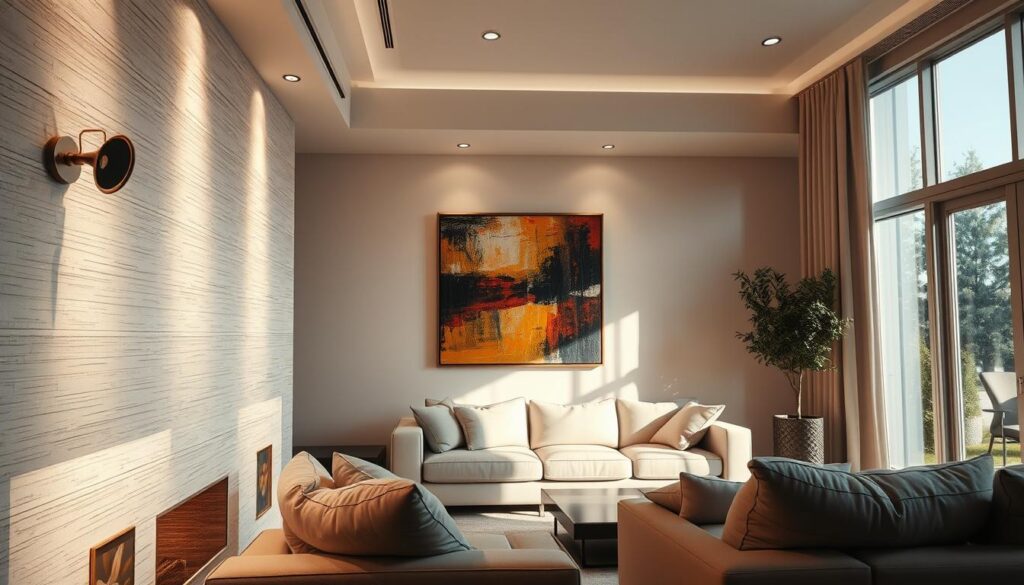
Accent lighting isn’t just an afterthought; it’s the secret sauce that transforms a room from mundane to magnificent. It adds depth and highlights special features. Imagine a wall wash over a fluted plaster wall or grazers on a stone fireplace. These techniques make a flat surface look like a geological wonder.
In luxury interiors, accent lighting is key. Without it, even the most luxurious materials like marble, wood, and crystal lose their charm at night. It reveals texture, adds drama, and completes the layered lighting plan luxury that defines sophisticated homes. It’s like giving your space a personality that shines through, even when the sun goes down.
Art lighting is where the stakes get even higher. Art conservation is not just a fancy term; it’s a critical consideration for preserving your investment-grade pieces. UV limits are vital for ensuring your artwork lasts for generations. Thanks to LED technology, achieving this balance is easier than ever, but precision is key. The beam angle should gently kiss the canvas, not assault it.
And please, resist the urge to spotlight every single object in the room as if it’s an evidence locker. Accent lighting thrives on contrast; if everything is highlighted, nothing stands out. Let some corners recede into comfortable darkness. The goal is to guide the eye through a curated narrative, not to blast every surface with democratic equality. Remember, shadows are not the enemy; they are the punctuation marks in your lighting sentence.
Linear language profiles lenses MacAdam steps color consistency
A well-crafted layered lighting plan can make luxury interiors stand out. At the heart of this transformation is the selection of linear LED fixtures. These lights are key to a well-designed space.
Let’s dive into the details. The difference between a good lighting plan and a mess often comes down to MacAdam steps. This term is important for making sure your linear LED lights look the same. Imagine a high-end kitchen with uneven lighting. It’s a nightmare for designers.
Color consistency is essential for a luxury look. When choosing linear profiles, I focus on lens diffusion and profile depth. It’s about how the lights fit into the space.
The language of linear lighting is subtle. Think of lights tracing a ceiling or defining a hallway. The right lens can make the light look seamless. Color temperature is also key, aiming for 2700K to 3000K for a healthy look.
Mixing different color temperatures can ruin the look. For example, mixing 2700K and 3500K can be jarring. Consistency is the luxury that makes a space feel right.
| Lighting Type | Color Temperature (K) | CRI | Ideal Use |
|---|---|---|---|
| Warm White | 2700K | 90+ | Living Rooms, Bedrooms |
| Soft White | 3000K | 80+ | Kitchens, Dining Areas |
| Neutral White | 3500K | 80+ | Bathrooms, Workspaces |
For more on linear LED lighting, check out this detailed guide. Remember, in luxury lighting, consistency is key to elegance.
Controls scenes circadian scheduling occupancy sensors and lockouts
Imagine a home where the lighting changes with your mood. This is possible with a layered lighting plan luxury. The controls should be easy to use, letting the lighting be the star. No need to feel like you’re flying a spaceship just to dim the lights for a movie.
Circadian scheduling is a key feature of modern lighting. It changes the light’s color to match the day. Morning brings bright light, and evening brings a warm glow. It’s like living in a tech utopia, and your body will love it.
Occupancy sensors are great for places like closets or powder rooms. They turn lights on when you enter and off when you leave. Just be careful not to look like you’re trying to signal for help!
Lockouts are also important, keeping kids from messing with the lights. They let you relax while your lighting does its thing.
Scene programming is another cool feature. You can set scenes like “Entertain” for a warm glow or “Movie Night” for a dimmed room. And “Goodnight” turns off all lights except for your path. This makes your home adapt to your life without hassle.
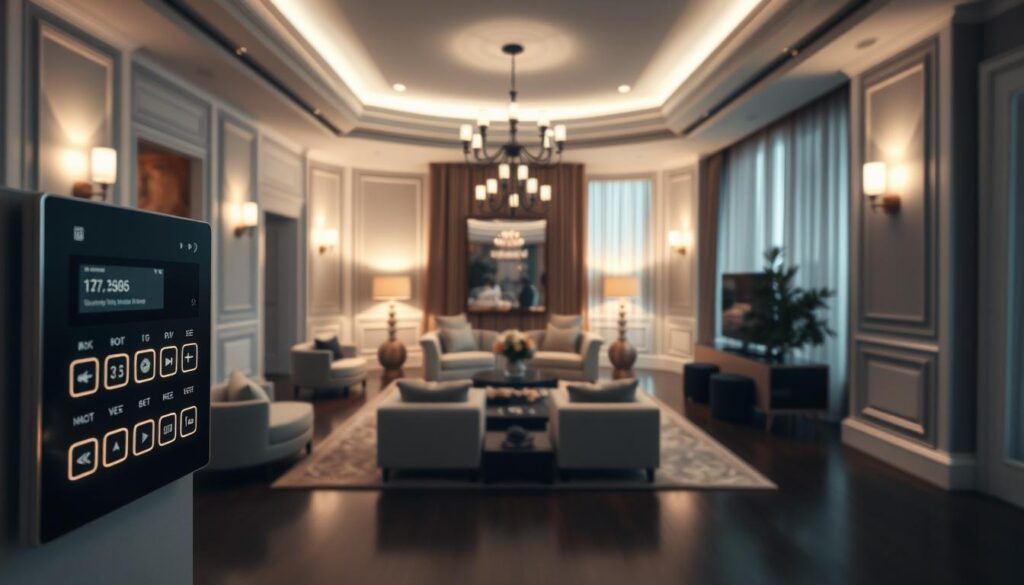
When your lighting controls match your lifestyle, you can enjoy your home’s ambiance easily. Lighting should make your home better, not more complicated.
Room guides foyer kitchen dining great room bath suite office wellness
Every room in your home needs its own special lighting. Lighting is more than just a need; it’s a way to show off each room’s personality. Let’s explore the spaces that make up your home.
The foyer is where it all begins. A bold chandelier, combined with ceiling coves and wall sconces, welcomes you warmly. This setup is like a grand introduction to your home’s story.
In the kitchen, function is key. Pendants over islands and undercabinet lights make cooking easier. Recessed lights in the ceiling help keep prep areas bright, making even the most expensive appliances shine.
The dining room is all about creating a cozy atmosphere. A stylish pendant light above the table adds to the charm. Dimmable lights on sideboards or art pieces keep the room bright and inviting.
The great room is all about flexibility. Soft cove lighting meets daily needs, while adjustable spotlights add flair. Reading lamps in cozy corners encourage you to put down your phone and enjoy a real book.
In the primary bath suite, we find peace. Sconces on either side of the mirror provide gentle light, while a soft cove above the tub creates a spa-like ambiance. Avoid harsh downlights over the vanity to keep the mood relaxed.
The home office needs task lighting to reduce eye strain during calls. Soft ambient light and subtle accent lighting on bookshelves make your workspace both comfortable and impressive.
The wellness space—whether for yoga or working out—requires soft, even lighting. This creates a welcoming atmosphere, not a clinical one. Each room has its own lighting style, yet they all share a common language.
| Room | Lighting Type | Key Features |
|---|---|---|
| Foyer | Ambient + Accent | Chandelier, wall sconces |
| Kitchen | Task + Ambient | Pendants, undercabinet lighting |
| Dining Room | Accent + Ambient | Sculptural pendant, dimmable wall washers |
| Great Room | Ambient + Task | Cove lighting, adjustable spots |
| Primary Bath Suite | Ambient | Vertical sconces, soft cove |
| Home Office | Task + Accent | Task lamps, bookshelf lighting |
| Wellness Space | Ambient | Diffuse lighting |
Coordination with finishes reflectance fluted walls stone sheen mirrors
In luxury design, lighting and finishes work together beautifully. Light acts differently on various surfaces. Marble, crystal, glass, and metal each change how light is reflected and felt in a space.
Alabaster stone makes light soft and welcoming. Murano-style glass bends light, adding depth. Crystal makes light sparkle, turning it into a design element.
But what’s the point of a wall wash if the surface absorbs all the light? Fluted walls look amazing under grazing light. Shadows and highlights dance on the surface, giving it life.
Yet, a flat light wash on a fluted wall is a waste. The stone’s sheen is key: honed marble glows softly, while polished marble can cause glare.
Mirrors can make or break the lighting. A sconce too close to a mirror can create a funhouse effect. Every surface, from ceilings to paneling, affects the lighting.
Interior designers and lighting experts get paid to make this work. They match fixture placement with finishes for perfect light. When done right, light seems to come from the materials themselves.
| Material | Light Behavior | Effect on Space |
|---|---|---|
| Alabaster | Softens light | Warm, inviting glow |
| Murano Glass | Refracts light | Fluid movement and depth |
| Crystal | Amplifies brilliance | Creates sparkle |
| Polished Marble | Reflects light | Potential glare issues |
| Honed Marble | Absorbs light | Soft, glowing effect |
Energy code compliance and daylight autonomy without killing mood
Energy codes might seem boring, but they can really improve your lighting. These rules are often seen as just red tape. But they’re actually key to making your lighting both functional and stylish.
Imagine a home where every spot is perfectly lit. This is what energy code compliance can do. It balances light and architecture, making spaces feel just right.
Energy codes like Title 24 and ASHRAE help use natural light during the day. Then, electric lights take over as night falls. This makes your home feel welcoming and well-lit.
The trick is in how you switch from natural to artificial light. It should be smooth, not jarring. Linear LED technology makes this possible, providing bright, warm light without harsh colors.
Here’s a quick comparison of traditional lighting versus linear LED:
| Feature | Traditional Lighting | Linear LED |
|---|---|---|
| Energy Efficiency | Low | High |
| Color Rendering | Poor | Excellent |
| Lifespan | Short | Long |
| Warmth | Cool | Warm |
So, how do you follow these codes without losing your creativity? View them as a challenge. A good designer sees rules as chances to be creative. The aim is to find beauty within the limits of physics and energy codes.
In short, following energy codes doesn’t mean you have to sacrifice mood. With careful planning and the right tech, you can make spaces that are both beautiful and functional.
Punch list focus aiming and final programming day and night
The grand reveal is here. The construction crew has left, and now the real work starts. A layered lighting plan luxury needs a sharp eye and careful detail. Daytime walkthroughs let us see how natural light works with your fixtures.
Are those cove lighting runs smoothly integrated into the architecture, or do they look out of place?
In the daylight, shadows can be both a blessing and a curse. Do the pendants cast unflattering shadows on your kitchen island? It’s time to check and make changes. The nighttime programming is when the magic really comes alive.
Every fixture must be aimed just right. That small adjustment can make a big difference. Adjustable spots need to lock in their angles. Cove lighting should be checked for any hot spots or dark gaps.
Task lights should shine brightly at the right height. Each scene—“Entertain,” “Relax,” “Cooking,” “Late Night,” “Away”—needs to be tested. This is when all the planning pays off.
The furniture is in place, and the lighting works with the space in amazing ways. When everything is perfect, the lighting should feel natural. You shouldn’t even notice it; you should just feel comfortable in the space.
This is the heart of a well-done layered lighting plan luxury. It makes the architecture shine, shows off materials, and supports your daily life without being too much. This is where true elegance is found.