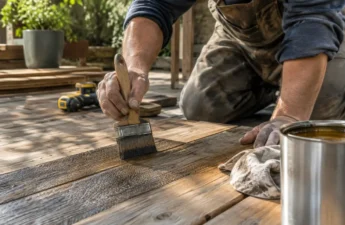
Home repair priorities in 2026 are less about dramatic room makeovers and more about keeping the house sound, safe, and easier to maintain. That shift is practical rather than pessimistic. Many homeowners are still improving their spaces, but the stronger pattern is repair, maintenance, and finish choices that reduce avoidable repeat work.
Angi’s 2026 State of Home Spending Pulse, based on a survey conducted on July 9, 2026, found that 63% of homeowners who had hired professionals did maintenance in the prior month, 58% made repairs, and 35% undertook renovations. The same report found that 92% of homeowners met or exceeded their project budget, while 43% exceeded the original estimate Angi reported. For materials and finishes, that data supports a cautious approach: address failure points first, then upgrade surfaces where the home can support the work.
Why Home Repair Priorities Are Shifting In 2026
The maintenance-first pattern is easy to understand from the jobsite. A worn finish may look like a style problem, but it can also be a clue that water, sun exposure, abrasion, poor ventilation, or substrate movement is wearing down the assembly behind it. Repainting a damp wall, replacing flooring over a soft subfloor, or installing new tile without addressing movement can waste money and mask a larger issue.
Home Repair Priorities Start With Exposure And Wear
The first design question should be where the finish fails. Exterior trim, entry thresholds, bathroom walls, laundry rooms, mudrooms, and kitchen work zones face different stresses. A finish that performs well in a low-traffic bedroom may be a poor choice near a sink, pet door, or covered patio entry. This is where home repair priorities should be tied to use: moisture exposure, cleaning frequency, foot traffic, impact risk, and sunlight should shape the material decision before color or pattern.
A cautious homeowner does not need to abandon design. The better path is to treat appearance as one requirement among several. If a household cooks daily, stores sports gear by the back door, or has children and pets moving through the same hallway, the finish schedule should reflect that real behavior.
Maintenance Before Cosmetic Replacement
Maintenance often has a weaker visual payoff than renovation, but it can protect the work homeowners already paid for. Caulk joints, grout condition, exterior paint, drainage at entries, door sweeps, cabinet hardware, and worn sealants can affect how long finishes remain serviceable. Small defects can also create safety concerns, such as loose flooring edges or deteriorated stair finishes.
For homeowners comparing repair work with style upgrades, a related discussion of essential repairs before cosmetic upgrades is a useful way to frame the decision. The practical sequence is simple: correct defects that affect safety, moisture control, or function before spending on surfaces that only change appearance.
Materials And Finishes That Earn Their Keep
Material selection in 2026 should be judged by service conditions, not by showroom appearance alone. A finish that looks restrained but cleans well, resists routine wear, and can be repaired in sections may be a stronger long-term choice than a fragile specialty surface. The goal is not to buy the most expensive product. The goal is to match the product to the room and the risk.
Pick Finishes By Failure Point
In bathrooms and laundry areas, the weak point is often water management rather than the face finish. In kitchens, common stress points include splatter zones, cabinet pulls, work surfaces, and flooring transitions. At entries, grit, standing water, and footwear can shorten the life of softer surfaces. In sun-exposed rooms, fading and heat gain may affect comfort and appearance.
Before selecting a finish, ask what failed last time. Was the paint peeling, the floor cupping, the grout cracking, or the cabinet finish wearing at touch points? Each symptom points to a different cause. A responsible contractor, designer, or inspector can help determine whether the issue is mainly material choice, installation quality, ventilation, moisture, movement, or routine wear.
Tool Choices Should Match The Job
Some maintenance tasks are reasonable for careful DIY work, such as replacing basic cabinet hardware or touching up paint after checking surface condition. Other tasks carry higher risk. Electrical, gas, plumbing, roofing, structural repairs, and work at height should be handled by qualified professionals. Even finish work can become unsafe if it involves dust from unknown materials, heavy panels, wet areas, or cutting tools beyond the user’s experience.
For safer planning, homeowners should read manufacturer instructions, use appropriate protective equipment, and avoid improvising with tools they do not understand. References from related trade and tool sites such as High Pro Tools can help owners think through tool selection, but product manuals and local professionals should guide actual high-risk work.
Budget Risk And Scope Control

The 2026 budget environment rewards restraint. Houzz’s 2026 U.S. Houzz & Home Study reported that median renovation spend in 2025 held at $20,000, while planned median spend for 2026 was $15,000. The same study reported that building materials were purchased by 41% of renovating homeowners in 2025, and interior finish products by 51% Houzz found. Those figures suggest that materials and finishes still matter, but the spending plan needs sharper boundaries.
Protect The Budget With Phased Work
Home repair priorities are easier to manage when the project is divided into phases. A homeowner might first repair water intrusion, stabilize damaged trim, or correct failing sealants. A second phase might replace worn flooring in the highest-use zone. A later phase can address paint, lighting, or decorative finishes. Phasing is not always cheaper if mobilization costs repeat, but it can reduce the risk of starting a cosmetic project before the hidden condition is known.
Written scopes are especially useful for finish work. They should identify which rooms are included, what substrate preparation is expected, what products are being used, who is responsible for moving fixtures or furniture, and what conditions would trigger a change order. Without that clarity, a “simple refresh” can turn into a disputed repair.
Know The Line Between DIY And Pro Work
DIY work should be limited to tasks where the homeowner can perform the job safely, identify hazards, and stop if conditions change. Removing finishes can expose moisture damage, mold-like growth, old adhesives, wiring, or structural defects. Homeowners should not sand, cut, or demolish unknown materials without understanding the risk and any applicable local requirements.
Professional help is justified when the work affects life safety, building systems, waterproofing, stairs, exterior openings, or load-bearing areas. It is also justified when a warranty depends on approved installation. A cautious design plan does not treat labor as an afterthought; the best product can fail early if installed over an unsuitable surface.
Home Repair Priorities For Safer Finishes
The strongest finish plans in 2026 begin with condition, not trend. Inspect the areas that take the most abuse, document what is failing, and separate urgent maintenance from optional style changes. Then choose materials that fit the room’s exposure, cleaning needs, and likely wear.
For homeowners working within tighter budgets, home repair priorities should favor safe surfaces, sound substrates, moisture control, and durable touch points before broad cosmetic renovation. That approach may feel less dramatic than a full remodel, but it is often the more practical design decision. A home that is dry, stable, easy to clean, and safe underfoot gives every future material choice a better chance to last.