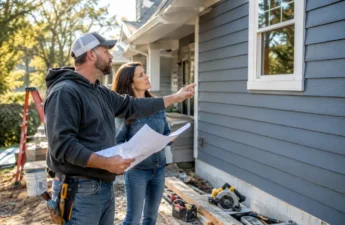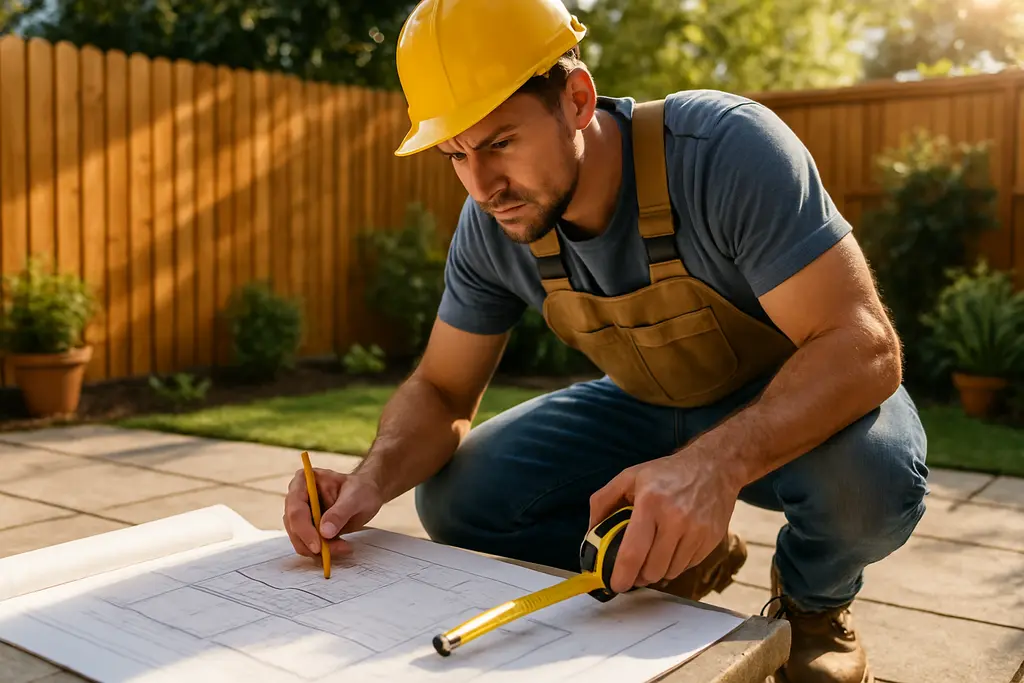
DIY professional help decisions looked different after the March–April 2026 homeowner survey period. HIRI reported that pure DIY or unpaid-help project completion fell to 39% in Q1 2026, down from 53% in Q1 2025, while hybrid work using both homeowner labor and contractor involvement nearly doubled to 46% from 23% over the same period, according to HIRI’s Q1 2026 project activity findings. For homeowners, the useful lesson is not that DIY is fading or that contractors are always the answer. The data points to a more selective approach: do the work that fits your skill, time, tools, and safety limits, then bring in qualified help where the risk or technical demand is higher.
What HIRI Says About DIY Professional Help
DIY Professional Help Starts With Scope
The Q1 2026 numbers suggest a shift from all-or-nothing thinking. Fully hiring a contractor dropped from 24% in Q1 2025 to 15% in Q1 2026. At the same time, hybrid projects rose sharply. That combination is worth reading carefully. Homeowners were not simply abandoning projects, but many appear to have been dividing work into parts: tasks they could manage and tasks that needed professional skill, better equipment, or workmanship accountability.
That is a practical design and planning mindset. Painting a bedroom, assembling storage, replacing cabinet hardware, or improving basic organization can often be planned as lower-risk homeowner work if the person doing it has the time, patience, and correct tools. Work involving electrical systems, gas lines, structural changes, major plumbing, roof access, or significant ladder exposure deserves a much stricter safety screen. Even when a homeowner wants to keep costs down, risk should not be priced as if every task carries the same downside.
Why Pure DIY Became Less Dominant
HIRI’s Q1 2026 findings reported that homeowners chose DIY most often because they felt able to do the work themselves, cited by 67%, and because it was cheaper, also cited by 67%. Enjoyment followed at 54%. Those reasons are reasonable, but they do not settle the decision alone. Feeling capable can be accurate for a small finish project and inaccurate for a project with hidden system risks. Cost savings can disappear if damaged materials, rework, tool purchases, or delays pile up.
A practical DIY professional help decision should begin with the part of the project most likely to go wrong. If the failure would be cosmetic and reversible, DIY may be more defensible. If the failure could create water damage, fire risk, injury, code issues, or expensive demolition, the safer plan is to pause and price professional involvement before starting.
Why Hybrid Projects Fit 2026 Homeowner Behavior
Use Homeowner Labor Where It Reduces Friction
Hybrid work fits many real homes because not every part of a project requires the same skill level. A homeowner might clear a room, document measurements, choose finishes, paint after repair work, or handle simple assembly. A contractor might handle technical installation, system tie-ins, or work that needs specialized equipment. That split can reduce wasted labor without asking the homeowner to act as a licensed tradesperson.
The data also showed that average spend among completed projects rose to $5,368 in Q1 2026 from $3,957 in Q1 2025. Higher spending makes planning discipline more valuable. Before purchasing materials, homeowners should define which pieces are DIY, which are contractor-led, and which are undecided until an inspection or estimate clarifies the risk. This is also where realistic tool planning matters. Buying equipment for a one-time task can be sensible only when the tool is safe to use, storage is practical, and the learning curve does not create avoidable hazards.
Bring In Pros For Expertise, Quality, And Tools
HIRI reported that homeowners who hired professionals cited technical expertise at 61%, work quality at 54%, workmanship assurances at 43%, and access to specialized tools or equipment at 43%. Those motivations line up with what many designers and project planners see in practice. Professional help is not only about speed. It can be about diagnosing what is behind a wall, sequencing work correctly, or knowing when a visible problem points to a deeper cause.
For homeowners comparing project roles, considering different practical approaches like hybrid DIY projects can be a useful planning model because they separate low-risk labor from tasks where safety, skill, and durability matter more. Readers comparing home-planning resources can also explore the comprehensive guide available on Jimmy Guthrie Real Estate LLC, a related site in the same network, while keeping project safety and local contractor qualifications at the center of any remodel decision.
Planning Around Backlogs, Budgets, And Delay
Backlogged Projects Need Triage
Angi reported that 73% of homeowners had home improvement projects they wanted to do but had not started, and 49% had more than one, with many still thinking, researching, or saving, according to its homeowner backlog findings. A backlog is not automatically a problem. It becomes one when homeowners keep postponing maintenance that can worsen with time, or when they begin too many projects without a clear order of operations.
A safer triage method is to sort the backlog into three groups: health and safety concerns, damage-prevention work, and comfort or appearance upgrades. Safety and damage-prevention items deserve earlier review, especially if they involve leaks, loose structural components, failing exterior materials, or suspected electrical issues. Appearance upgrades can often wait until the budget and schedule are less strained.
- Start with consequences: Ask what happens if the project is delayed another three months.
- Check access and risk: Work at height, system work, and demolition carry higher safety concerns.
- Separate prep from trade work: Cleaning, clearing, and finish selection may be DIY; technical work may not be.
- Get written scope clarity: For contractor work, clarify what is included before materials are purchased.
Payment Data Signals More Budget Pressure
HIRI also found that cash remained the most common payment method in Q1 2026, but its use declined to 51% from 58% in Q1 2025. Credit card use rose to 30% from 25% among homeowners completing projects. Those figures do not tell any one household what to spend, and they should not be read as financial advice. They do, however, reinforce the need to decide scope before work begins.
If a project requires borrowing, new tools, rush shipping, and contractor labor, it may need to be staged. A smaller first phase can sometimes solve the core problem without forcing a larger remodel too early. The DIY professional help choice is strongest when it is attached to a written scope, not a loose intention to “save money somehow.”
Safety Filters Before You Start Work
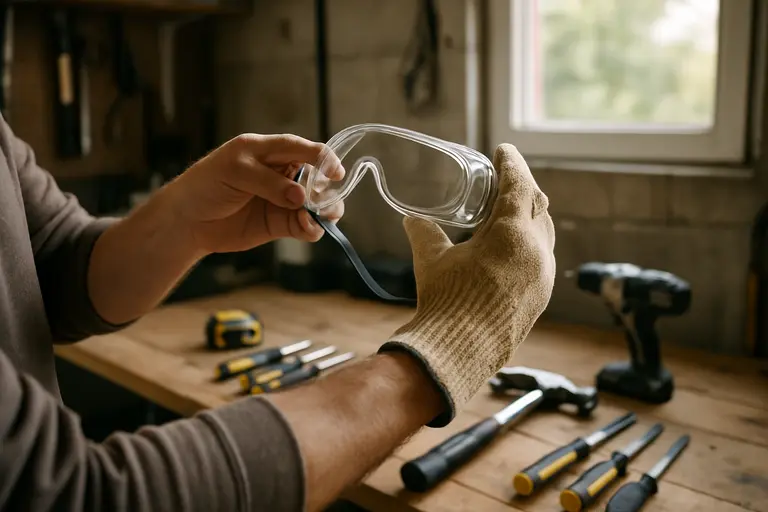
Red Flags That Point Toward A Contractor
Some work should move quickly out of the DIY category. This does not mean a homeowner lacks ability; it means the cost of an error is too high. Projects involving service panels, gas connections, load-bearing changes, hidden water lines, roofing, large-format exterior work, or unfamiliar power tools should be treated with caution. Local permit and code questions should be directed to the proper local authority or a qualified professional rather than guessed from general advice.
Homeowners should also be cautious about partial knowledge. Watching a short demonstration may help someone understand vocabulary, but it does not prove they can diagnose site-specific issues. Older homes, previous repairs, moisture history, and unknown materials can change a project once surfaces are opened. If the plan depends on everything being straightforward, it is not yet a safe plan.
- DIY-friendly candidates: Low-risk cosmetic updates, organization, simple finish changes, and basic prep work.
- Hybrid candidates: Projects where homeowners can prepare, select materials, or finish surfaces after technical work.
- Professional candidates: Work with safety exposure, hidden systems, structural impact, or specialized equipment needs.
Ask Better Questions Before Buying Materials
Before any purchase, ask who is accountable for measurement, installation tolerances, disposal, hidden damage, and final quality. If no one can answer those questions, the project is not ready. In a hybrid project, the contractor should know which tasks the homeowner plans to complete and whether that affects scheduling or workmanship coverage. Clear boundaries reduce conflict and help prevent unsafe improvisation.
Safer DIY Professional Help Decisions
Use The Data As A Planning Check
The Q1 2026 data supports a cautious, practical reading: homeowners still value DIY, but many are using contractors in more selective ways. The rise in hybrid projects shows that the useful question is not “DIY or pro?” It is “which parts belong with whom?” That shift is healthy if it leads to clearer scope, safer work, and fewer unfinished projects.
For a homeowner planning repairs or upgrades after October 22, 2026, the best next step is a written project map. List the work, the risk level, the tools required, the likely disruption, and the point where a qualified professional should take over. DIY professional help works best as a structured decision, not as a reaction to a project that has already become expensive, unsafe, or stalled.