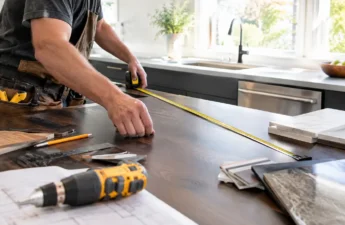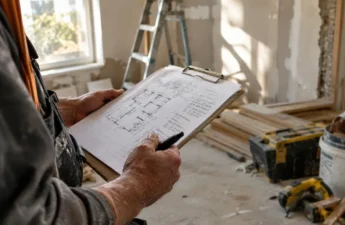
Hybrid DIY projects are becoming a more common middle path for homeowners who want hands-on involvement without taking on tasks that should be handled by licensed or specialized trades. The shift is not just a design preference. It reflects higher project spending, more technical work inside homes, and a practical need to decide which parts of a project are safe for an owner to manage.
The clearest recent signal comes from Q1 2026 research by The Farnsworth Group: only 39% of home improvement activities were completed purely by homeowners with non-paid help, down from 48% in Q1 2025. In the same Q1 2026 period, nearly 46% of homeowners used a mix of homeowner labor and contractor labor, far above the roughly 20% to 26% range seen during 2025, according to Farnsworth’s home improvement trends. That is a large change in a short period, so it deserves a careful reading rather than a hype-driven one.
Why Hybrid DIY Projects Are Gaining Ground
The hybrid labor model appears to be a response to two pressures that can coexist: homeowners still want to save money or contribute effort, but many projects now include work that carries safety, code, warranty, or durability concerns. A homeowner may feel comfortable painting a bedroom, assembling storage, or replacing cabinet pulls, yet hesitate before touching electrical wiring, gas connections, structural framing, roofing, or major plumbing. That hesitation is sensible.
What Hybrid DIY Projects Change For Planning
A mixed-labor project changes the planning sequence. Instead of asking, “Can I do this myself?” the better question is, “Which parts are low-risk enough for me, and which parts require a qualified professional?” That one shift can prevent a project from drifting into unsafe work after demolition has already started.
Farnsworth also reported that in Q1 2026, projects handled entirely by hired professionals fell to 15%, down from 27% in Q4 2025. Read together, these figures suggest many homeowners were not simply rejecting contractors. They were using contractors more selectively, while keeping certain tasks in their own hands.
The Cost Signal Behind The Trend
Spending data supports the same pattern. The Harvard Joint Center for Housing Studies reported that from 2021 to 2023, expenditures on professionally installed home improvements rose 28% in nominal terms, reaching $340 billion. Professionally installed work made up 84.1% of spending on owner-occupied homes, while DIY-only spending fell to 15.9% in 2023, described in the report as a historical low in Improving America’s Housing 2025.
Those numbers do not mean every homeowner should hire out every task. They do show that professional labor remains a major part of home improvement spending, especially where projects require specialized tools, trade knowledge, inspections, or safe coordination between building systems.
Planning Hybrid DIY Projects With Clear Boundaries
For hybrid DIY projects, the safest boundary is set before materials are purchased. Homeowners should write down the full scope, then separate work into three categories: tasks they can safely perform, tasks they can support but not control, and tasks that should be fully assigned to a qualified contractor.
Safe homeowner work often sits in the preparation, finish, and organization stages. Examples may include room clearing, non-hazardous surface prep, painting at safe heights, hardware swaps, simple storage assembly, and product research. Even these tasks require basic caution: follow manufacturer instructions, use personal protective equipment where appropriate, and stop if the work exposes unknown wiring, moisture damage, suspected mold, asbestos-containing materials, or structural concerns.
Professional work belongs in higher-risk categories. Electrical panel work, new circuits, gas lines, major plumbing changes, roof work, load-bearing alterations, window openings, and stair or guardrail changes can affect life safety and may require permits or inspections. Local requirements vary, so homeowners should confirm permit rules with their city or county before work starts. This is not a place to rely on short videos or assumptions from another region.
Where Hybrid DIY Projects Fit Safely
Kitchen refreshes, bathroom updates, basement finishing, laundry room improvements, and outdoor living upgrades can all support a mixed-labor plan if the division of work is clear. A homeowner might handle painting, fixture selection, organization, and cleanup while a licensed or experienced trade handles wiring, plumbing, ventilation, waterproofing, or structural changes. The point is not to reduce the contractor’s role to the bare minimum. The point is to assign each task to the person best suited to do it safely and correctly.
Tool Choices Should Follow The Scope
Tool buying should be tied to the work a homeowner will actually perform. A cordless drill, stud finder, level, respirator, eye protection, hearing protection, and basic hand tools may support many low-risk projects. For comprehensive help in comparing these tools, tool selection resources offer useful guidance for making informed purchasing decisions without assuming every task belongs in the DIY column.
One practical rule is to avoid buying a tool as a substitute for skill. If a mistake could cause fire, flooding, collapse, a fall, or a failed inspection, hiring a qualified professional is usually the more cautious path. The value of a mixed-labor project comes from clear handoffs, not from stretching a homeowner beyond safe limits.
Case Patterns In Home Project Labor
The recent data can be read through a few common case patterns. A cosmetic case is the lowest-risk version: the homeowner repaints, updates hardware, installs shelves, and organizes storage while hiring no trade work or very limited trade work. This remains closest to traditional DIY, but it still benefits from planning, budgeting, and safety checks.
A system-touching case is different. Consider a bathroom or kitchen update where finishes are visible, but plumbing, ventilation, electrical, or waterproofing decisions sit behind the surface. The homeowner may save labor by handling product research, demolition only after hazard checks, painting, or cleanup. The contractor handles the work that affects code compliance, water control, and long-term performance. This is often where the hybrid model makes the most sense.
A high-risk case should lean more heavily toward professional labor. Roof repairs, structural wall changes, service panel upgrades, gas appliance changes, and major drainage corrections are not good candidates for trial-and-error learning. The homeowner can still contribute through planning, documentation, material selections, schedule coordination, and site communication. That contribution has value, but it does not put the household at avoidable risk.
Budget, Quality, And The DIY-Pro Split

Farnsworth’s Q1 2026 data also reported that average spend among those completing projects was $5,368, up from $3,957 in Q1 2025, while average DIY hours were 31, down from 35 in Q1 2025 but higher than in the two prior quarters. That mix is useful: homeowners were spending more while still investing meaningful hands-on time.
Budget planning should account for rework risk. A homeowner who performs a task incorrectly may pay twice: once for materials and again for a professional to correct the issue. On the other hand, a homeowner who takes on well-matched work can free up budget for skilled labor where it matters most. The stronger plan is not always the cheapest plan at the start; it is the one least likely to create unsafe or costly problems later.
Quality expectations also need to be stated early. Contractors may not want to warranty or stand behind work that depends on homeowner-prepared surfaces, owner-supplied materials, or unfinished prep. Homeowners should ask in writing where responsibility starts and ends. Clear sequencing helps too. If a contractor needs access to walls, floors, or ceilings, homeowner finish work should wait until the trade work is complete and inspected where required.
Hybrid DIY Projects As A Practical Case Study
The shift toward mixed labor is best understood as a planning case study in risk control. Homeowners are not abandoning DIY, and they are not handing every decision to contractors. They are dividing projects into safer owner tasks and higher-skill professional tasks, often because cost, project scale, and technical requirements are all rising at the same time.
A cautious homeowner can use the trend constructively. Start with the project goal, list every task, mark the safety risks, check permit needs, and decide where professional skill protects the home. Then reserve homeowner labor for work that is visible, manageable, and unlikely to compromise safety if performed carefully. That balance is where the hybrid model earns its place: not as a shortcut, but as a disciplined way to match labor to risk.