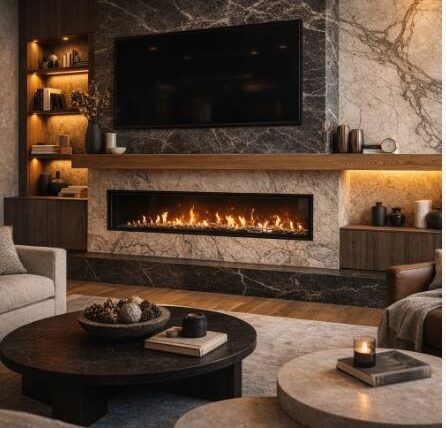
The Modern Hearth: Where Design Intelligence Meets Fire
The fireplace has always been a symbol of comfort, but in today’s homes it has evolved into something far more deliberate. No longer just a source of warmth, the modern fireplace is a statement piece—an architectural anchor that defines a room’s character. When done well, it fits like a custom suit: perfectly proportioned, crafted from the right materials, and designed with foresight so there are no regrets years later.
A thoughtfully designed hearth can transform a space instantly. I’ve seen entire living rooms elevated by a single decision—a wide linear fireplace stretching across a feature wall, commanding attention like a cinematic screen. In those moments, the fireplace isn’t an accessory; it’s the heart of the home.
Proportion First: Designing the Visual Anchor
Before materials or technology enter the conversation, proportion must lead the way. A fireplace that is too small will feel timid, while one that overwhelms the room can feel forced. Scale should respond to ceiling height, wall width, and viewing distance.
Linear fireplaces have become especially popular because they naturally align with modern architecture. Their horizontal emphasis complements open-plan living and wide sightlines. Taller vertical fireplaces, on the other hand, can accentuate ceiling height and work beautifully in spaces that need a strong vertical gesture.
The surrounding feature wall is just as important as the firebox itself. Whether the wall spans floor to ceiling or frames the fireplace more discreetly, its dimensions set the stage. When proportion is right, everything else feels intentional.
Materials That Speak Volumes
Material selection is where the fireplace truly begins to express personality. Choosing between book-matched marble and large-format porcelain slabs isn’t just an aesthetic decision—it’s a lifestyle choice.
Book-matched marble offers unmatched drama. Natural veining mirrored across the surface creates a sense of movement and luxury that few materials can rival. It speaks to those who appreciate organic beauty and are comfortable with materials that age and tell a story over time.
Porcelain slabs, by contrast, deliver consistency and ease. Resistant to heat, staining, and wear, they are ideal for homeowners who want a refined look with minimal maintenance. Advances in manufacturing mean porcelain can convincingly replicate stone, concrete, or even metal, offering design flexibility without compromise.
Beyond stone and porcelain, plaster finishes have reemerged as a favorite for feature walls. Smooth or subtly textured, plaster introduces a softness that feels distinctly European. It pairs beautifully with minimalist interiors, allowing the fireplace to feel sculptural rather than decorative.
Metal cladding pushes the aesthetic in a different direction. Steel, brass, or blackened iron can add an industrial or contemporary edge, reflecting light and creating contrast. Used sparingly or boldly, metal makes it clear that this fireplace is meant to be noticed.
The Feature Wall as a Design Statement
A statement fireplace rarely exists alone. It is part of a larger composition—the feature wall. This wall can unify materials, conceal storage, or integrate shelving and lighting.
When designed thoughtfully, a feature wall guides the eye and organizes the room. Built-in niches, floating shelves, or recessed lighting can add depth without clutter. The key is restraint: every element should support the fireplace, not compete with it.
Texture also plays a critical role. Smooth stone against rough plaster, matte finishes beside subtle gloss—these contrasts create visual interest while maintaining balance. The result is a wall that feels curated rather than decorated.
Technology Meets Tradition
The modern hearth is where old-world charm meets advanced technology. Today’s fireplaces offer options that were unimaginable just a generation ago. Gas, electric, and even advanced bioethanol systems provide clean, efficient heat with precise control.
Smart technology allows homeowners to adjust flame height, temperature, and even color with a remote or smartphone. Safety features such as automatic shut-off, cool-touch glass, and improved ventilation systems ensure peace of mind without sacrificing style.
One of the most debated topics in fireplace design is the television. Placing a TV above the fireplace can work—if designed correctly. Proper ventilation, heat management, and thoughtful placement are essential. Recessed mounting, heat deflectors, and motorized TV lifts are all tools designers use to resolve this common challenge elegantly.
The Mantel: A Subtle but Powerful Detail
The mantel may seem like a minor element, but it often determines whether a fireplace feels complete. In modern designs, mantels are slimmer, simpler, and more integrated. A floating stone shelf, a minimalist wood beam, or even the absence of a traditional mantel can all work, depending on the overall vision.
Custom wood finishes add warmth and contrast, softening stone or metal surfaces. Whether sourced from specialty mills or crafted locally, wood introduces a human touch that balances the precision of modern materials.
Curating, Not Decorating
Every choice made in a fireplace design reflects values. Selecting materials from top stone suppliers, opting for custom fabrication, or investing in advanced technology all signal a commitment to quality and longevity.
This process isn’t about following trends—it’s about curating a space that feels authentic. A well-designed fireplace doesn’t shout; it resonates. It becomes a place people naturally gather, where conversations linger and moments are shared.
The Heart of the Home
Ultimately, the modern fireplace is more than a design feature or a heat source. It is a focal point where safety meets style, where innovation supports comfort, and where tradition is reinterpreted through a contemporary lens.
Your dream fireplace lives at the intersection of bold ideas and careful planning. When proportion, material, and technology align, the result is a hearth that doesn’t just warm the room—it defines it. In that glow, design intelligence meets fire, and the home feels complete.