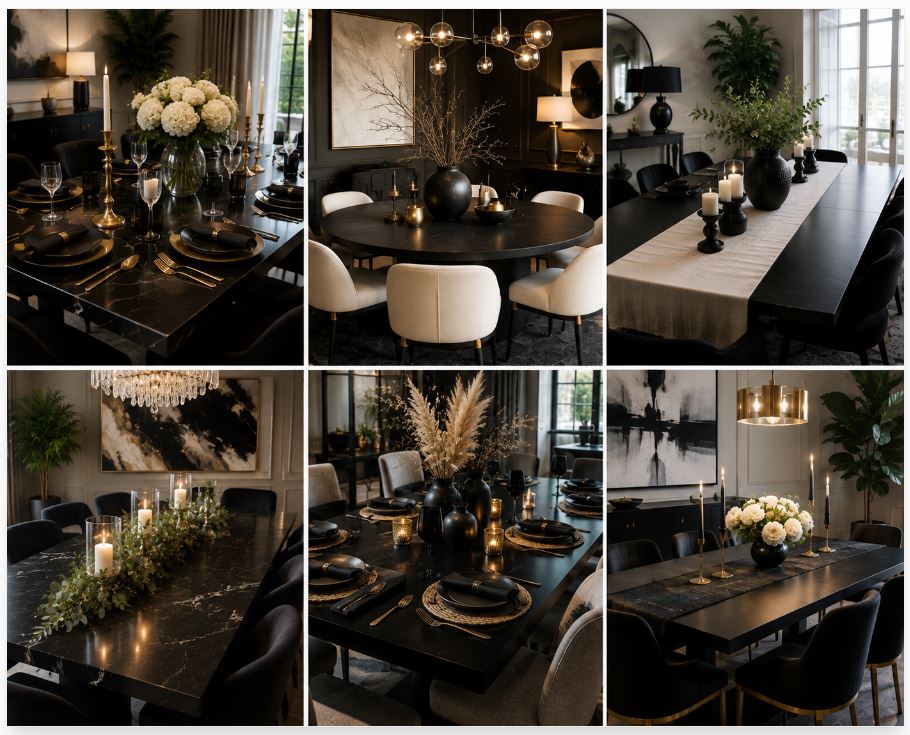
A black dining table acts as a massive architectural anchor in any residential space. This dark surface absorbs ambient light and demands strict attention to visual weight. Decorating this expansive plane requires moving past simple centerpieces. True design success relies on exploiting high-contrast combinations, engineering proper illumination, and introducing textural friction. A dark table provides an uncompromising canvas that exposes poor styling instantly.
The Geometry Of High-Contrast Tablescapes
Placing dark objects on a black table causes them to vanish into the surface. The eye needs clear outlines to register shapes and volume. High-contrast elements solve this optical issue. Crisp white ceramic vases, pale travertine bowls, and bleached wooden trays stand out sharply against an ebonized wood or black marble top. The stark contrast forces the brain to process the precise geometry of the decor.
Spacing dictates the success of these arrangements. Crowding the center of the table creates visual anxiety. Leaving significant negative space between objects allows the black surface to breathe, establishing a calm, orderly aesthetic. A single, oversized sculptural piece often performs better than a collection of smaller items scattered aimlessly across the wood.
Manipulating Light Reflectance On Dark Surfaces
The finish of the black table determines how light behaves in the room. A high-gloss lacquer finish acts like a dark mirror, bouncing light from windows and chandeliers back into the space. Matte finishes absorb light entirely, creating a soft, velvety void that requires focused illumination from overhead fixtures.
The objects placed on the table must balance this reflectance. A matte black table benefits from highly reflective decor, such as polished silver, clear ribbed glass, or unlacquered brass candlesticks. These materials catch the ambient light and add necessary visual activity. A glossy table pairs better with matte ceramics and raw stone, preventing the tablescape from looking too chaotic or aggressively shiny. Reviewing color theory principles helps designers analyze how different material finishes interact with surrounding light sources to create a balanced visual field.
Material Pairings And Textural Friction
A black surface risks looking cold and severe in a residential dining room. Introducing organic textures warms the dining area and makes the severe architecture feel approachable. Heavy linen table runners in oatmeal or soft gray provide an immediate physical barrier between the hard table and the delicate dinnerware. The woven fibers introduce a soft, tactile element that contrasts heavily with the solid black plane beneath it.
Wood accents provide another layer of necessary friction. Placing a long, raw-edge walnut serving board down the center of the table bridges the gap between the dark finish and the surrounding room architecture. The natural grain of the timber introduces organic patterning, breaking up the monolithic quality of the black table and adding deep historic weight.
Metallic Accents And The Application Of Hardware
Metals act as the primary light reflectors on a dark surface. The specific finish chosen for candle holders, flatware, and centerpiece bowls dictates the temperature of the room. Brass and gold tones introduce profound warmth. The yellow undertones of these metals stand out sharply against the black background, creating a classic, highly formal aesthetic.
Silver and polished nickel provide a much cooler, sharper contrast. These metals reflect the surrounding room clearly, adding a sleek, modern edge to the dining arrangement. Selecting a single, dominant metal keeps the visual field organized and prevents the black table from looking cluttered. The weight of the metal pieces must correspond to the thickness of the tabletop.
| Table Profile | Ideal Metallic Pairing | Visual Impact |
| Thick Marble Slab | Heavy Cast Bronze | Grounded, monumental, historic |
| Sleek Glass/Metal | Polished Chrome | Aerodynamic, sharp, highly modern |
| Ebonized Oak | Unlacquered Brass | Warm, organic, patinated |
The Role Of Glassware In Dark Environments
Transparent materials serve a unique geometric function on a black table. Clear glass vases, stemware, and water pitchers provide volume and height with zero visual obstruction. The eye looks straight through the glass to the dark surface below. This transparency prevents the table from feeling overcrowded, even when fully set for a large dinner party.
Smoked or ribbed glass introduces a different dynamic entirely. Ribbed textures distort the light passing through them, casting intricate shadow patterns across the black tabletop. Smoked glass in gray or amber tones blends softly into the dark background, offering a muted, elegant alternative to stark, clear crystal. The placement of glass elements near candle flames or ambient light sources maximizes their reflective potential, adding movement and energy to the static dining arrangement.
Structural Dynamics Of Floral Centerpieces
Organic elements bring temporary life to the static dining environment. The black table provides a dramatic theatrical backdrop for floral arrangements. Saturated colors pop aggressively against this dark canvas. Deep burgundy branches, bright chartreuse foliage, and pure white blooms command immediate attention and draw the eye directly to the center of the room.
The scale of the botanical arrangement must match the scale of the room and the table itself. A massive, ten-foot-long table easily accommodates three large glass cylinders filled with towering cherry blossoms. A compact, round black table requires a low, subdued arrangement that permits guests to maintain eye contact across the surface. The container holding the flora carries equal weight. Heavy cast iron urns or aged terracotta pots ground the arrangement, preventing the flowers from looking too fragile against the heavy table base.
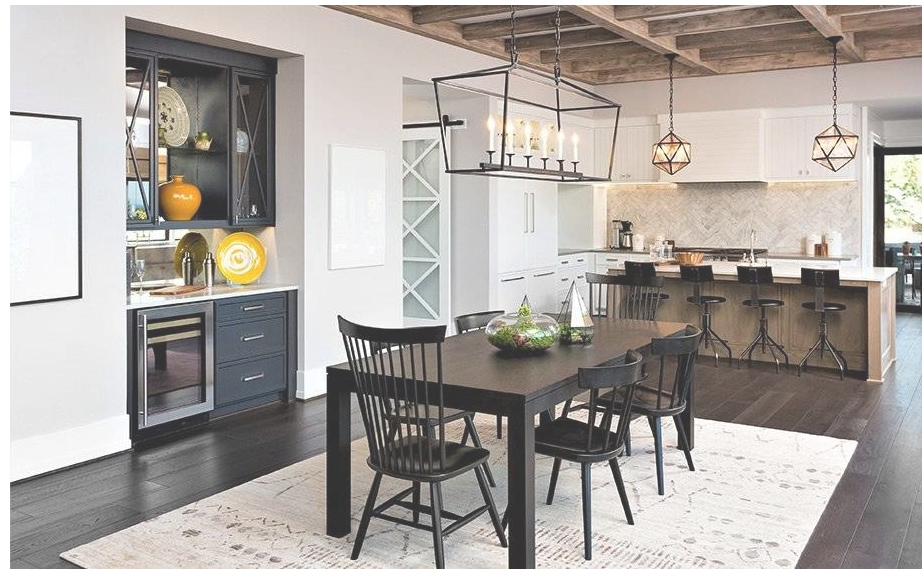
Integrating The Table With Custom Architecture
The dining table does not exist in a vacuum. It interacts continuously with the surrounding structural elements. The styling of the table must directly reference the millwork and spatial geometry of the room. A room featuring heavy, dark wainscoting requires table decor that echoes that specific historical gravity.
Executing a cohesive interior relies heavily on the initial framing and design phases. Homeowners aiming for absolute consistency often rely on experts in custom home building to manage the tight tolerances between the architectural envelope and the final interior styling. A well-planned dining room aligns the central chandelier directly over the table’s exact center, creating a flawless geometric axis for all subsequent decor placed on the dark surface.
Seasonal Transitions Grounded In Neutrality
A black dining table offers extreme versatility as the calendar shifts. The dark baseline allows for dramatic seasonal adjustments without requiring new furniture. The table accepts shifting color palettes effortlessly.
Autumn transitions rely on introducing heavy, dried botanicals, forged iron candelabras, and muted amber glassware. Winter arrangements feature stark white taper candles, silver serving pieces, and deep evergreen branches that provide stark contrast against the black surface. Spring styling strips away the heavy metals, replacing them with pale linens, clear glass vases, and vibrant green stems. The table acts as a permanent, reliable anchor as the transient decor reflects the changing outdoor environment perfectly.