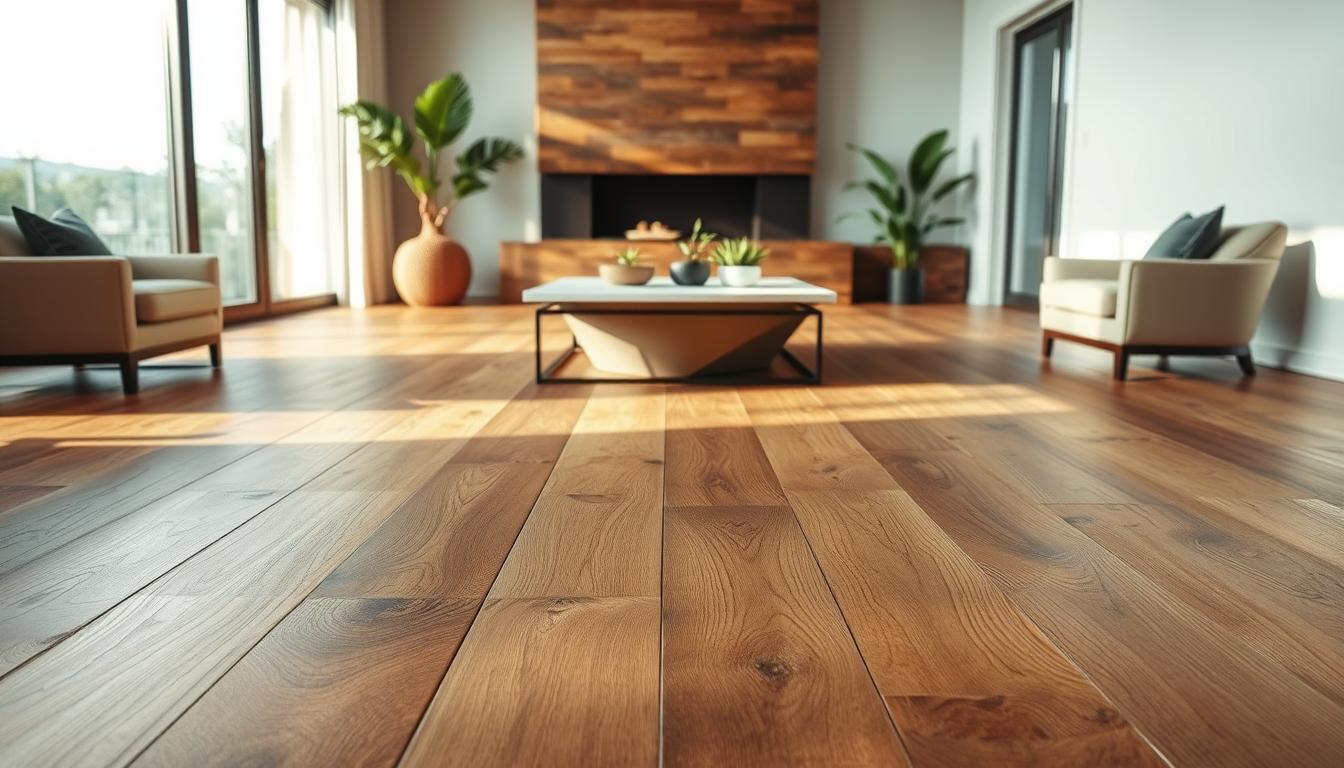
The term “sustainable” is often used loosely in flooring. But what does it really mean? Is it just about making floors look good, or is there more to it? True sustainability means looking at a material’s whole life cycle.
Many floors come with hidden costs, affecting both your wallet and the planet. The cement industry, for example, is a big polluter, emitting about 8 percent of greenhouse gases. On the other hand, floors made from renewable materials are better for the environment and air quality.
It’s not just about being eco-friendly. It’s about making smart choices for the long run. A terrazzo floor can last for decades, while cheap vinyl might harm the environment. Choosing wisely is essential, not just a trend.
Reclaimed Timber: Sourcing, Grading, Fumigation, Stability, and Story Value
Walking on reclaimed timber is like stepping into a story. Each plank has a history, from old rickhouses to factory beams. Finding this wood is like solving a mystery, where the wood’s past is more important than its type.
Grading reclaimed timber is key. A “rustic” grade might sound nice, but it could mean the wood is weak. You want wood that looks good and lasts long, not wood that’s falling apart.
Fumigation is the not-so-glamorous part. It involves baking the wood in a kiln, which uses a lot of energy. This method kills pests, but it also raises questions about its environmental impact. Is it really worth it in today’s world?
But reclaimed timber is stable. It has been weathered for years, so it doesn’t warp or cup. This means it will stay strong, even when your home’s humidity changes.
The story value of reclaimed timber is real. It adds depth and history to your space. Each piece tells a story that factory-made wood can’t match. It’s not just flooring; it’s a piece of history.
| Aspect | Description | Benefits |
|---|---|---|
| Sourcing | Finding timber from old structures | Unique character and sustainability |
| Grading | Assessing quality and structural integrity | Ensures durability and aesthetic appeal |
| Fumigation | Eliminating pests through kiln-baking | Protects wood but has energy costs |
| Stability | Resistance to warping and cupping | Reliable performance in various conditions |
| Story Value | Cultural and historical significance | Enhances the narrative of your space |
Terrazzo: Cement vs. Epoxy, Recycled Aggregates, and Precast Stair Pieces
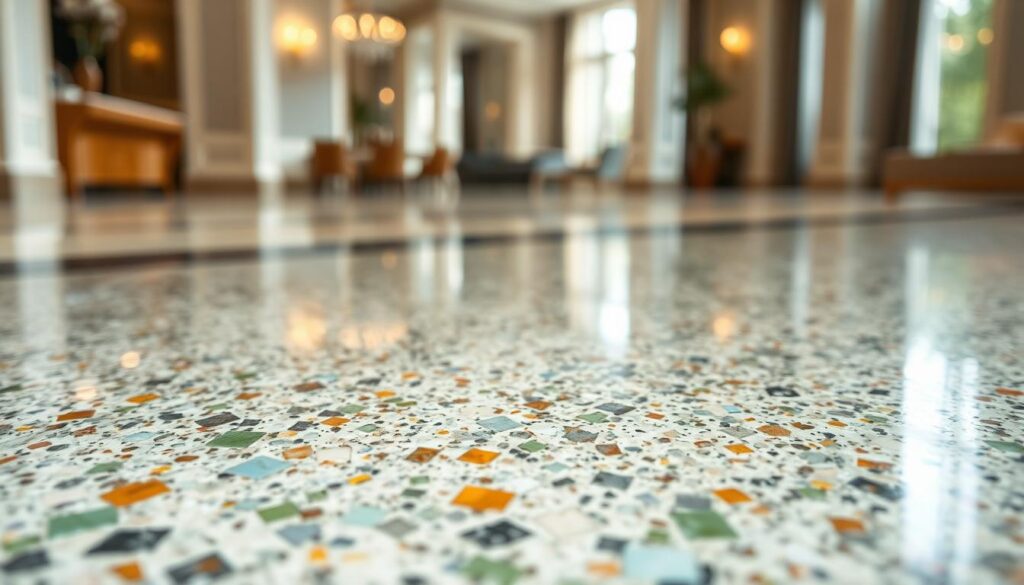
Step onto terrazzo and discover a story of recycled beauty. This flooring is a blend of recycled marble, granite, quartz, and terrazzo recycled glass. It turns waste into a durable, polished surface.
Choosing between cement and epoxy terrazzo is like picking between a heavy meal and a light salad. Cement terrazzo has a big carbon footprint, while epoxy terrazzo is lighter but made from petrochemicals. Are we just swapping one problem for another?
The real win is in the recycled materials. Terrazzo uses glass from broken bottles, marble scraps, and even mother-of-pearl. This mix is a key part of the circular design movement.
Precast terrazzo stairs are a game-changer. They arrive ready to install, cutting down on waste and VOCs. It’s like getting a custom-made suit versus a smartly altered one—both look great, but one is quicker.
| Feature | Cement Terrazzo | Epoxy Terrazzo |
|---|---|---|
| Carbon Footprint | High | Moderate |
| Durability | Very High | High |
| Installation Time | Long | Short |
| Recycled Content | Variable | High |
Cork and Bamboo: Modern Aesthetics, Durability, Acoustics, and Healthy Binders
Cork and bamboo flooring might just be the eco-friendly heroes we didn’t know we needed. These materials are stylish and come with many benefits. They are perfect for modern homes and focus on sustainability.
Cork is a natural wonder, harvested from the bark of the cork oak without harming the tree. This makes it very sustainable. Cork has tiny air pockets that help with sound insulation, great for apartments or quiet homes. It’s also antimicrobial and hypoallergenic, fighting mold and dust mites.
Bamboo is a sustainable superstar, maturing in just five years. But, the manufacturing process can be mixed. Look for bamboo with healthy binders like soy-based or formaldehyde-free resins to keep your air quality good.
Both cork and bamboo have evolved in looks. Today’s cork comes in various stains and textures, from stone to hardwood. Bamboo offers a sleek, modern look that can elevate any space.
| Feature | Cork | Bamboo |
|---|---|---|
| Sustainability | Harvested without tree damage | Fast-growing grass, but check adhesives |
| Sound Insulation | Excellent, naturally soundproof | Moderate, depending on construction |
| Health Factors | Antimicrobial and hypoallergenic | May contain VOCs if not sourced carefully |
| Aesthetic Options | Variety of textures and colors | Sleek, modern finishes available |
In conclusion, whether you prefer cork’s cozy acoustics or bamboo’s sleek modernity, both offer style and sustainability. Just make sure to check the binders in bamboo products for a truly eco-friendly choice.
Certification Map: FSC, FloorScore, Greenguard, HPD, and WELL Links
Understanding eco-certifications can be like solving a spy thriller. Each label claims to make the world better. But do they really? Let’s explore.
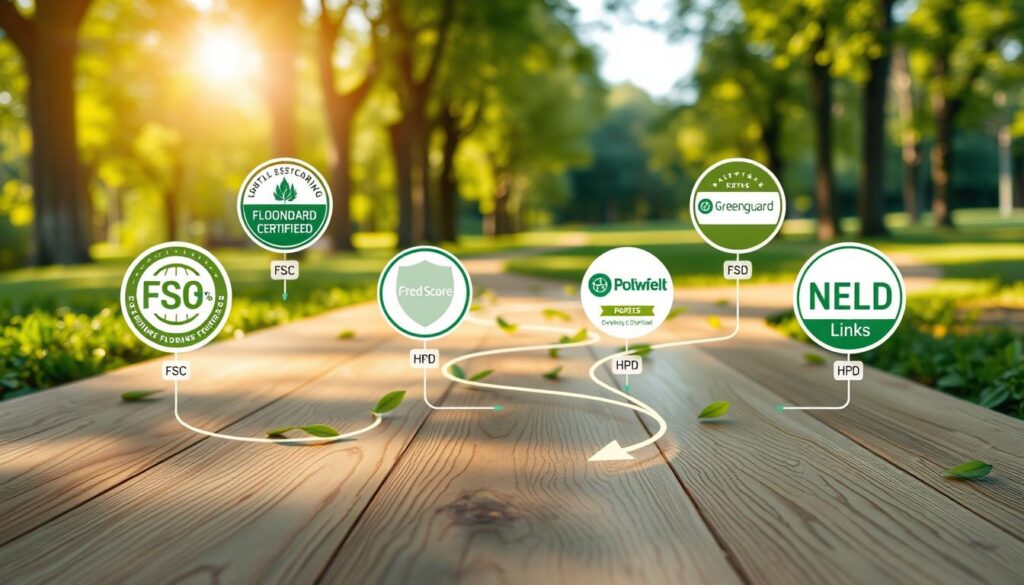
The Forest Stewardship Council (FSC) is a must for wood products. It ensures forests are managed well, avoiding clear-cutting and promoting sustainability. If you’re picking hardwood flooring, FSC is key. Without it, you’re risking the planet.
FloorScore and Greenguard Gold focus on volatile organic compounds (VOCs). They check for thousands of chemicals to keep your flooring safe. A Greenguard Gold label means a product meets strict emissions standards. But, remember, don’t lick the floor!
Health Product Declarations (HPDs) and Environmental Product Declarations (EPDs) offer deeper insights. An EPD is like a nutrition label for building materials. It shows the environmental impact from start to finish. This data helps earn LEED v4.1 credits. Without an EPD, you’re trusting the manufacturer too much.
The WELL Building Standard connects flooring to human health. It considers sleep quality and brain function. Choosing the right flooring is about health, not just the planet.
| Certification | Focus Area | Key Benefits |
|---|---|---|
| FSC | Wood Sourcing | Responsible forest management |
| FloorScore | VOCs | Improved indoor air quality |
| Greenguard Gold | Emissions | Low chemical exposure |
| HPD | Transparency | Comprehensive health data |
| EPD | Lifecycle Impact | Informed sustainability choices |
Design Without Compromise: Luxe Palettes and Textures
Why choose between style and sustainability? The world of sustainable eco flooring luxury offers stunning designs that prove you can have both. Imagine walking into a room with rich colors and textures that are both elegant and eco-friendly.
Today’s sustainable flooring is a true showcase of creativity. Polished concrete, for example, has evolved from a simple gray slab to a variety of finishes. A light grind can reveal a salt-and-pepper look, while a deeper grind shows larger stones, adding depth to your space.
Then there’s terrazzo, a flooring option as unique as you are. With endless design choices, terrazzo floors tell your story. They can be as bold as your personality, all while being good for the planet. Terrazzo’s marble chunks resemble abstract art, making each floor a masterpiece.
Reclaimed timber also brings unique textures to the table. Each piece has its own history, with marks and holes that tell stories. This texture offers a sensory experience that artificial products can’t match. You can have a floor that feels like a gallery, all while being eco-friendly.
In today’s design world, people want floors that are both stylish and sustainable. The design community now sees that luxury and eco-friendliness can go hand in hand. Here are some tips for choosing your sustainable flooring:
- Color Palettes: Choose deep colors like carbonized bamboo charcoals or jewel tones in linoleum.
- Unique Textures: Look for materials that show off natural beauty, like polished concrete with exposed aggregates.
- Personalization: Pick materials that let you create custom designs, like terrazzo, to reflect your style.
- Historical Value: Use reclaimed materials to add character and a story to your space.
The message is clear: you don’t have to give up luxury or style for sustainability. The world of sustainable eco flooring luxury is vibrant, diverse, and ready to enhance your home.
For more on eco-friendly flooring, check out this article on green living and sustainable interior design.
Installer Training and Mockups to Reduce Waste and Callbacks
Skilled installers are key to reducing flooring waste. The best eco-friendly materials won’t help if installed poorly. I’ve seen FSC-certified wood wasted because the layout was off.
Installer training and mockups are vital. They help avoid waste by preventing it. A mockup is like a rehearsal for your floor. It checks if the installer knows the pattern and details before starting.
For materials like terrazzo or epoxy, a small mistake can cause big problems. A wrong move can lead to costly failures. This means more waste and more trips to the site.
Good training teaches installers about adhesives and materials. It’s key for LEED certification. It helps achieve a 75% waste reduction goal.
| Training Aspect | Importance | Impact on Waste Reduction |
|---|---|---|
| Material Knowledge | Understanding material properties | Reduces miscalculations |
| Installation Techniques | Proper methods for each material | Minimizes errors |
| Mockup Processes | Visualizing layout and transitions | Prevents costly mistakes |
Owner Manuals: Care Products, Reseal Cadence, and the Stain Playbook
Having a luxury floor without a care manual is like giving a teenager a sports car. It’s a recipe for disaster. Keeping your eco-friendly floor in top shape is not just about looks. It’s about keeping its value and story alive.
Let’s talk about resealing your floor. A cork floor in a sunny kitchen needs more frequent resealing than a limestone entryway. Not doing so can cause it to wear out faster, which is bad for the environment.
Now, let’s look at the “Stain Playbook.” Imagine red wine spills on your limestone floor. Don’t reach for vinegar right away. It can damage the stone. Instead, use biodegradable cleaners that are safe for the environment.
Did you know refinishing hardwood floors can cut down its carbon footprint by over 75%? This is true if you avoid using harsh chemicals. Your owner’s manual should guide you on how to care for your floor without harming the planet.
In summary, a good owner’s manual should include:
| Care Product | Recommended Use | Reseal Frequency |
|---|---|---|
| Water-based Polyurethane | For cork and hardwood floors | Every 1-3 years |
| pH-neutral Cleaner | For daily cleaning | As needed |
| Stone Sealant | For limestone and travertine | Every 2 years |
With the right care products and a bit of effort, your eco-friendly floor will stay beautiful and functional for years. So, take good care of your floor. A little maintenance can make a big difference.
Cost and ROI: Incentives, Rebates, Durability Math, and Resale Boost
The high cost of sustainable flooring can be a challenge. But, it’s more than just the price. Sustainable flooring is a long-term investment in durability and health.
Think about this: a $5-per-square-foot cork floor lasts 40 years. This is cheaper over time than a $2 vinyl plank that only lasts 10 years. This shows the value of choosing durable options.
Resale value also matters. Homes with eco-friendly flooring and finishes sell better. They show that the home is stylish and safe. This trend is growing, with the hardwood market expected to grow by 4.3% each year.
There are also financial benefits. Commercial projects can get tax breaks and rebates for using sustainable materials. These incentives help make sustainable choices more affordable.
The return on investment is more than just money. It includes saving on replacement costs and improving indoor air quality. Plus, you’ll feel good knowing your floor is eco-friendly.
| Flooring Type | Initial Cost per Sq Ft | Expected Lifespan (Years) | Lifecycle Cost |
|---|---|---|---|
| Cork | $5 | 40 | $0.125 |
| Vinyl | $2 | 10 | $0.20 |
| Engineered Hardwood | $10 | 30 | $0.333 |
In conclusion, the cost of sustainable flooring may seem high at first. But, the long-term benefits are worth it. It’s time to see flooring costs in a new light and choose a sustainable path.
Spec Template with Sustainability Attributes and Bid Alternates
Creating a solid spec template for sustainable eco flooring is key. Architects and designers want clear, detailed specs. But many specs are vague and lack real meaning.
Each flooring type needs specific sustainability details. Ask for an Environmental Product Declaration (EPD) for carbon content. Also, request a Health Product Declaration (HPD) for material transparency and VOC test results from FloorScore or Greenguard Gold.
Don’t just ask for “recycled content.” Specify the percentage and type, like post-consumer or post-industrial.
Bid alternates can spark competition and new ideas. Start with a base bid for standard engineered wood. Then, offer Alternate #1: an FSC-certified, formaldehyde-free option with an EPD.
Alternate #2 could be domestic, reclaimed timber with a story value addendum. This approach turns procurement into a chance for market change.
By making manufacturers like HMTX Industries and Forbo prove their claims, we raise the bar for sustainable flooring. This ensures the floor is not just beautiful but also well-thought-out. A spec template like this doesn’t just meet a need; it changes the market.


