A vintage rocking chair is a modest object, but Bette Midler’s 1980s New York City apartment shows how one well-chosen piece can carry a room’s character without making the whole interior feel dated. Homes & Gardens reported that Midler’s apartment featured a distinctive bamboo rocking chair and connected it to the 2026 interest in “grandma chic,” a nostalgic style that blends older furnishings with current living needs Homes & Gardens. The useful lesson is not that every home needs a celebrity-inspired accent. It is that vintage seating has to earn its place through proportion, condition, comfort, and a clear relationship to the rest of the room.
The published research does not provide a full floor plan, product maker, exact chair dimensions, or construction details for Midler’s piece. That limits how far any case study can go. Still, the apartment example is strong enough to support a practical design discussion: a single antique or upcycled furnishing can add warmth and memory to a modern interior, provided it is not treated as a fragile prop. For homeowners and renters, the question is less about copying a look and more about deciding whether an older chair is structurally sound, suitably placed, and compatible with daily routines.
Why A Vintage Rocking Chair Works In A Modern Room
What The Vintage Rocking Chair Signals
A vintage rocking chair brings motion, texture, and memory into a room. Midler’s bamboo example matters because bamboo is a natural material with a lighter visual weight than many heavy upholstered antiques. In a contemporary apartment, that kind of chair can soften straight lines, polished surfaces, and newer construction finishes without asking the homeowner to redesign the entire room around a period theme.
The “grandma chic” label can sound decorative on the surface, but the practical design idea is broader. It reflects a preference for furniture with evidence of age, personal association, and visual variety. Homes & Gardens linked the style to nostalgic and whimsical interiors, and cited designers Rebecca Hughes and Laura Hammett on the value of vintage furnishings for character, depth, and lasting appeal. That is a cautious but useful point: older furniture can do more than fill space if it contrasts with newer pieces in a controlled way.
Why One Strong Piece Is Usually Enough
The risk with retro revival is overcorrection. A room can quickly move from collected to cluttered if every object competes for attention. Midler’s bamboo rocker is best read as an accent with a clear job: it provides a visible vintage note while remaining a functional seat. That approach is easier to manage than filling a room with unrelated antiques.
For a homeowner testing this idea, one rocking chair near a window, reading lamp, or conversation area is often a more disciplined choice than a full set of period furnishings. Keep the surrounding pieces quieter: a plain side table, a solid-color cushion, or a simple rug can help the older item read as intentional rather than leftover. If the chair will be used daily, comfort should be judged in real time. Sit in it, check the height, and consider whether the rocker movement interferes with nearby furniture, pets, children, or foot traffic.
Safety And Condition Checks Before Styling
Inspect The Frame Before You Buy
A vintage piece should be evaluated before it becomes part of a living room, nursery, porch, or rental property. With a rocker, the frame, joints, runners, seat support, and any woven elements matter because the chair moves under load. A loose arm, cracked runner, or weakened seat is not just a cosmetic issue. It can cause tipping, pinching, or sudden failure. If the chair has obvious structural damage, a qualified furniture repair professional is the safer path than a quick cosmetic refresh.
Bamboo, wicker, and similar natural materials deserve special caution because their condition is not always obvious from a distance. Dryness, splits, broken wrapping, or soft spots can change how the chair performs. The research identifies Midler’s chair as bamboo, but it does not state its age, maker, or restoration history. That uncertainty is a reminder not to assume that any antique rocker is ready for daily use simply because it photographs well.
Plan The Clearance Around Movement
A stationary lounge chair needs less clearance than a rocker. The runners move forward and backward, and the seated person shifts weight while using it. Leave practical breathing room behind and in front of the chair, especially near glass doors, low tables, fireplaces, stairs, and children’s play zones. If the chair sits on a hard floor, test whether it drifts during use. If it sits on a rug, check that the rug does not bunch under the runners.
Outdoor use calls for extra judgment. Homes & Gardens notes that rocking chairs are gaining attention indoors and outdoors, with modern versions using materials such as wicker, eucalyptus, and nautical-grade rope. That does not mean every antique or vintage rocker belongs on an uncovered patio. Moisture, sun exposure, and temperature swings can damage older natural materials. A covered porch, sunroom, or protected corner may be more realistic than full exposure. For vacation homes and weekend properties, resources like Weekendervillas.com can offer valuable insights into how seating arrangements can complement casual gathering spaces.
Blending Old And New Without Forcing The Room
Use Contrast With Restraint
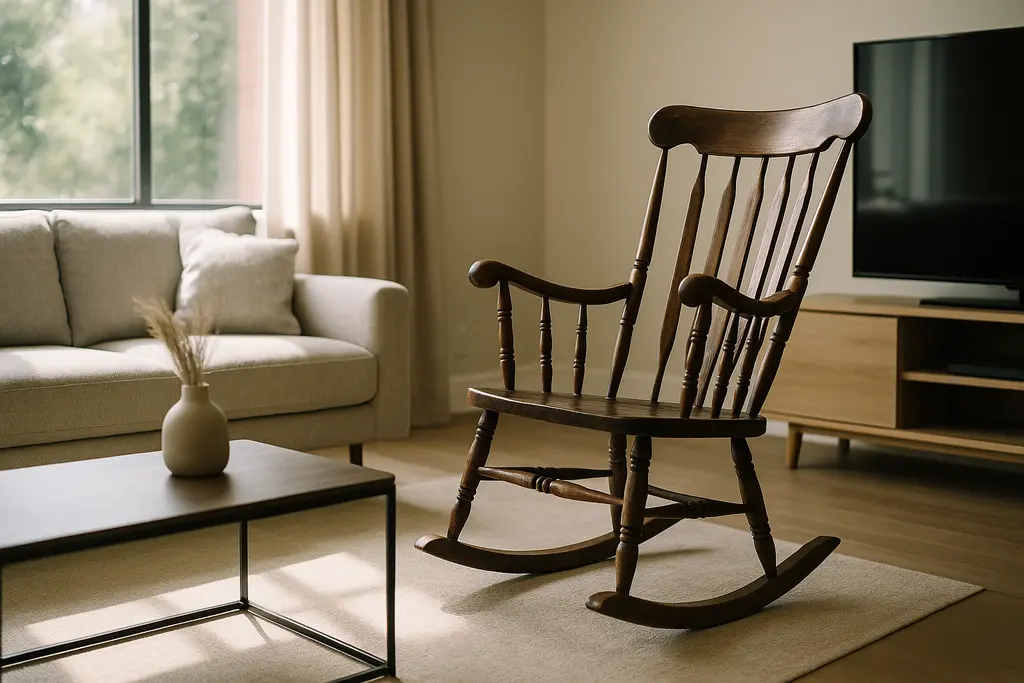
A vintage rocking chair can be paired successfully with modern interiors when contrast is planned, not scattered. A bamboo rocker beside a clean-lined sofa creates a useful difference in material and silhouette. The chair’s curved runners and woven or cane-like details can offset boxier furniture. The key is to repeat one or two related notes elsewhere, such as a natural-fiber basket, a warm wood side table, or a linen shade. Repetition should support the chair, not create a theme room.
Color also needs discipline. If the chair has a warm natural finish, surrounding it with too many competing wood tones may make the room feel unresolved. A neutral cushion can make the chair more comfortable while keeping the form visible. Pattern can work, but it should be chosen with the room’s existing rugs, art, and upholstery in mind. The goal is an interior that feels layered and usable, not staged around a single nostalgic cue.
Respect Modern Living Needs
The research frames “grandma chic” as a blend of vintage aesthetics and modern needs. That second half should not be ignored. A rocker used for reading needs lighting. A rocker used on a porch needs weather-appropriate surroundings. A rocker used in a family room needs enough clearance and a fabric or cushion choice that can handle ordinary wear. If the chair is decorative only, place it where it will not block circulation or tempt unsafe use.
For renters, the strategy can be low-impact. A chair, cushion, small table, and lamp can create a vintage corner without construction. For homeowners planning a remodel, built-in decisions should still come first: outlet locations, lighting, flooring transitions, and traffic paths affect whether an accent chair feels convenient or awkward. If any project involves electrical changes, structural work, or exterior modifications, hire licensed professionals and check local requirements rather than treating the chair placement as an isolated design decision.
What The Midler Case Suggests About Design Value

Character Is Not The Same As Clutter
Midler’s apartment example is useful because it shows character coming from a specific furnishing rather than from excessive decoration. A rocking chair has a recognizable cultural association with porches, older homes, and slow domestic rituals. In a city apartment, that association becomes more noticeable. It adds a human quality to the room because the object implies use: sitting, rocking, reading, talking, or resting.
That experiential quality is part of why rocking chairs are being discussed again. Homes & Gardens describes them as returning as standout design elements and ties their renewed appeal to both appearance and experience. A chair that invites someone to sit is different from an object that merely fills a corner. Still, the experience depends on comfort and safety. A beautiful rocker that feels unstable will not deliver long-term value.
Upcycling Needs Honest Assessment
The research also points to growing interest in upcycled and antique furniture among Millennials and Gen Z. That preference can be positive because it encourages reuse and personal expression. Yet upcycling should not mean ignoring condition, scale, or maintenance. Refinishing, re-caning, cushion replacement, and frame repair can all add cost and effort. Without a professional assessment, it may be hard to know whether an older chair is a simple refresh or a repair project.
Before buying, ask basic questions: where will the chair go, who will use it, does it rock evenly, are the joints tight, and will the material tolerate the chosen location? This is not about discouraging vintage purchases. It is about separating a smart design decision from an impulse buy that becomes unsafe, uncomfortable, or expensive to restore.
Applying The Vintage Rocking Chair Case Study At Home
The strongest takeaway from Midler’s bamboo rocker is that old and new design can work together when the older piece has a defined role. A vintage rocking chair should not be chosen only because a trend says it is fashionable. It should fit the scale of the room, support the way people actually sit, and remain sound enough for its intended use.
For a practical room plan, start with the chair’s job. If it is for reading, place it near steady light and a small surface for a book or drink. If it is for a porch, protect it from harsh exposure unless the material and finish are suitable for outdoor conditions. If it is mainly decorative, be honest about that and avoid placing it where guests assume it is a sturdy everyday seat. The Midler case works because the chair appears as a confident design note, not as a forced period statement. That restraint is the part worth carrying into modern homes.