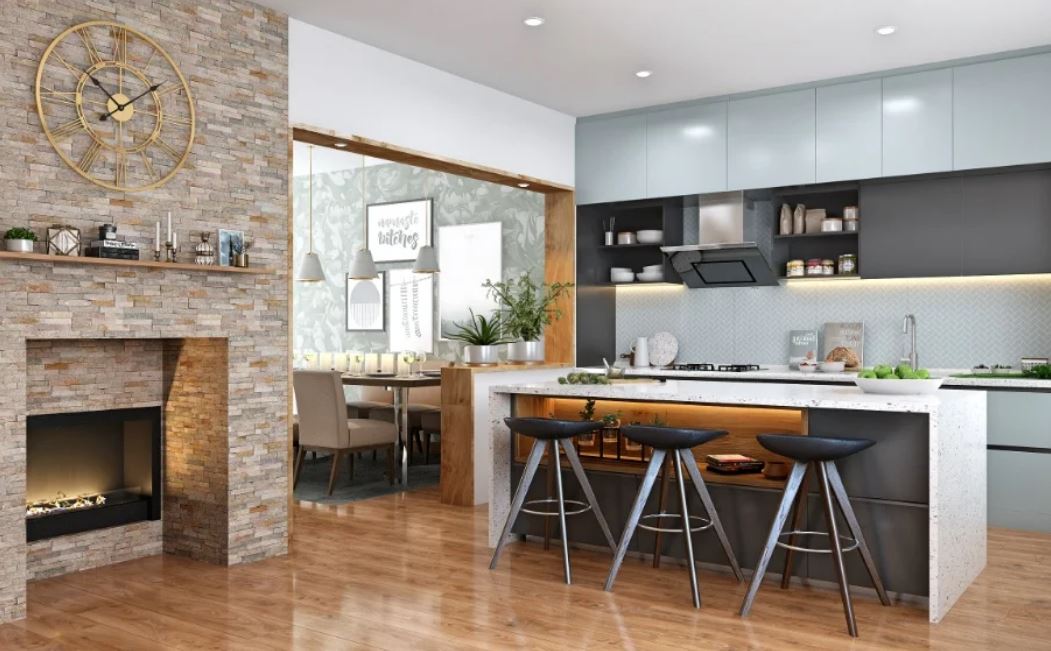
Light-colored kitchen considerations
The culinary demands of Indian cuisine place a severe test on residential interiors. High-heat oil frying and heavy pigment spices like turmeric create a hostile surface environment. Therefore, executing a successful white kitchen design requires strict adherence to material science. Specifying porous natural stone or matte cabinetry in this workspace would cause permanent staining within weeks. A pristine, functional kitchen setup demands engineered surfaces, robust ventilation, and thoughtful spatial zoning.
Countertop Engineering For Pigment Resistance
The horizontal work surface endures the most physical and chemical abuse. In white kitchen design, traditional white marble fails instantly under Indian cooking. Natural marble acts like a hard sponge. Turmeric paste or acidic tamarind spills penetrate the porous stone. They create permanent yellow and brown scars.
Engineered quartz provides the baseline solution for a white aesthetic. Manufacturers crush natural quartz crystals and bind them with polymer resins under intense pressure. The resulting slab features a non-porous surface that repels liquid stains. Hot oil splatters wipe away cleanly without penetrating the material.
Sintered stone represents the absolute peak of high-performance white countertops. Brands like Dekton manufacture these slabs by mimicking tectonic pressure, fusing natural minerals without using synthetic resins. The resulting surface ignores extreme heat, acid, and heavy spice pigments entirely. You can place a burning hot cast-iron kadhai directly on a white sintered stone surface without leaving a scorch mark.
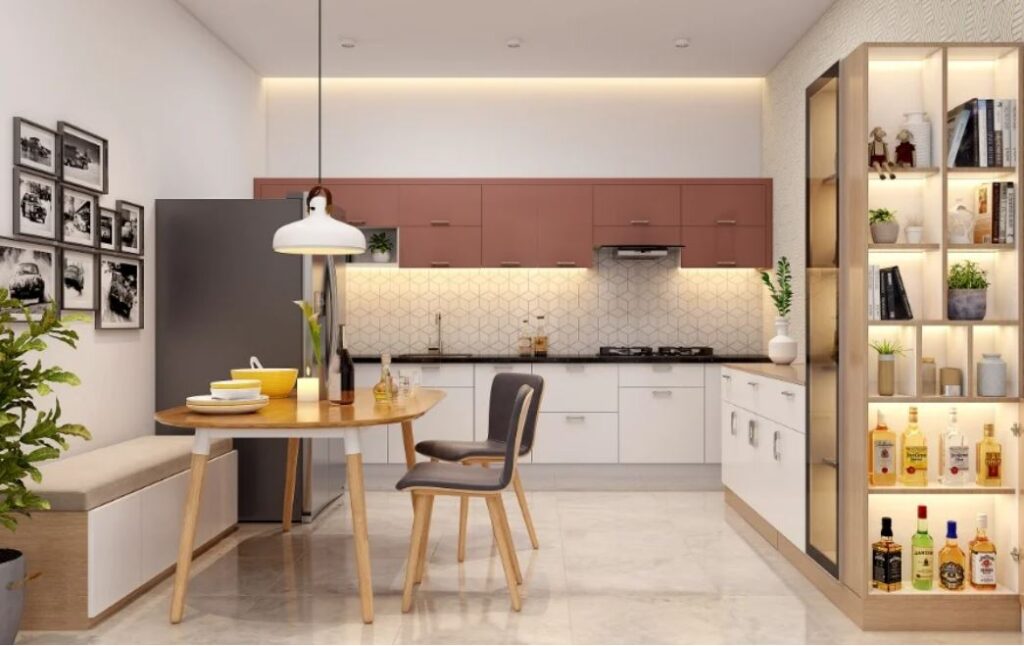
| Material Type | Porosity | Heat Resistance | Stain Resistance (Turmeric/Oil) |
| Natural Carrara Marble | High | Medium | Poor |
| Engineered Quartz | Zero | Medium | Excellent |
| Sintered Stone (Dekton) | Zero | Extreme | Flawless |
Cabinet Finishes That Reject Grease And Oil
Cabinet doors occupy the largest visual footprint in the room. Airborne grease from deep-frying settles directly on these vertical planes. Choosing a matte white finish creates a massive maintenance liability. Matte surfaces feature microscopic ridges that trap oil and dust, turning crisp white cabinets into a sticky, yellowed mess over time.
High-gloss acrylic offers the superior mechanical defense against airborne cooking grease. The perfectly smooth, mirror-like finish prevents oil from bonding to the cabinet door. A simple microfiber cloth and mild soapy water remove residue instantly. High-pressure laminates (HPL) provide a highly durable alternative for budget-conscious projects. Specifying a glossy laminate guarantees the surface remains easy to scrub. Polyurethane (PU) paint applied in a high-gloss finish provides a seamless, edge-free surface that stops oil from settling into joint cracks.
High-Performance Backsplash Architecture
The vertical wall space directly behind the stovetop catches the most aggressive oil splatters. Installing small, intricate mosaic tiles here creates a structural flaw. Standard cement-based grout absorbs liquids rapidly. The white grout lines will turn brown and yellow after a single week of heavy cooking.
A continuous slab backsplash eliminates grout lines completely. Extending the engineered quartz or sintered stone from the countertop straight up the wall creates a seamless, impenetrable barrier. Back-painted glass offers another brilliant architectural solution for a white aesthetic. Large panes of tempered glass installed over a white painted wall provide absolute stain resistance. The glass wipes clean effortlessly and reflects ambient light, making the entire kitchen feel vastly larger.
Moreover, evaluating the material standards published by the National Kitchen & Bath Association (NKBA) helps builders select specific non-porous backsplashes that meet rigorous commercial sanitation requirements.
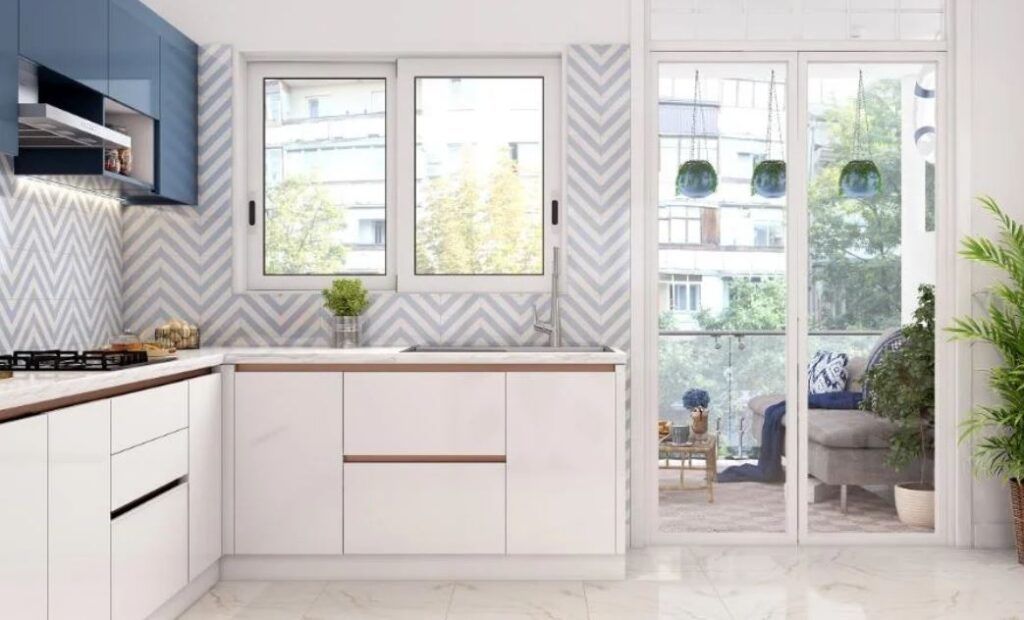
Mechanical Ventilation And Odor Extraction
A white kitchen requires more than surface protection. The mechanical extraction of smoke, atomized oil, and heavy spice odors dictates the long-term cleanliness of the entire house. Standard recirculating hoods fail completely during intense Indian cooking. They trap minimal grease and blow the remaining smoke straight back into the room.
A high-capacity ducted chimney serves as a mandatory structural component. The motor must pull a minimum of 1200 cubic meters of air per hour (m3/hr) to handle heavy frying and tempering (tadka). Baffle filters perform best in this environment. The overlapping curved steel panels force the rising smoke to change direction rapidly. The heavy grease particles separate from the air and drop down into a removable collection tray. The clean air vents completely outside the building envelope.
Positioning the hood correctly dictates its efficiency. The bottom of the baffle filter must sit exactly twenty-four to thirty inches above the cooking surface. Placing the hood any higher allows the atomized oil to escape into the room and settle onto the white cabinetry.
Spatial Zoning With The Wet And Dry Kitchen Concept
Modern Indian residential architecture solves the problem of heavy cooking through structural segregation. The open-concept white kitchen serves as a beautiful social hub, leaving actual heavy food preparation out of sight.
The dual-kitchen layout splits the culinary function into two distinct zones. The “dry” kitchen faces the main living area. It features the pristine white countertops, integrated coffee machines, and casual seating. The “wet” kitchen sits entirely enclosed behind a door, often adjacent to the utility area. This secondary room houses the heavy-duty gas burners, deep sinks, and industrial ventilation required for intense cooking.
Individuals executing massive structural remodels rely on experts in custom home building to integrate this dual-kitchen floor plan correctly. The plumbing, gas lines, and HVAC ducting must route through both zones flawlessly. This architectural division allows the homeowner to enjoy a flawless white entertaining space, leaving the chaotic, staining environment of daily cooking hidden behind closed doors. Precision in material selection and spatial planning guarantees the white aesthetic survives decades of heavy culinary use.