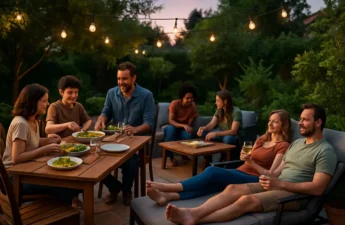
Comfortable Outdoor Living is becoming less about a decorative backyard and more about everyday use. The 2026 U.S. Houzz Outdoor Trends Study, fielded April 25-May 6, 2026 among 1,191 homeowners, found that 83% of renovated outdoor spaces included a lounge or seating area, according to the Houzz outdoor trends study. For homeowners, that points to a practical shift: seating, lighting, shade, fire safety, storage and professional planning now deserve as much attention as plant selection or surface finishes.
Why Comfortable Outdoor Living Is Driving Projects
The study suggests homeowners are prioritizing personal use over resale positioning. Houzz reported that 25% of renovating homeowners said they were improving outdoor spaces to make them more accommodating, up from 22% in 2024. The share renovating for resale value dropped to 15%, down from 18% in 2024, based on Houzz Pro’s report on backyard trends of 2026. That does not mean resale no longer matters. It means homeowners appear to be weighing daily comfort more heavily before investing.
Comfortable Outdoor Living Starts With Seating
Among outdoor lounge areas, 71% include sofas or lounge chairs. That finding matters because a lounge cannot function well if seating is treated as an afterthought. The most useful layouts usually begin with the number of people who use the space on an ordinary weeknight, then expand to occasional guests. A pair of lounge chairs may be enough for a small patio, while a larger covered area may need a sofa, two movable chairs and small tables that do not block circulation.
For Comfortable Outdoor Living to work beyond staged photos, furniture should fit the scale of the surface under it. Oversized sectionals can make a narrow patio difficult to cross, especially for older adults, children or guests carrying food. Homeowners should check door swings, grill clearance, step edges and traffic paths before ordering furniture. If a deck or elevated structure is involved, a qualified professional should evaluate load limits before heavy furniture, planters or fire features are added.
Tables, Storage And Daily Use
Houzz Pro reported that 55% of these lounge areas include a coffee or side table. That statistic may seem minor, but it reflects how outdoor rooms are actually used. A table supports drinks, books, portable task lighting, small plates and phones. Without one, people improvise with seat cushions, planter ledges or the ground, which can create spills and tripping risks.
Storage is not highlighted in the research findings provided, so it should not be overstated as a measured trend here. Still, from a planning standpoint, cushions, covers and small accessories need a dry, reachable place to go. If storage is not possible outdoors, the route to indoor storage should be simple enough that cleanup happens consistently.
Lighting Is Now A Core Outdoor Planning Item
Outdoor lighting appears in 66% of lounge areas in the 2026 Houzz data. That is not just an aesthetic choice. Lighting affects whether people can safely use stairs, step-downs, changes in paving, cooking zones and paths back to the house. A single bright fixture may help with visibility, but it can also create glare and deep shadows. A safer approach usually layers low-level path lighting, task lighting near food preparation areas and softer light near seating.
Plan Light Before Hardscape Is Finished
Lighting is easier to plan before patios, walls and planting beds are complete. Conduit, fixture locations and switching can be considered with the layout rather than added awkwardly later. Homeowners should avoid improvised extension cords across walking routes. Outdoor-rated equipment, weather exposure, GFCI protection and local electrical requirements should be handled by qualified electricians where wiring is involved.
Comfortable Outdoor Living also depends on glare control. If a seating area faces a reflective door or window, bright fixtures can bounce light into people’s eyes. A modest mockup with temporary battery lights can help test fixture height and direction before permanent work begins.
Fire Features Need Comfort And Caution
Houzz Pro reported that 48% of lounge or seating areas include a fireplace or fire pit. That makes sense from a comfort standpoint, especially in shoulder seasons or on cooler evenings. It also raises safety questions that homeowners should address early, not after furniture is in place.
Fire features need clearance from furniture, roof structures, fences, planting, cushions and overhanging branches. Local rules, manufacturer instructions and fuel type all matter. Gas lines should be installed or modified only by qualified professionals. Wood-burning features bring ash management, smoke direction and ember control into the plan. A related discussion of fire pits and shade may help homeowners think through comfort without ignoring risk.
- Confirm the fire feature is approved for the intended location and surface.
- Keep seating far enough away for safe movement and heat clearance.
- Plan a stable walking surface around the feature, not loose or uneven placement.
- Store cushions, covers and combustible items away from heat sources.
Outdoor Kitchens Should Be Scoped Carefully

The research notes show that 12% of homeowners adding or improving an outdoor structure are building or upgrading an outdoor kitchen, and 95% of those kitchens are built from scratch. That high build-from-scratch share suggests these projects are less like buying a grill and more like constructing a small service area with utilities, appliances, storage and weather exposure to consider.
Homeowners should be cautious about scope. A grill station is not the same as a full outdoor kitchen with refrigeration, counters, electrical outlets, plumbing or a roof. Any gas, electrical or plumbing work should be left to licensed professionals where required. Clearances, ventilation and manufacturer instructions are not design details to adjust casually. They are safety boundaries.
Professional Help Is Becoming More Common
The 2026 Houzz study found that 71% of homeowners hired professional help for outdoor renovation projects, up from 65% in 2024. That shift is consistent with the kind of projects described in the data: lounges with lighting, fire features, kitchens and more permanent surfaces. A homeowner may be able to select furniture or plant containers independently, but grading, drainage, structural decks, built-in fire features and utility work call for specialized review.
For owners comparing outdoor comfort ideas across primary homes, guest houses or vacation properties, Weekender Villas offers related design inspiration. Their insights can be useful, provided each idea is checked against the actual site, climate exposure and local requirements.
Landscaping Is Shifting Toward Lower-Upkeep Surfaces
The research notes show a reduced emphasis on lawn projects, with 31% of renovating homeowners doing lawn work, a 4-percentage-point decline since 2024. They also show increases in synthetic turf to 19%, hardscaping to 57% and mulch to 51%. Those figures suggest homeowners may be looking for outdoor areas that support use with less mowing and less soft-surface maintenance.
That does not mean every yard should become hardscape. Hard surfaces can worsen heat, runoff and glare if poorly planned. Synthetic turf has its own heat and drainage considerations. Mulch can reduce exposed soil but may shift during storms or create maintenance needs at edges. The practical path is usually a balanced plan: stable walking surfaces where people gather, planted areas where shade or softening is needed, and drainage details that move water away from the house.
Practical Takeaways For Comfortable Outdoor Living
Comfortable Outdoor Living in 2026 is best understood as a planning priority rather than a style label. The Houzz findings point to lounges, sofas and lounge chairs, tables, lighting, fire features, professional involvement and selective outdoor kitchens. Each item can make a patio or yard more useful, but only if it fits the home’s site conditions and safety limits.
Before starting, homeowners should define the main use of the space, the number of regular users, the desired evening use, the need for shade, and whether utilities or structural work are involved. Projects that include wiring, gas, plumbing, elevated structures, drainage corrections or built-in fire features should be reviewed by qualified professionals. A safer outdoor room is not the one with the longest feature list. It is the one where seating, light, heat, movement and maintenance have been considered together.