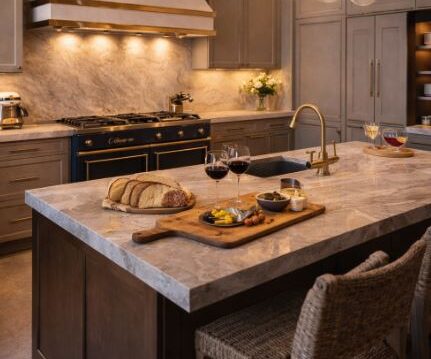
The Designer Kitchen as Domestic Philosophy
Designing a truly great kitchen is not unlike articulating a complex idea to someone with a very different frame of reference—it takes clarity, patience, and a deep understanding of fundamentals. A designer kitchen is not defined solely by beautiful cabinetry or high-end appliances. It is a philosophy about how we live today, how we cook, how we gather, and how seamlessly technology can support those rituals without overwhelming them.
At its best, the modern designer kitchen disappears and performs at the same time. It feels calm, intentional, and almost effortless, even though every inch has been meticulously considered. This balance between style and state-of-the-art functionality is where great kitchens are born.
Appliances as Architecture
In contemporary kitchen design, appliances are no longer treated as stand-alone objects. They are integrated into the architecture of the space. When Sub-Zero refrigeration and Wolf cooking appliances are concealed behind custom cabinetry, the kitchen achieves a sense of visual serenity. The technology is still there—powerful, precise, reliable—but it no longer dictates the room’s aesthetic.
Brands like Miele and Gaggenau take this philosophy even further, offering appliances that blend advanced engineering with minimalist design. Steam ovens, induction cooktops, and precision warming drawers elevate everyday cooking into something more deliberate and enjoyable.
Then there are heritage brands like La Cornue, whose handcrafted ranges introduce a different kind of luxury. Their presence is unapologetic, almost sculptural, reminding us that the kitchen is also an emotional space—one tied to tradition, craftsmanship, and romance. Choosing between concealed integration and expressive statement appliances is not about right or wrong; it’s about identity.
Materials That Tell the Story
A designer kitchen speaks through its materials. Countertops, in particular, carry both aesthetic and practical weight. Quartzite offers the natural beauty of stone with impressive durability, standing up to heat and the occasional red wine spill without losing its composure. Dekton, engineered for extreme resilience, pushes durability even further—resistant to scratches, stains, UV light, and heat to a degree that feels almost indestructible.
These choices aren’t just technical decisions. They signal how the kitchen will be used. A family-focused kitchen may prioritize surfaces that forgive spills and impact, while a culinary-forward space might lean into natural materials that develop character over time.
Cabinet finishes, hardware, and backsplashes continue the narrative. Natural woods add warmth and grounding. Lacquered or matte finishes introduce modern restraint. Every selection layers meaning into the space, turning the kitchen into a reflection of lifestyle rather than a catalog of products.
The Hidden Infrastructure of Order
What separates a good kitchen from a great one is often what you don’t see. Appliance garages, for example, have become essential in designer kitchens. They hide small appliances while keeping them easily accessible, preserving clean sightlines without sacrificing convenience. That blender, coffee maker, or toaster lives just out of view—ready when needed, invisible when not.
The butler’s pantry has made a decisive comeback, especially in homes designed for entertaining. It acts as a buffer between the kitchen and dining areas, allowing mess, prep, and storage to exist without disrupting the main space. Dirty dishes disappear, countertops stay clear, and hosting feels controlled rather than chaotic.
For those who cook frequently or in larger households, the scullery takes this concept further. As a secondary work kitchen, it handles heavy prep, cleanup, and storage. The primary kitchen remains composed and welcoming, even during the most ambitious meals. This division of labor within the home reflects a deeper understanding of how kitchens are actually used.
Layouts That Support Modern Life
Functionality in a designer kitchen begins with layout. The classic work triangle has evolved into more nuanced zoning: cooking, prep, cleaning, storage, and socializing each have their own territory. Islands are no longer just prep surfaces; they are social hubs, homework stations, and casual dining tables all in one.
Seating placement matters. Bar stools positioned to face the cook foster conversation without crowding the workspace. Clear circulation paths prevent bottlenecks and keep the kitchen flowing, even when multiple people are cooking or gathering.
Lighting reinforces these zones. Task lighting ensures precision where it’s needed, while ambient and accent lighting soften the space during non-cooking hours. Smart lighting systems allow the kitchen to shift effortlessly from morning efficiency to evening warmth.
Technology That Serves, Not Dominates
The hallmark of a successful designer kitchen is restraint. Technology should enhance the experience, not announce itself. Touchless faucets, smart refrigeration, and app-controlled ovens bring convenience and efficiency, but they are most effective when they feel intuitive.
Integrated control systems allow homeowners to manage lighting, appliances, and even ventilation seamlessly. Yet the goal is never to showcase technology—it’s to make daily life smoother. When done right, the kitchen feels timeless rather than tech-heavy, capable of evolving as tools improve.
A Reflection of How We Live
Ultimately, a designer kitchen is not about trends. It is about alignment—between beauty and performance, tradition and innovation, order and expression. It reflects how we nourish ourselves and others, how we balance work and leisure, and how we bring people together.
This is not merely a decorative exercise. It is an investment in daily rituals. The ideal kitchen feeds both body and soul, combining exceptional hardware with thoughtful design. It respects old skills while embracing new technologies, creating a space that supports modern life without losing its humanity.
In this sense, the designer kitchen becomes more than a room. It becomes a philosophy—a place where intention, craftsmanship, and function converge to shape the way we live, every single day.