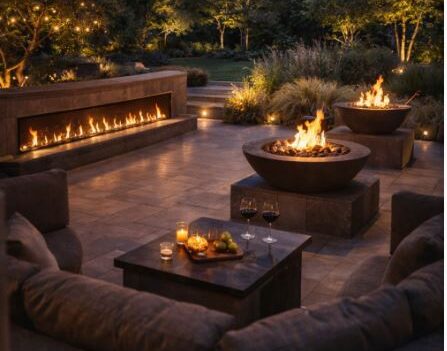
The Alchemy of Flame and Illumination
Creating a compelling outdoor atmosphere is less about decoration and more about transformation. When fire and light are thoughtfully combined, ordinary patios and gardens evolve into immersive environments that feel intentional, welcoming, and emotionally resonant. This is the alchemy of flame and illumination—a balance of primal elements and modern design intelligence that communicates taste before a single word is spoken.
Fire features and night lighting do more than extend usability after sunset. They shape mood, direct movement, and define how people gather. At their best, they turn outdoor spaces into destinations rather than afterthoughts, places where evenings linger and memories take root.
Fire as the Emotional Anchor
Fire has always drawn people together. In contemporary outdoor design, it continues to act as the emotional anchor of a space. The choice of fire feature sets the tone immediately.
Linear fire pits and fireplaces appeal to those drawn to architectural clarity. Their clean lines echo modern facades and structured landscapes, reinforcing symmetry and order. Positioned along a seating edge or integrated into a retaining wall, a linear burner reads as intentional architecture rather than accessory.
Sculptural fire bowls, by contrast, introduce an organic sensibility. Their rounded forms soften hardscapes and feel almost elemental, as if discovered rather than installed. Arranged singly or in rhythmic groupings, bowls create visual punctuation across a terrace or pool deck.
Both approaches are valid. The decision is less about trend and more about narrative. Linear forms speak to precision and restraint. Sculptural forms suggest warmth and informality. Either way, fire becomes the gravitational center of the outdoor room.
Materials That Shape the Flame
The materials surrounding a fire feature influence not only appearance but also performance and safety. Lava rock remains a favorite for its ability to absorb and radiate heat while maintaining a natural, textural look. Its irregular surface adds visual depth and movement, enhancing the flame’s character.
Tempered fire glass offers a more contemporary expression. Available in clear, reflective, or richly colored options, it refracts light dramatically, amplifying the presence of the flame. Beyond aesthetics, tempered glass is engineered for high heat, adding a layer of safety and durability.
Metal surrounds, concrete forms, and stone cladding all contribute to the story. A corten steel fire pit develops a patina that feels grounded and earthy, while smooth concrete or porcelain surfaces reinforce a modern, gallery-like feel. Material choice should always echo the broader language of the home and landscape.
Lighting as the Invisible Architecture
If fire is the heart of night ambiance, lighting is the nervous system. It guides the eye, defines boundaries, and ensures comfort without overpowering the senses.
Low-voltage landscape lighting is the foundation of sophisticated outdoor design. Subtle path lights provide safe navigation while remaining visually discreet. Uplighting on trees and architectural elements adds drama, creating vertical interest and depth.
Downlighting, often concealed in trees or pergolas, mimics moonlight and bathes spaces in a soft, natural glow. This technique avoids harsh glare and keeps the focus on people and fire rather than fixtures.
Bistro or café lights introduce a different energy altogether. Suspended overhead, they create a sense of intimacy and celebration, recalling European courtyards and long summer dinners. Used sparingly, they add charm; used excessively, they can overwhelm. The key is balance.
Choreographing the Experience
For those seeking the highest level of control, programmable lighting systems open up a new realm of possibility. DMX and smart lighting scenes allow homeowners to choreograph fire and light like a theatrical production.
With a single command, the space can shift from lively gathering to intimate retreat. Flames lower, lights dim, and accents soften. For larger properties or hospitality-inspired residences, these scenes ensure consistency and ease, allowing the environment to respond effortlessly to the occasion.
This level of control, however, must always be paired with technical expertise. Proper zoning, transformer sizing, and weather-rated components are essential. Fire and lighting systems must comply with local safety codes, setback requirements, and ventilation standards. True luxury is invisible compliance—where safety is embedded, not advertised.
Layering for Depth and Comfort
The most successful outdoor nightscapes rely on layering. Fire provides movement and warmth. Ambient lighting sets the base mood. Accent lighting highlights features, while task lighting ensures functionality where needed.
This layered approach prevents spaces from feeling flat or overlit. Instead, the eye moves naturally from glow to shadow, from flame to foliage. The result is a space that feels alive, dynamic, and comfortable.
Design studios known for experiential outdoor environments often treat light itself as an artistic medium. When illumination is used to sculpt space rather than simply brighten it, the landscape becomes a living composition.
Telling a Story After Dark
An outdoor space at night should feel cohesive with its daytime identity while offering something new. Fire features and lighting work together to reveal a different personality—one rooted in intimacy and atmosphere.
Every flicker of flame and carefully aimed beam contributes to that story. Guests may not consciously register why the space feels so good, but they feel it nonetheless. They stay longer, speak more softly, and remember the experience more vividly.
The Lasting Impression
The best outdoor gatherings are not defined by furniture or square footage. They are remembered for how they felt. Warmth on the skin. Light in the trees. Fire reflecting in glass and stone.
When flame and illumination are thoughtfully combined, outdoor spaces transcend function and become experiences. Long after the embers fade and the lights dim, the memory of that atmosphere lingers—proof that true design magic happens after dark.