Essential Repairs are no longer the unglamorous line item sitting behind prettier home projects. Angi’s 2026 spending data points to a more cautious homeowner: one who still cares about paint, flooring and bathroom updates, but is more likely to protect function, safety and budget control first. For design planning, that changes the order of decisions. A room can be attractive and still be the wrong project if the roof, drainage, HVAC, wiring, plumbing or exterior envelope is asking for attention.
The clearest lesson is not that cosmetic upgrades have lost value. It is that discretionary work is being forced to compete with repairs, maintenance and cost uncertainty. Angi reported that 92% of homeowners who recently hired a professional for a 2026 home project said the project finished at or above budget, while 43% exceeded original estimates. Among those who went over budget, just over one-third spent at least 30% more than planned. In the same report, 58% of homeowners had completed a repair in the prior month, 63% had performed maintenance and only 35% had completed renovations, according to Angi’s 2026 State of Home Spending Pulse.
What Angi’s 2026 Pulse Says About Essential Repairs
The data supports a practical hierarchy: stop deterioration, preserve safe daily use, then improve appearance. That order may sound conservative, but it is often the more durable design decision. A new backsplash cannot compensate for a leak inside the wall. Fresh flooring can be a poor investment if subfloor damage or moisture intrusion remains unresolved. In a cautious market, the attractive project still needs a sound base.
Budget Pressure Is Changing Project Order
Angi’s 2026 Pulse also found that 23% of homeowners who delayed projects cited an unplanned or emergency issue. That figure matters because emergency work often consumes cash that had been set aside for visible improvements. The report also found that 59% of homeowners said lower material costs would make them more likely to act on home improvement, and 54% cited lower inflation. These are not design-style preferences; they are affordability signals.
As a case study pattern, I see this most often in homes where owners planned one visible upgrade and discovered a basic system problem during scoping. A family may enter the year thinking about interior painting and new bath tile. After a plumbing issue, failing exterior sealant or electrical panel concern, the design brief changes. The cosmetic wish list is not discarded, but it is phased behind the work that keeps the home usable and safer.
Repair Activity Outpaced Renovation Activity
The gap between repairs, maintenance and renovation is meaningful for project planning. Repairs and maintenance are usually less photogenic, yet they reduce the chance that a later cosmetic upgrade will need to be opened up, removed or redone. That is especially relevant for kitchens, bathrooms, laundry rooms and exterior doors, where water, ventilation and daily wear have direct design consequences.
For homeowners under market pressure, a related planning frame is outlined in safe renovation strategies, where function and risk control come before appearance-driven scope. That does not make design secondary. It makes design accountable to the condition of the building.
Case Study: Safety Work Before Visible Finishes
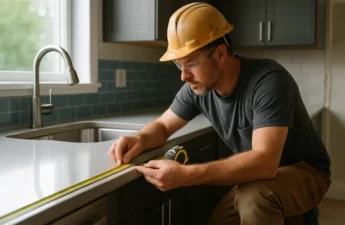
Consider a typical older kitchen plan. The owner wants cabinet repainting, new hardware, better lighting and a more current wall color. During contractor visits, the scope raises concerns about uneven outlets, undersink water damage and poor ventilation. None of those issues will produce the most dramatic before-and-after photograph, but they affect how the kitchen performs every day.
Budget Triage In An Older Kitchen
A cautious project sequence would first separate urgent repair, professional assessment and cosmetic improvement. Electrical, gas, structural and major plumbing concerns should be evaluated by qualified professionals rather than handled as casual DIY work. The homeowner can still make design decisions, but those decisions should follow the repair findings. Cabinet color, hardware finish and wall paint are easier to adjust than hidden system work.
The budget lesson from Angi’s data is direct: if many hired projects are landing at or above budget, early allowances should not assume ideal conditions. A design estimate that ignores likely repair work can give a false sense of affordability. In practice, a homeowner might choose to repaint existing cabinets only after water damage is repaired and ventilation is addressed. That approach is less dramatic, but it lowers the risk of paying twice.
Essential Repairs First, With Cosmetics Batched Later
The best near-term scope treated Essential Repairs as the foundation of the kitchen plan. After that, cosmetic work could be batched in lower-risk groups: paint after repairs, hardware after cabinet doors are adjusted, and decorative lighting only after safe wiring has been reviewed. This order is not about lowering ambition. It is about reducing avoidable rework.
To assist homeowners with small, low-risk tasks, a useful resource is High Pro Tools, which helps identify tool categories. However, it’s important to note that tool research is not a substitute for professional expertise. If a task involves live electrical circuits, gas lines, structural changes, roofing height, or concealed plumbing, hiring a qualified professional is the safer choice.
Case Study: Repair Rather Than Replace

Angi’s related Q1 2026 reporting adds another useful signal. In that period, 62% of homeowners chose to repair rather than replace, up from 51% in Q4 2025. The same report said average home improvement spending over the prior 90 days rose to about $5,368 from $3,702 in Q4 2025, with fewer projects started but higher dollar value per project, according to Angi’s backlog report.
Why Replacement Can Wait
Essential Repairs do not automatically mean replacing everything old. In a bathroom, for example, a vanity with worn hardware may not need full removal if the plumbing is sound, the cabinet box is stable and the layout works. In contrast, a slow leak, damaged subfloor or persistent moisture issue deserves attention before tile, mirrors or decorative fixtures. The key distinction is whether the existing component is unattractive, unsafe, failing or causing damage elsewhere.
This is where repair-versus-replace thinking becomes a design tool. Repair can preserve budget for later finish upgrades, but it should not be used to postpone a known safety or moisture problem. Replacement can be reasonable when repair would be temporary or when repeated failures are likely, but the research provided here does not support a universal rule. The decision depends on condition, professional diagnosis, cost tolerance and the risk of hidden damage.
Cosmetic Upgrades Still Need A Job
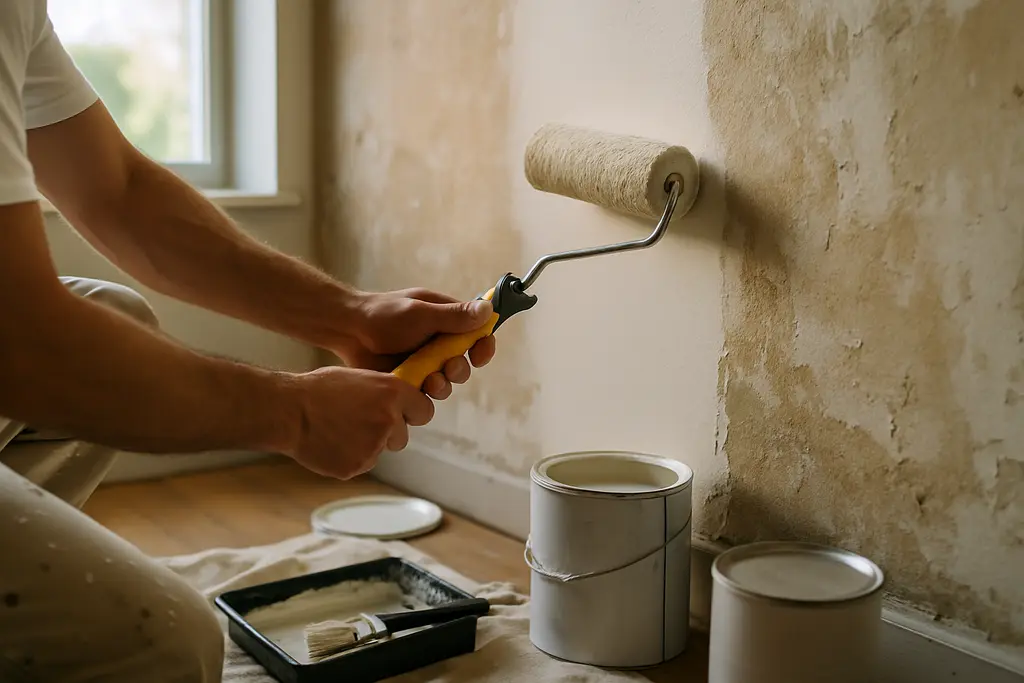
Cosmetic upgrades are easier to defend when they solve a practical problem. Interior painting can improve cleanability and light quality. Flooring can reduce trip concerns if worn transitions are corrected by a pro. Bathroom improvements can improve storage, ventilation planning and daily use. The caution is that cosmetic work should not hide defects. Covering a stain without identifying the moisture source is not a design solution.
Essential Repairs Vs. Cosmetic Upgrades Decision Frame
Before committing to a project, homeowners should use a simple decision frame that separates risk, function and appearance. This is especially useful when a contractor estimate comes back higher than expected or when a planned upgrade competes with a maintenance problem.
- Start with safety: Any concern involving electrical service, gas, structural movement, roof access, major plumbing or persistent moisture should move to professional review.
- Protect the building envelope: Water intrusion, exterior gaps, drainage concerns and damaged openings can make later finish work less durable.
- Preserve daily function: Heating, cooling, cooking, bathing, secure doors and safe walking surfaces usually outrank purely visual updates.
- Phase cosmetic work: Paint, hardware, lighting style and surface finishes can often be scheduled after repair work defines the true budget.
- Keep contingency realistic: Angi’s 2026 budget findings show why optimistic estimates deserve caution, especially in older homes.
The practical takeaway is measured, not pessimistic. Cosmetic upgrades still matter because people live with their homes every day. Color, layout, lighting and finish choices affect comfort and use. Yet the 2026 spending data favors a disciplined sequence: diagnose, repair, maintain, then improve. That sequence gives design decisions a better chance of lasting beyond the first invoice.