The architectural placement of residential wine collections recently underwent a massive transformation. Historically, homeowners relegated their wine to dark, subterranean cellars. Basements provided naturally stable temperatures and protection from sunlight. Modern climate control technology completely changed this dynamic. Architects and interior designers now position home wine bars in the center of the primary living space. These installations serve a dual purpose. They function as highly engineered storage units and double as striking focal points for entertaining.
The shift aligns perfectly with current cultural habits. Hosting friends and family at home holds immense appeal. Homeowners want their collections visible and accessible during dinner parties. Pulling the wine out of the basement and into the dining room or main lounge transforms a passive collection into an active, conversational design feature. Designing these spaces requires a strict balance between aesthetic ambition and rigorous thermodynamic engineering.
The Architectural Shift From Cellar To Living Space
Moving a wine collection to the main floor demands a deep rethinking of residential floor plans. The open-concept layouts popular in recent decades often lack visual boundaries. A well-placed glass wine wall acts as a brilliant architectural divider. It creates distinct zones within a large room without entirely blocking sightlines or natural light. A floor-to-ceiling glass enclosure can separate a formal dining area from a relaxed seating lounge, providing structure to the floor plan.
Builders frequently carve these spaces out of previously dead zones. The area beneath a primary staircase offers perfect square footage for a custom wine bar. Wide hallways connecting kitchens to dining rooms transform into functional butler’s pantries featuring integrated wine refrigeration and tasting counters. Repurposing these awkward footprints maximizes the utility of the home. The architecture adapts to the lifestyle of the inhabitants.
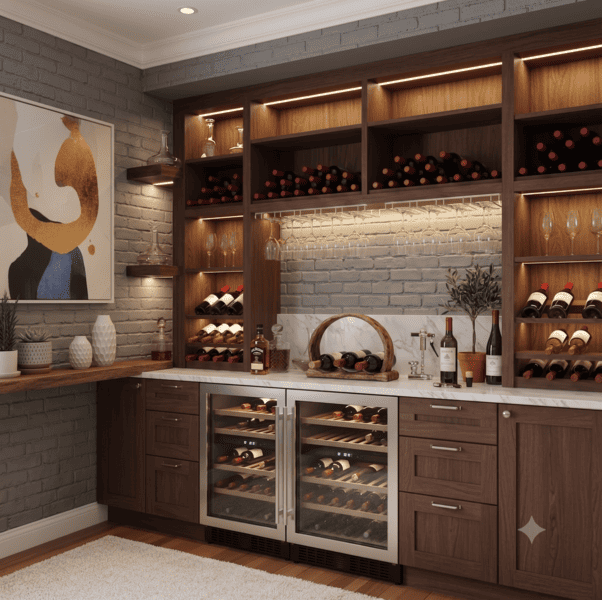
The Engineering Behind Proper Climate Control
Treating a glass-enclosed wine bar like a standard closet guarantees failure. These structures operate as walk-in refrigerators. Maintaining a constant temperature of 55 degrees Fahrenheit within a heavily glazed room requires precise engineering. Standard household HVAC systems cannot handle this load. Dedicated cooling units are a strict requirement.
Builders typically choose between self-contained systems and split cooling systems. Self-contained units sit inside the wine room, venting exhaust air into an adjacent interior room. This exhaust heat must be managed. Split systems separate the evaporator coil from the noisy compressor. The evaporator sits inside the wine bar, cooling the air. The compressor sits outside the house or in a dedicated mechanical room. This setup eliminates mechanical noise in the living area, preserving a quiet, luxurious atmosphere.
Following strict guidelines for proper wine storage prevents the degradation of expensive collections. Heat is the primary enemy of wine. Temperatures fluctuating beyond a narrow band cause the liquid to expand and contract, eventually pushing the cork out and letting oxygen inside. A tightly controlled thermal environment protects the investment over decades.
Managing Humidity And Preserving Cork Integrity
Temperature represents only half of the climate equation. Humidity control plays an equally critical role in wine preservation. The ideal humidity level for a wine bar rests between 50 and 70 percent. Environments dropping below 50 percent humidity cause corks to dry out and shrink. A shrunken cork allows ambient air to seep into the bottle, oxidizing the wine and turning it into vinegar.
Environments exceeding 70 percent humidity present a different set of problems. High moisture levels encourage rapid mold growth on the corks, the bottle labels, and the surrounding millwork. Maintaining this exact moisture balance requires specialized vapor barriers. During the framing stage, builders apply closed-cell polyurethane spray foam to the stud cavities surrounding the wine bar. This foam provides high thermal insulation and acts as a complete moisture barrier. Standard fiberglass batts fail in this application, absorbing condensation and promoting hidden mold within the walls.
The interior walls receive a covering of moisture-resistant drywall, often finished with specialized vapor-barrier paint. Every seam, electrical outlet, and plumbing penetration gets meticulously sealed with silicone. The structural envelope must be completely airtight before any decorative finishes are applied.
Material Selection For Custom Wine Displays
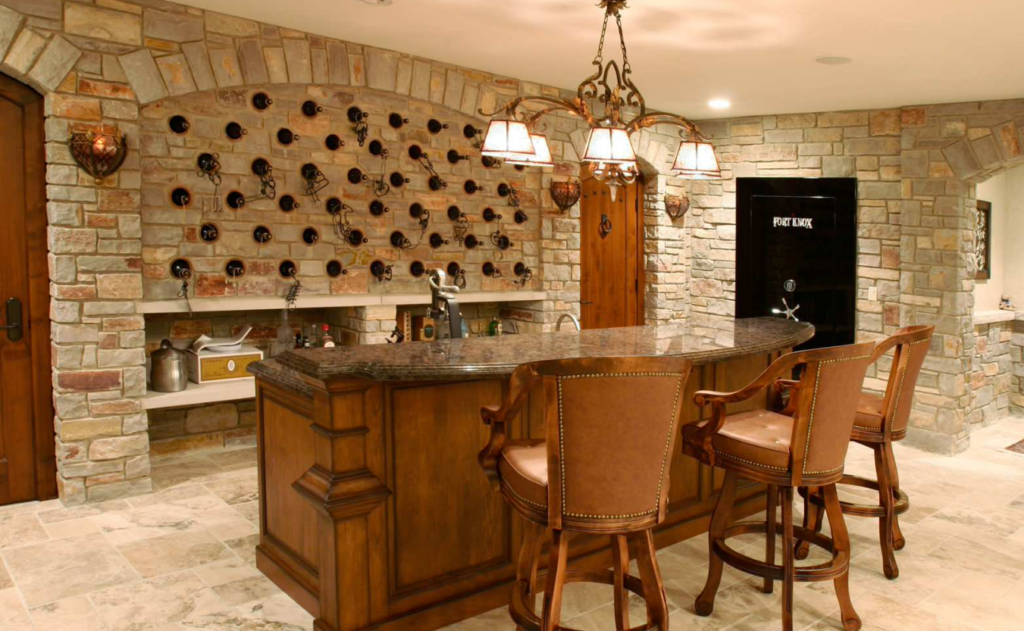
The visual impact of a home wine bar depends entirely on the selected materials. Traditional designs favored heavy mahogany, ornate carvings, and Tuscan-inspired stone work. The modern aesthetic leans heavily into minimalism, clean lines, and industrial textures. Frameless glass enclosures dominate the market. These massive glass panels require heavy-duty pivot hinges and thick, tempered panes to trap the cold air effectively.
Metal racking systems replaced bulky wooden shelves. Aluminum and steel pegs extending directly from the wall hold the bottles securely. This method allows for a label-forward display. Traditional racking hides the bottle label, showing only the cork and foil capsule. Label-forward systems treat the bottles like individual pieces of art, allowing the homeowner and guests to easily browse the collection without handling every bottle.
Black anodized steel, brushed brass, and matte acrylic form the basis of many modern racking systems. When designers do incorporate wood, they favor clean, pale species like white oak or walnut with a matte finish. Strong odors from woods like cedar or redwood can seep through the cork and taint the wine over long periods. Neutral, odorless materials are mandatory for long-term storage.
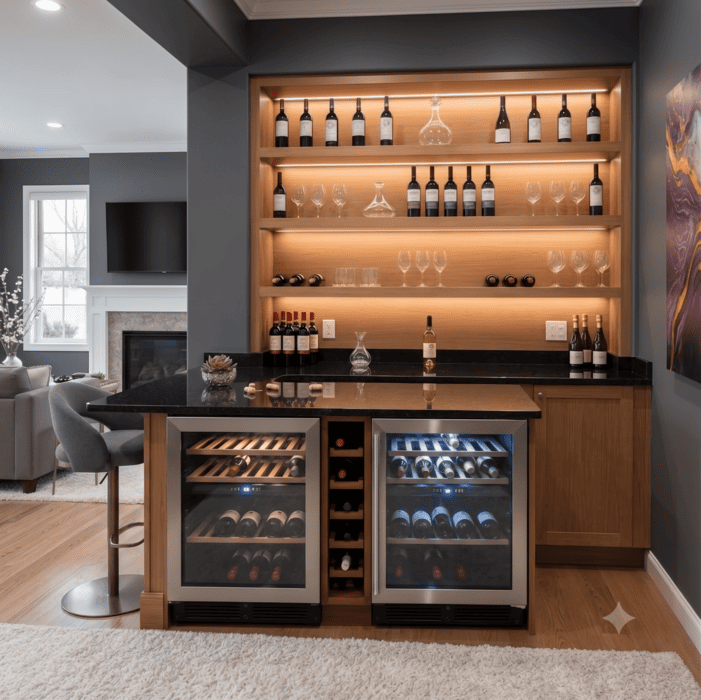
Lighting Strategies For Optimal Preservation And Aesthetics
Illuminating a wine bar requires an exact science. Wine reacts poorly to ultraviolet light. Prolonged exposure to UV rays causes a chemical reaction within the liquid known as “light strike,” which introduces unpleasant, sulfuric odors. Standard incandescent and fluorescent bulbs emit heat and UV radiation, making them totally unsuitable for wine displays.
Designers rely exclusively on high-quality LED fixtures. LEDs generate virtually zero heat and emit no ultraviolet light. The color temperature of these diodes dictates the mood of the space. Warm white LEDs, measuring between 2700 and 3000 on the Kelvin scale, cast a soft, inviting glow over the bottles. Cooler color temperatures can make the glass enclosure feel like a commercial supermarket cooler.
The placement of the light source matters immensely. Direct spotlights cast harsh shadows and cause glare on the glass bottles. Indirect lighting provides a much softer, more sophisticated look. Builders route continuous channels into the vertical wooden posts or metal uprights holding the racks. They recess the LED strips inside these channels, pointing the light backward against the wall or diffusing it through frosted acrylic covers. This technique makes the bottles appear to glow from within, hiding the actual light source entirely from the viewer’s eye. Backlighting an entire wall with a slab of translucent onyx or quartz adds a dramatic, high-contrast backdrop behind the dark glass bottles.
Integrating Tasting Zones And Social Hubs
A functional wine bar requires more than simple storage. The ritual of opening, decanting, and serving the wine demands dedicated space. Designers incorporate wet bars and tasting counters directly adjacent to the glass enclosure. These service areas mimic the functionality of a commercial hospitality venue, scaled down for residential use.
The countertop material selection requires careful thought. Red wine spills easily stain porous surfaces. Delicate materials like Carrara marble require constant sealing and aggressive maintenance. Engineered quartz, dark granite, or ultra-compact surfaces like Dekton provide high resistance to acidic spills and heavy impacts.
These service zones feature specialized appliances. Integrated dishwasher drawers handle delicate stemware without risk of breakage. Small under-counter sinks, often pounded from copper or cast in matte black composite, provide an area to rinse glasses and empty decanters. Hidden trash receptacles and dedicated drawers for corkscrews, stoppers, and linen napkins keep the visual clutter off the counter.
Seating arrangements complete the social hub. Two comfortable lounge chairs and a small cocktail table placed near the wine bar encourage guests to linger. In larger homes, a full tasting table standing at bar-height bridges the gap between the storage enclosure and the main living room. The entire setup invites interaction, making the wine bar the natural center of gravity during evening gatherings.
Managing Acoustics And Vibration
Wine is a highly sensitive liquid. Beyond temperature and light, mechanical vibration physically degrades the molecular structure of aging wine over time. Continuous shaking stirs up sediment and accelerates unwanted chemical reactions. This scientific reality influences the placement of the wine bar within the larger home footprint.
Architects avoid positioning wine displays directly adjacent to high-vibration areas. Sharing a wall with a massive home theater subwoofer, a heavy-duty laundry room, or an elevator shaft introduces constant micro-vibrations to the racks. The cooling equipment itself presents a vibration risk. Mounting the condenser unit on rubber isolation pads dampens the mechanical shaking before it transfers into the wall studs.
Acoustic management plays a role in the human experience of the space. Hard surfaces dominate wine bars: glass walls, stone floors, metal racks, and glass bottles. This combination creates an acoustically bright environment where sound bounces endlessly. Adding soft materials to the surrounding tasting zone absorbs these harsh echoes. Upholstered seating, heavy drapery on nearby windows, and thick wool rugs soften the sound profile, making conversation much more pleasant.
The Value Addition To Luxury Real Estate
Integrating these complex systems requires massive coordination. Framing crews, HVAC technicians, electricians, and finish carpenters must work in exact sequence to build a functioning, beautiful wine enclosure. Homeowners seeking flawless execution routinely rely on experts in custom home building to manage the technical intersections. The investment in these high-end installations yields significant returns.
In the luxury real estate market, a beautifully executed home wine bar functions as a major selling point. Buyers expect premium amenities that differentiate a property from standard builds. A temperature-controlled glass display signals a high level of craftsmanship and lifestyle sophistication. It proves the home was designed for serious entertaining and detailed living.
The aesthetic flexibility of the modern wine bar ensures its long-term relevance. By utilizing clean lines, neutral materials, and advanced invisible technology, these installations blend with a wide variety of architectural styles. They offer a perfect union of form and function. The wine remains perfectly preserved, the living space gains a stunning visual anchor, and the act of hosting guests feels entirely elevated.