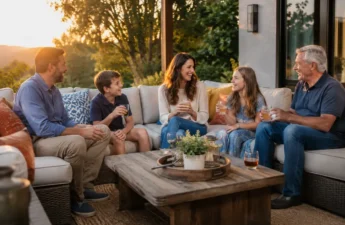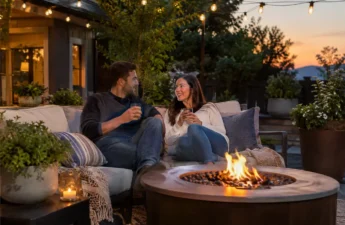
Outdoor comfort spaces are becoming less about a single patio set and more about how a yard supports sitting, eating, reading, cooking and quiet recovery after a workday. The trend is practical rather than flashy: homeowners are trying to make outdoor areas work harder without assuming every property needs a full outdoor kitchen, large pergola or major construction project.
Recent Houzz outdoor research points to that shift. In 2026, 83% of U.S. homeowners renovating outdoor spaces included a lounge or seating area, and 71% of those spaces used sofas or lounge chairs. Dining areas appeared in 55% of remodeled or planned outdoor spaces, while quiet retreats or reading zones appeared in 53%. Outdoor kitchens were less common but still notable: 12% added or renovated one, and 8% added or customized built-in bars, according to the Houzz outdoor trends report.
Outdoor Comfort Spaces Start With Daily Use
A good plan starts by naming the ordinary uses before choosing materials. If two people eat outside three nights a week, a compact dining zone with shade and task lighting may matter more than a large conversation area. If the space is mainly used for weekend guests, flexible seating and open circulation become higher priorities. This early sorting helps homeowners avoid buying furniture that looks appealing online but blocks doors, creates trip points or leaves no place for serving dishes.
Outdoor Comfort Spaces Need Clear Zones
Clear zones do not have to mean walls or built structures. A lounge can be defined by an outdoor rug, a pair of chairs and a small table. Dining can be located closer to the kitchen door to reduce carrying distance. A reading chair can sit near planting or a quieter edge of the yard. In practical outdoor comfort spaces, the test is whether people can move safely between these areas while carrying food, drinks, cushions or garden tools.
For homeowners planning several uses in one yard, it helps to sketch the most common paths: house to grill, house to table, table to lounge and lounge to gate. Keep those paths open before filling the plan with planters, fire features or storage boxes. If a space feels crowded on paper, it will usually feel more crowded during an evening gathering.
Furniture Choices Should Match The Real Schedule
The Houzz data shows strong interest in sofas and lounge chairs, but size still needs restraint. Deep seating can be comfortable, yet it may not suit a narrow balcony or small townhouse patio. Chairs that can be moved by one adult, compact side tables and pieces with washable cushions are often more forgiving for everyday households than oversized sets. Renters can apply the same logic with freestanding pieces, avoiding permanent changes that may violate lease terms.
Shade, Lighting And Systems Need Early Planning
Comfort is not only a seating issue. Shade, lighting and utility planning decide whether a space can be used safely at different times of day. Houzz reported that shade structures, including pergolas and roofs, were part of 35% of structural outdoor projects in 2026, up 15 percentage points since 2024. The same study reported that outdoor system upgrades such as lighting, plumbing and electrical reached 36% of projects, up 4 points from 2024, while decorating-only projects fell to 34%, based on the 2026 U.S. Houzz Outdoor Trends Study.
Shade Should Be Treated As A Safety And Comfort Feature
A pergola, roof extension or shade sail can change how long a patio remains usable, but structural choices carry risk. Homeowners should not guess at attachment points, wind loads, drainage or support requirements. Anything tied into a roofline, exterior wall or permanent footing should be reviewed by qualified professionals and checked against local permit rules. Freestanding umbrellas and shade canopies still need stable bases, clearances and storage plans for storms.
Shade placement also affects furniture life and daily habits. A dining table that is shaded at breakfast may be fully exposed by late afternoon. Before installing a permanent feature, observe the space at the hours it will actually be used. That simple step can prevent a costly structure from landing in the wrong place.
Lighting Should Help People Move, Not Just Set A Mood
Outdoor lighting is often discussed as atmosphere, but safety comes first. Steps, thresholds, cooking areas and changes in surface level need enough illumination for people to walk without guessing. Low-voltage landscape lighting may be suitable for some homeowners, but line-voltage wiring, exterior outlets, hardwired fixtures and any work near wet locations should be handled by licensed electricians. The same caution applies to plumbing and gas connections for outdoor kitchens or built-in bars.
Layered lighting can support several uses without making the yard feel overlit. A dining area may need brighter light during meals and cleanup. A seating area may need softer light for conversation. A path may need consistent light from the door to the steps. For a deeper planning example, this related article on multifunctional outdoor space design focuses on traffic flow, durable furniture and safer zones.
Plants And Hardscape Should Support The Use Plan
Planting choices can make a multi-purpose yard feel calmer, but they should be selected with maintenance capacity in mind. Houzz reported that 55% of renovating homeowners chose native plants, 56% chose pollinator-friendly species and 49% chose drought-resistant plants. Those figures show interest in plantings beyond decorative borders, but the right choices still depend on region, soil, sun exposure, irrigation access and household tolerance for upkeep.
Use Planting To Shape Space Without Blocking Movement
Planters, shrubs and small trees can help separate a reading area from a dining area without building a wall. They can also soften hardscape edges and give a lounge a sense of enclosure. The caution is clearance. Plants placed too close to steps, gates or grill zones can create snagging hazards, crowd walkways or become difficult to maintain. Thorny or brittle plants should be kept away from tight seating areas and children’s play routes.
Hardscape deserves the same discipline. Pavers, decking and gravel can organize a yard, but transitions between materials should be easy to see and walk across. Loose gravel near dining chairs can make seating unstable. Slick surfaces near water features, pools or hose bibs can increase fall risk. Homeowners should ask installers about drainage, slope and surface texture before choosing by appearance alone.
Budget Priorities For Multi-Purpose Outdoor Design
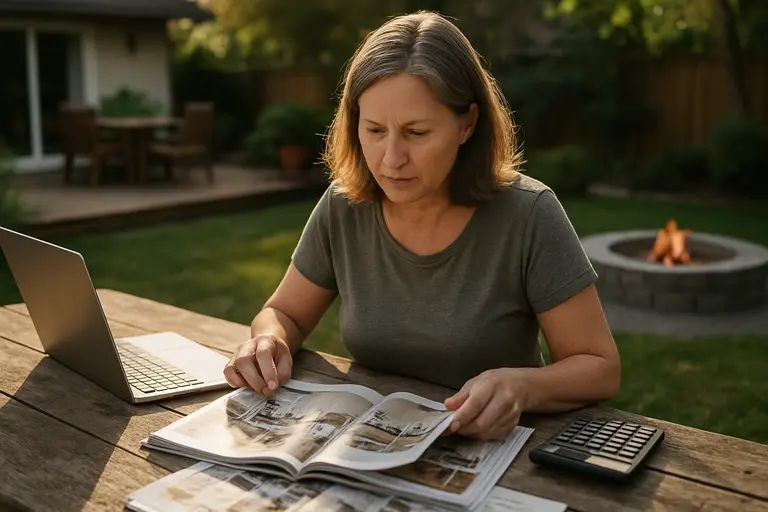
The research suggests many homeowners are designing for lifestyle rather than resale alone. Houzz reported that only 15% of homeowners in 2026 outdoor renovations were driven by resale value, down from 18% in 2024, while 25% were motivated by making the space more accommodating for their lifestyle. That does not mean resale should be ignored. It means the stronger planning question is whether the project will support daily life for the people who live there now.
- Start with seating and shade: These showed broad adoption in the Houzz data and affect comfort immediately.
- Plan systems before finishes: Lighting, plumbing and electrical are harder to correct after hardscape and built-ins are installed.
- Keep cooking features proportional: A grill station may be more realistic than a full outdoor kitchen for many households.
- Leave open circulation: Multi-use spaces fail quickly when every zone competes for the same walking path.
- Hire for higher-risk work: Structural shade, gas, plumbing and exterior electrical work call for qualified trades.
Homeowners comparing outdoor improvements with broader housing decisions might find relevant property insights through Jimmy Guthrie Real Estate LLC. Design choices should still be based on the site, household routines and safe construction practices rather than assumptions about a guaranteed future sale.
Building Multi-Purpose Outdoor Comfort Spaces
The strongest outdoor comfort spaces are not the ones with the most features. They are the ones where each feature has a job: a shaded place to sit, a clear route from the kitchen, enough light to move safely, planting that supports the mood without taking over the walkway and systems planned before the surface finishes are locked in.
A modest patio can do this well. So can a larger yard, if the plan resists crowding. The 2026 trend data supports a practical case for multi-use outdoor living, but it does not remove the need for site-specific judgment. Measure first, observe sun and traffic patterns, set safety boundaries and bring in qualified professionals for structural, electrical, plumbing or gas work. That approach gives homeowners a better chance of creating a space that feels comfortable on ordinary days, not just when it is staged for guests.