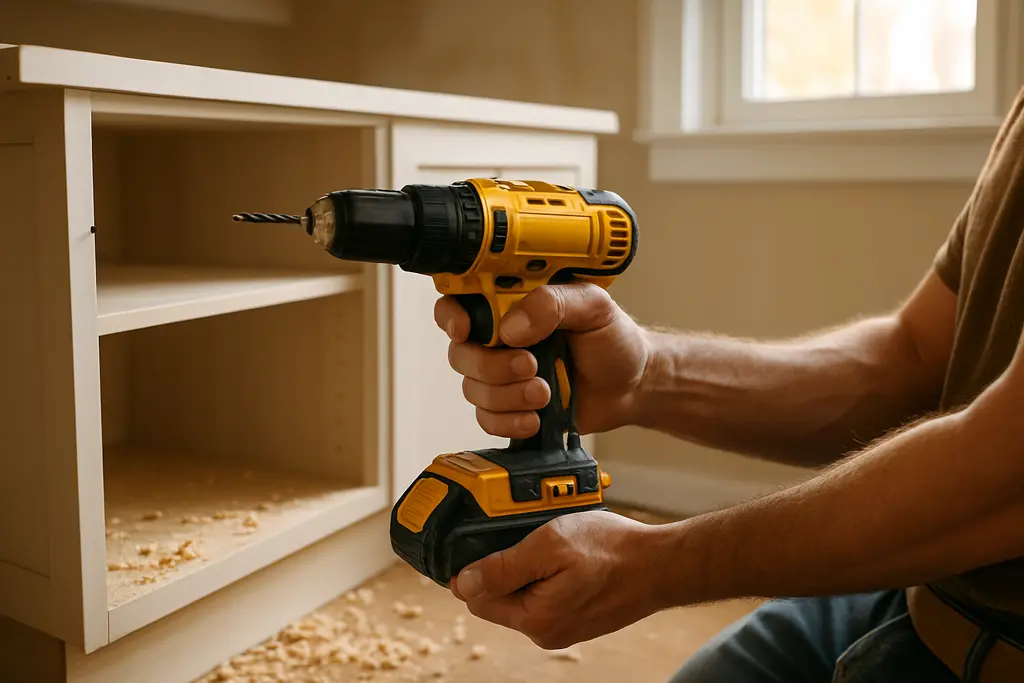
Choosing cordless tools for a remodel is no longer just a question of brand loyalty or sale pricing. Battery systems, motor type, tool housing materials, dust resistance and charger compatibility now shape how practical a purchase will feel after the first project. For homeowners working on finish carpentry, cabinet hardware, shelving, deck maintenance or outdoor repairs, the safer buying decision is usually the one that fits the project scope without pushing the user into work better handled by a licensed trade professional.
The market data points to a clear shift toward battery-powered platforms. The global cordless power tools market was valued at USD 29.84 billion in 2025 and is projected to reach USD 52.77 billion by 2034, according to Straits Research market data. That growth does not mean every homeowner needs a contractor-grade lineup. It does mean battery compatibility, battery replacement cost and tool durability deserve more attention before buying.
Why Cordless Tools Now Affect Remodel Planning
Buying cordless tools should start with the project list, not the display shelf. A homeowner installing cabinet pulls, assembling built-ins, sanding patch repairs or maintaining a small deck has different needs from someone cutting masonry, drilling concrete or handling demolition. Higher power can help in some work, but it also adds cost, weight and risk if the tool is poorly matched to the user or the material.
Start With The Work You Can Safely Own
A practical remodel plan separates low-risk tasks from work that needs a qualified pro. Drilling pilot holes in wood shelving, driving screws into preplanned blocking or sanding a small repair are very different from cutting structural members, altering wiring, modifying gas lines or changing plumbing routes. Tool buying should not become a reason to expand the scope beyond safe DIY limits.
In home design work, I see the same pattern often: the wrong tool purchase encourages a project to drift. A compact drill may be enough for hardware and light fastening, while a heavy high-voltage tool can tempt a homeowner into materials and methods that require more experience. Safer planning keeps the tool matched to the task, the material and the user’s comfort level.
Use Market Growth As A Signal, Not A Sales Pitch
The industry is clearly investing in battery platforms, but market growth should be read cautiously. A growing category can produce better choices, yet it can also create more overlapping models with similar claims. Before buying, compare the battery family, charger cost, replacement battery availability and the number of tools that share the same pack. A single tool that requires a separate charger and battery may be less attractive if the household expects to buy a drill, sander and outdoor tool later.
For broader project planning, the same discipline applies to scopes, materials and tool timing. A homeowner comparing tool purchases for larger remodel phases may benefit from reviewing related tool buying trends for complex remodels before building a cart around one promotional kit.
Battery Platforms And Voltage Choices
Battery selection is where many purchases succeed or fail. The power tool battery market is forecasted to grow from about USD 3.72 billion in 2026 to USD 6.02 billion by 2031, with lithium-ion adoption, high-voltage platforms and outdoor tool demand among the drivers reported by Mordor Intelligence battery research. For a homeowner, the practical lesson is not to chase every new pack size. It is to choose a system that can support the next several likely purchases.
12- To 18-Volt Tools Fit Many Interior Tasks
The research notes that 12- to 18-volt packs dominated 57.1% of the battery market in 2025. That range makes sense for many interior remodeling tasks because it can support drilling, fastening and lighter cutting tools without moving immediately into heavier high-voltage equipment. For finish work, tool balance and control often matter as much as raw output. A lighter drill that can be held square to a cabinet face may produce a cleaner result than a heavier tool that tires the user quickly.
Above-18-volt packs, including 40V to 80V classes, are growing quickly for heavy-duty work such as concrete and demolition. That does not automatically make them the right choice for a homeowner planning trim, hardware and small repairs. If the task involves concrete, structural removal or other high-risk work, the better decision may be to hire a qualified professional rather than buy a more forceful tool for one difficult job.
Battery Interoperability Reduces Friction
Interoperability matters because batteries and chargers can outlive one small project. A shared platform across drills, saws, sanders and outdoor equipment can reduce extra battery purchases and simplify storage. It can also reduce the chance of using the wrong charger or keeping too many partly charged packs without a clear system.
For readers comparing cordless tools across brands, the practical questions are simple: How many tools use this battery? Are replacement packs widely available? Does the charger support the pack sizes I am likely to buy? Is the battery capacity suitable for short indoor sessions, or am I paying for run time I will rarely use?
Materials, Finishes And Tool Durability

Materials and finishes are not just about how a tool looks on a shelf. Battery pack casing, grip texture, overmolded bases, dust sealing and state-of-charge indicators affect how a tool handles in real remodeling conditions. The research notes that professional lines increasingly emphasize overmolded battery bases, integrated LED charge indicators and better sealing for dust and water resistance. Those features are most useful when the tool will be moved between indoor repair work, garage cutting stations and outdoor maintenance.
Matching Cordless Tools To Materials And Finishes
Different finish materials reward different tool qualities. Cabinet hardware and built-ins call for control, steady torque and a comfortable grip. Sanding painted patches benefits from a tool that pairs with dust collection or at least limits unnecessary mess. Outdoor repairs place more stress on housings, battery casings and contacts because dirt, humidity and impact are harder to avoid.
Brushless motors are another practical consideration. The research notes that the brushless motor segment is expected to see a growth rate around 7.12%, with advantages tied to power-to-weight, durability and finish quality. A brushless model may be worth considering for repeated use, especially where a lighter tool with consistent output helps protect the work surface. Still, the user should compare actual tool fit, battery cost and service support rather than assuming brushless is always the correct upgrade.
- For finish carpentry: prioritize control, balanced weight and a battery size that does not make the tool nose-heavy.
- For outdoor maintenance: look closely at battery casing, sealing claims and the number of compatible outdoor tools in the platform.
- For occasional repairs: avoid paying for high-voltage capacity unless the planned work truly needs it.
- For shared household use: choose tools that multiple users can hold safely and operate within the manufacturer’s instructions.
Tool condition and support also matter. Check the manufacturer’s manual, use the recommended accessories, and avoid modified batteries or chargers. For product comparisons and insights on professional-grade tools within the home improvement sphere, a related site in the same network can offer valuable context. However, the final purchase decision ultimately hinges on the specific project and the individual’s safety thresholds.
A Practical Buying Standard For Cordless Tools
A sound buying standard starts with restraint. List the next three projects, name the materials involved, and decide which tasks are safe for a homeowner. Then compare battery platforms, not just bare tools. A discounted drill is less useful if its battery family does not support the sander, driver or outdoor tool you may need next.
Good cordless tools should make planned work safer and more controlled, not encourage overreach. For many remodels, the strongest purchase is a midrange battery platform with a comfortable drill-driver, a charger that supports future packs, and materials that can tolerate normal dust, handling and storage. Larger voltage classes and specialized tools have a place, but they should follow a real scope requirement rather than a broad promise of power.
Before purchasing, read the manual, confirm accessory compatibility, price replacement batteries and decide where the tools and chargers will be stored. If the project touches wiring, plumbing, gas, structural framing, roofing or work at height, hire the right professional. A thoughtful tool purchase supports a safer remodel; it should never substitute for training, permits or trade expertise.


