Low-Water Outdoor Design is becoming a practical materials-and-finishes issue in Southwest yards, not just a planting preference. Homeowners are weighing turf removal, drip irrigation, gravel, pavers, shade, and durable surface choices because outdoor areas have to handle heat, dry spells, storm runoff, daily foot traffic, and maintenance limits. The strongest projects start with water movement and safety before they move into color palettes or decorative finishes.
The evidence is promising but not universal. A compact courtyard in Phoenix, a sloped lot near San Diego, and a shaded patio in Las Vegas will not perform the same way. Soil, slope, municipal rules, irrigation age, roof drainage, and existing concrete all affect the result. That is why a cautious plan treats water savings as an outcome to verify, not a promise to assume.
Why Low-Water Outdoor Design Starts With Runoff
Outdoor water planning often begins with reducing grass, yet the more useful question is where water goes after irrigation or rain. Spray heads can overshoot planting beds, hit pavement, or add water faster than the soil can absorb it. Hard surfaces can move runoff toward sidewalks, neighboring parcels, or building foundations if grading is poor.
Low-Water Outdoor Design And Drip Irrigation
A three-year San Diego County study that concluded in 2024 found that replacing spray-irrigated turf with drought-tolerant planting and drip irrigation reduced or completely eliminated irrigation and rainfall runoff in about 85 percent of storms, according to the Southern California runoff study. The same research note reported expansion to 13 larger sites covering about 354,830 square feet of former turf.
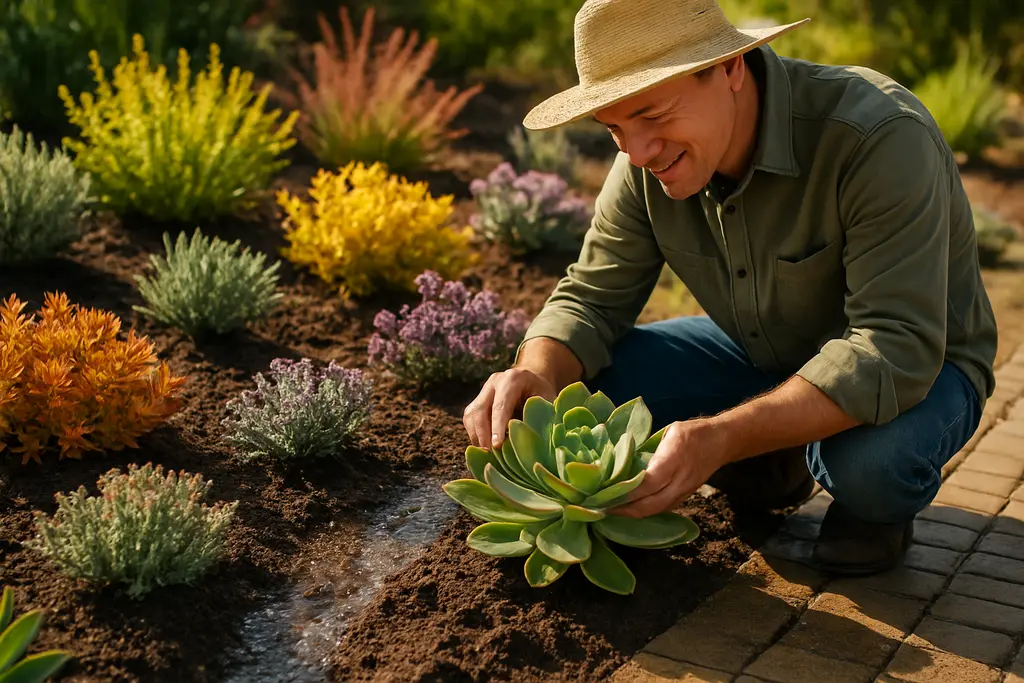
For a Southwest homeowner, Low-Water Outdoor Design should treat drip irrigation as a system choice, not a decorative add-on. Drip lines need correct zoning, pressure regulation, filtering, and access for inspection. Those details are best planned before gravel, stone, or pavers are installed, because buried repairs can be more disruptive after finished surfaces are in place.
Reading Turf Replacement Evidence Cautiously
Las Vegas provides useful evidence because its turf replacement program has been studied over time. Participation in the Cash-for-Grass program yielded an average household water-use reduction of 19 to 21 percent, and the savings remained stable over time, according to a Las Vegas rebate study. That is a meaningful finding, but it does not mean every yard will reach the same range.
A yard that already uses little outdoor water may show smaller reductions. A yard with leaking irrigation, poor grading, or oversized turf areas may show greater change after correction. Homeowners should document baseline water use, identify irrigation zones, and check utility or municipal program rules before assuming a payback period.
Materials And Finishes That Reduce Water Dependence
Materials carry much of the workload in a low-water yard. The right finish can reduce irrigated area, improve walking comfort, manage occasional stormwater, and make planting areas easier to maintain. The wrong finish can trap heat, wash into drains, create trip hazards, or direct water toward the house.
Ground Plane Choices
Gravel, decomposed granite, unit pavers, stone, and concrete can all fit a dry-climate yard, but each behaves differently. Loose aggregate can migrate onto walkways. Smooth stone may become slick when wet. Dark paving can hold heat. Permeable paver systems may help with infiltration where local rules, soil conditions, and base preparation support that approach. A qualified contractor should evaluate slope, subbase, edge restraint, and drainage before large paved areas are changed.
| Material Or Finish | Practical Use | Caution |
|---|---|---|
| Gravel or crushed stone | Reduces planted area and supports a dry visual style | Needs edging and periodic redistribution |
| Decomposed granite | Works for paths and casual seating zones | May erode on slopes or track indoors |
| Permeable pavers | Can support patios or walks where approved | Requires correct base design and maintenance |
| Drip-irrigated planting beds | Targets water near plant roots | Emitters and lines need inspection access |
Finish selection should also reflect daily use. A small dining patio needs stable chair movement. A route from a driveway to an entry needs safe footing after rain. A play area needs surface choices that do not create sharp edges or excessive glare. If a project includes saw-cut concrete, retaining walls, line-voltage lighting, gas fire features, or major grading, the safer path is to bring in licensed or qualified trades rather than treating it as casual weekend work.
Shade, Texture And Daily Use
Texture matters in dry outdoor rooms because plant mass is often reduced. Layered groundcovers, mulch, stone size changes, paver joints, and shade structures can keep the yard from feeling like a parking pad. Still, texture should serve function. Avoid loose rock where mobility is a concern, and keep main walkways clear, stable, and wide enough for the people who use them every day.
For owners comparing patios, plant beds, lighting, and low-maintenance finish choices, this related discussion of sustainable outdoor materials is a useful companion because it keeps durability and safety at the center of the design conversation.
Planning The Work Without Overpromising Savings

Water-aware yards can reduce stress on irrigation systems, but they still require planning, labor, and periodic care. A common mistake is to remove turf quickly, spread rock, and assume the project is finished. That approach may leave compacted soil, poor drainage, exposed utilities, failing irrigation parts, or surfaces that are uncomfortable in heat.
A safer planning sequence starts with observation. Watch how water moves during rain. Note where spray heads overshoot. Identify shaded and sun-exposed areas. Mark doors, steps, hose bibs, cleanouts, drains, and existing low-voltage or line-voltage features. Before digging, homeowners should use the local utility locating process and avoid disturbing unknown buried lines.
Tool choices also matter, especially for demolition, edging, compaction, cutting, and dust control. Homeowners comparing tool categories can review specifications and safety considerations at HighProTools, then verify manufacturer instructions before using any equipment. For heavy cutting, powered compaction, masonry work, or projects near utilities, hiring an experienced pro can be less risky than learning on the finished yard.
- Confirm whether local rebates, permits, or water rules apply before removing large turf areas.
- Protect drainage paths so runoff does not move toward the foundation or adjacent properties.
- Choose walking surfaces for traction and stability, not only appearance.
- Keep irrigation valves, filters, and drip connections reachable for service.
- Use qualified trades for electrical, gas, structural, retaining-wall, and major grading work.
Cost recovery should be treated carefully. The cited Las Vegas study supports average water-use reductions in that specific program context, and the San Diego County study supports runoff reduction in tested turf-conversion conditions. Neither source proves that a specific remodel will increase resale value or pay for itself on a fixed schedule. The practical value is more direct: lower outdoor water demand, fewer spray losses, less runoff in many cases, and a yard that may fit the climate better.
Low-Water Outdoor Design Decisions That Last
A durable dry-climate yard is usually built from small, coordinated decisions rather than one dramatic feature. Reduce high-water turf where it is not serving a clear purpose. Use drip irrigation where planting remains. Select hard surfaces that are stable, drain responsibly, and suit the users of the home. Add shade and texture where they improve comfort, not just as styling moves.
A cautious Low-Water Outdoor Design plan also leaves room for maintenance. Filters clog, emitters shift, gravel moves, weeds appear, and paver joints need care. Homeowners who budget for that reality are more likely to be satisfied than those who expect a no-maintenance yard. In the Southwest, the best material choices are not the flashiest ones; they are the ones that handle heat, water limits, foot traffic, and repair access without creating new hazards.