Outdoor kitchen trends in 2026 pointed less toward showpiece patios and more toward functional backyard work zones that need realistic budgets, safe utility planning and clear priorities. The strongest signal from recent data was not simply that homeowners wanted grills outdoors. It was that many projects were adding refrigeration, water access, specialty cooking equipment and infrastructure that can make the space behave more like a second kitchen.
That does not mean every home needs a large built-in setup. A compact grill station may still be the better answer for a small yard, a rental property or a household that cooks outside only a few times each month. The useful lesson from the 2026 data is that scope matters. As function increases, so do product costs, installation questions and the need for qualified help with plumbing, gas, electrical and heating work.
What Outdoor Kitchen Trends Say About Priorities
A case-study reading of the 2026 figures shows a shift from isolated appliances to connected outdoor rooms. Homeowners were not just buying a grill island; many were specifying features that support food prep, storage, cleanup and longer gatherings. That pattern helps explain why planning should begin with use, not finishes.
Outdoor Kitchen Trends In Product Orders
RTA Outdoor Living reported that homeowners taking on outdoor remodeling projects placed 2026 prefab outdoor kitchen orders with a median product-only cost of $19,355, up 17.9% from $16,409 in 2025, according to its 2026 cost study. Because that figure was product-only before installation, it should not be treated as a full project budget.
The middle 80% of 2026 orders in the same study ranged from $10,330 to $33,807 before installation. That spread is useful for homeowners because it shows how quickly feature choices can move a project away from a simple cooking station. A sink, refrigerator, pizza oven or smoker may improve daily use, but each can create added space, utility and maintenance questions.
Regional Cost Patterns Were Close, Not Identical
The RTA data also showed regional variation. The Northeast had the highest 2026 median order cost at $20,565, followed by the West at $19,281, the South at $18,662 and the Midwest at $18,500. All regions increased over 2025. Those figures should be read as a product-order snapshot, not a prediction for a specific home. Site access, slab work, local labor, permitting requirements and utility distance can change the real budget.
| Region | 2026 Median Product-Only Order Cost |
|---|---|
| Northeast | $20,565 |
| West | $19,281 |
| South | $18,662 |
| Midwest | $18,500 |
Cost Signals From 2026 Outdoor Kitchen Orders
The cost pattern matters because outdoor projects can be easy to underestimate. A product quote may look manageable until the homeowner accounts for base preparation, utility extensions, drainage, appliance clearances, lighting, shade, weather protection and professional labor. Outdoor kitchen trends also show that more homeowners are choosing features that may require trades beyond a general patio installer.
For example, a refrigerator needs power and weather-appropriate placement. A sink needs water supply, drainage planning and local code review. Gas appliances and heating systems require professional installation and inspection where applicable. Homeowners should avoid treating these as weekend add-ons. The safer approach is to decide which functions are essential before asking contractors to price the work.
Budgeting By Function, Not By Appliance Count
A practical budget starts with the meals the space must support. A household that mostly grills burgers may need prep space, covered storage and task lighting more than a pizza oven. A family that hosts long dinners may get more use from refrigeration, a sink and shaded seating. The order of priority should reflect actual habits.
Homeowners comparing broader backyard planning ideas may find it useful to review outdoor kitchens and renovation priorities, especially if the project is competing with shade, drainage, lighting or patio repair in the same budget cycle.
Functionality Is Moving Beyond The Grill
The most revealing 2026 data concerned add-on features. In the RTA order data, refrigerators appeared in 60.3% of 2026 orders, up from 55.7% in 2025. Sinks appeared in 30.5%, up from 24.5%. Pizza ovens rose to 13.0%, flat-top griddles to 21.8% and smokers to 8.0%. These percentages suggest that many buyers were planning for more varied cooking and serving patterns, not just a grill with counter space.
Separately, Domino reported on the 2026 U.S. Houzz Outdoor Trends Study, conducted April 25 to May 6, 2026, with 1,191 respondents. Among homeowners adding or renovating outdoor kitchens, 95% were building from scratch, and over two-thirds were adding infrastructure such as plumbing, electrical or heating systems, according to Domino’s report. That infrastructure finding is one reason homeowners should involve qualified pros early rather than after cabinets or appliances have already been selected.
Gathering Space Changes The Design Brief
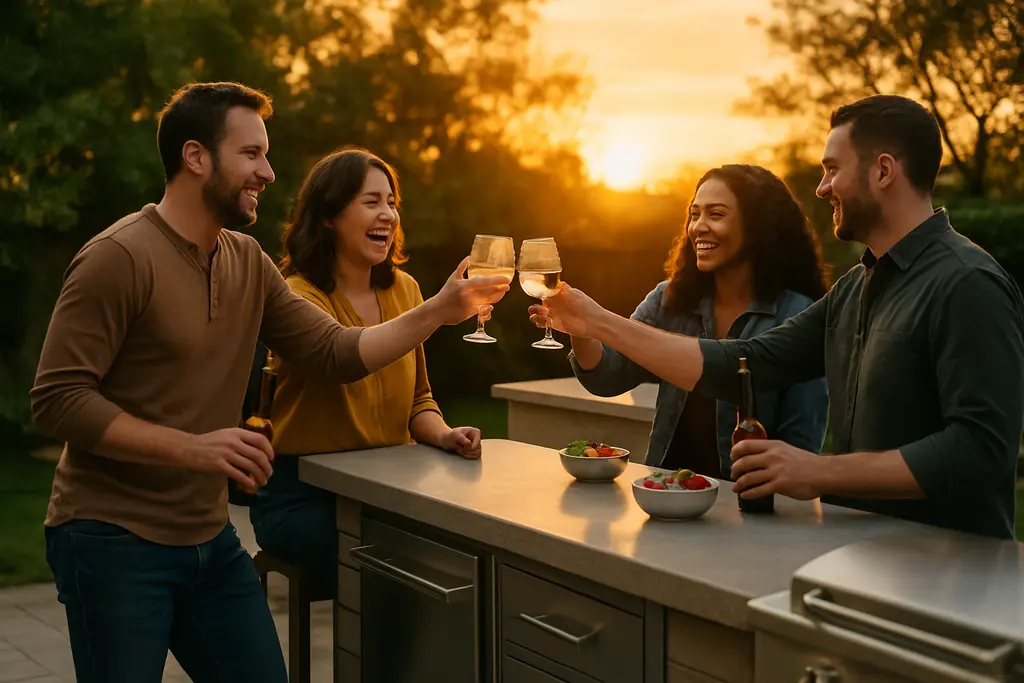
Once an outdoor kitchen supports longer gatherings, circulation becomes as important as cooking power. Guests need a place to stand without blocking a hot appliance. Children and pets need to be kept away from cooking zones. Seating should not trap the cook between a grill and a crowd. These are ordinary design issues, but they carry higher safety stakes outside because heat, weather and uneven surfaces are often part of the setting.
Owners of vacation homes or frequent-hosting properties may study similar outdoor living patterns through weekend villa ideas, which can provide inspiration on how to integrate aesthetics with functionality. However, the same caution applies: a space that photographs well is not automatically safe, durable or easy to maintain.
Safety And Scope Before A Backyard Build

The best outdoor kitchen plan is the one that matches the site. Before product selection, homeowners should check the patio condition, drainage direction, prevailing wind, sun exposure and distance from the indoor kitchen. These basics affect comfort and safety. They also influence whether a smaller station may outperform a larger installation.
Know Which Work Is Not A DIY Task
Outdoor kitchens often combine heat, water, electricity and heavy materials. That mix deserves clear boundaries. Homeowners can compare layouts, choose finishes and define how the space will be used. They should hire qualified professionals for higher-risk work.
- Use licensed or properly qualified trades for gas, electrical, plumbing and heating connections.
- Confirm local permit and inspection requirements before construction starts.
- Keep appliance clearance requirements, ventilation and manufacturer instructions in the plan.
- Plan safe lighting for cooking, walking routes and cleanup after dark.
- Avoid placing seating where guests must pass close to hot appliances or sharp counter corners.
These steps are not design extras. They are part of making an outdoor kitchen work after the first few gatherings. A project that ignores drainage, heat clearance or electrical protection can become harder to use and more expensive to correct.
Practical Lessons From Outdoor Kitchen Trends
The 2026 evidence supports a cautious but positive view of outdoor kitchen trends. Demand appeared strong in the cited product-order data, and homeowners were selecting more functional equipment. Yet the same data also showed why careful scoping matters. Product-only costs were already substantial before installation, and many popular features require infrastructure.
For everyday homeowners, the smartest case-study lesson is to design from routine use. Start with the number of people usually served, the cooking style used most often and the distance to indoor storage and cleanup. Then decide whether a sink, refrigerator, griddle, smoker or pizza oven earns its cost and space. Outdoor kitchen trends can offer direction, but the right project is still the one that fits the home, the site and the household’s real habits.