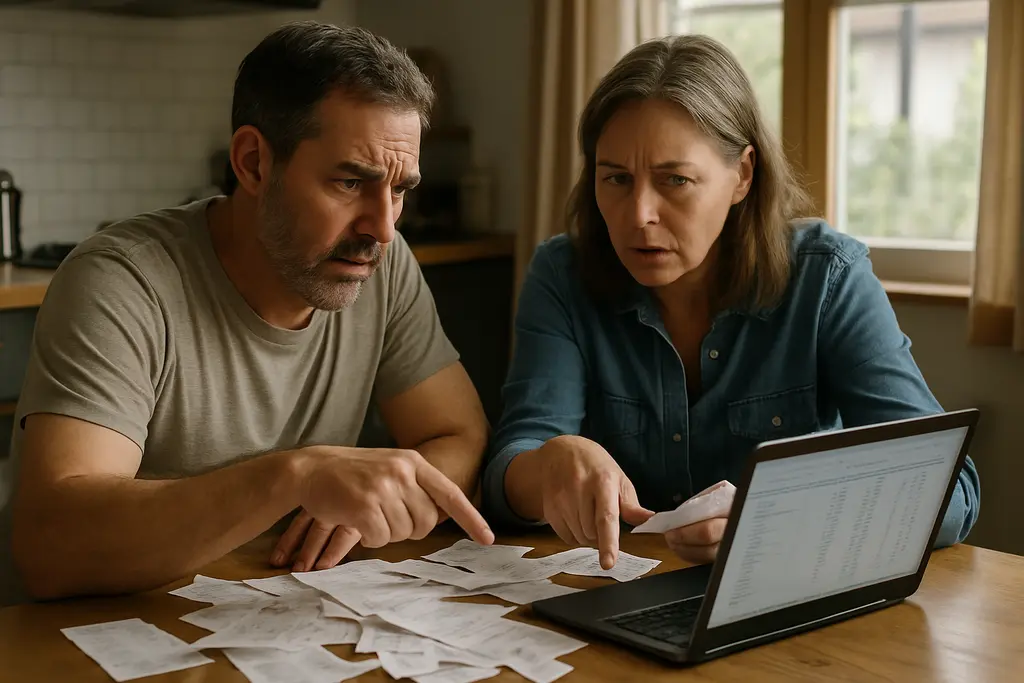
Home repair budgeting has become less forgiving for owners who assume a first estimate will hold. Angi’s 2026 State of Home Spending Pulse reported that 92% of U.S. homeowners who hired a professional for a home project in the past year finished at or above budget, and 43% went above the original estimate, according to Angi’s 2026 spending report. That does not mean every project is poorly planned. It does mean a repair budget should be built around uncertainty, not optimism.
As Carter Winslow, I tend to view repair planning through the same practical lens used in durable home design: protect the building first, then improve comfort, then consider cosmetic upgrades. A leaking exterior assembly, failed mechanical component, or unsafe stair rail is not in the same category as new paint or upgraded tile. The budget should reflect that order.
Why Home Repair Budgeting Is Tight In 2026
Cost Overruns Are Common
The strongest signal in Angi’s 2026 data is not simply that projects cost money. It is that many homeowners reached the finish line with higher-than-expected spending. Among homeowners who exceeded their budget, Angi reported that more than one-third spent at least 30% more than planned. A small cushion may not be enough if the scope is uncertain, access is difficult, or hidden damage appears once work begins.
For homeowners, this argues for a repair estimate that separates visible work from possible follow-up work. For example, a contractor may be able to price replacing a damaged section of trim, but the cost can change if rot extends behind siding. The homeowner’s job is not to guess the hidden condition. The practical step is to reserve funds for discovery and to ask the contractor what conditions could change the price before signing.
Maintenance Is Outpacing Renovation
Angi reported that in 2026, 63% of homeowners completed maintenance work in the past month and 58% made repairs, while 35% carried out discretionary renovations. That ordering matches what many design and remodeling professionals have seen in the field: owners are trying to keep homes functional before spending heavily on style-driven changes.
The same report noted that 66% of homeowners planned a major home investment within five years, and 56% planned to begin or continue a home project in the next three months. Those figures suggest steady activity, but not unlimited budgets. A homeowner planning a kitchen refresh may still need to account for roof, drainage, HVAC, or exterior repair needs first.
Set A Safer Repair Priority Order
Separate Urgent Repairs From Style Work
A practical repair budget starts with sorting work by risk. Water intrusion, electrical hazards, structural movement, pest damage, failing exterior stairs, and heating or cooling problems can affect safety, habitability, or further property damage. These items generally deserve review before cosmetic work. Painting, fixture swaps, and decorative updates may still matter, but they should not crowd out repairs that keep the home dry, stable, and safe.
For a deeper discussion of how owners can weigh safety and function against appearance, this related analysis on essential repairs versus cosmetic upgrades offers a useful planning frame. The key is not to reject design upgrades. It is to time them after the house’s basic systems have been considered.
Build A Contingency Before Choosing Finishes
Many repair budgets fail because the contingency is treated as leftover money rather than a planned line item. Angi’s overrun data supports a more cautious approach. If a project involves older materials, concealed framing, drainage issues, or previous DIY work, the chance of a scope change may be higher than it appears during the first walkthrough.
- Ask for a written scope that identifies what is included and what is excluded.
- Hold back a contingency before selecting premium finishes or add-ons.
- Request that change orders be documented before extra work proceeds.
- Prioritize repairs that reduce the chance of larger damage later.
This is where home repair budgeting becomes a design decision as much as a cost decision. A modest finish package with a realistic repair reserve can be more durable than a high-style plan that leaves no room for hidden conditions.
Decide What To DIY And What To Hand Off

Home Repair Budgeting Starts With Scope
Some small maintenance tasks are reasonable for capable homeowners, but the budget should not assume DIY is automatically cheaper. Angi’s Home Oops Report, based on a survey fielded on September 16, 2026, reported that 78% of homeowners had experienced at least one “home oops” mishap and that the average homeowner incurred $3,166 over the past three years fixing those mishaps, according to Angi’s Home Oops Report.
The same report found that correcting a DIY mistake costs $1,171 on average, and 52% of DIY mistakes require hiring a professional to finish or fix the work. For home repair budgeting, that means the first question is not “Can I try this?” The better question is “What happens if this goes wrong, and who has to correct it?”
Tools Should Match The Risk
Tool buying deserves the same caution. A homeowner may be able to justify basic tools for recurring maintenance, but specialized tools for one risky job can become false savings. Projects involving electrical panels, gas lines, major plumbing, roofing, structural work, or high ladders should be evaluated by qualified professionals. Local code and permit requirements may also apply, and those rules vary by location.
For those considering tool purchases for maintenance projects, one might explore insights from High Pro Tools to guide equipment choices. However, it should be emphasized that a tool purchase should never replace training, protective gear, or professional help where the work carries serious safety consequences.
Home Repair Budgeting In Practice
A Working Method For The Next Project
Good home repair budgeting starts with a written list of known defects, not a wishlist. Walk the home and group issues by water, structure, safety, mechanical systems, exterior envelope, and cosmetic work. Then decide which items need professional evaluation. If there is active leaking, repeated breaker trips, suspected mold, unstable railings, or movement in floors or walls, avoid casual trial-and-error repairs and seek qualified help.
After the list is sorted, collect estimates that describe the scope in plain language. A lower bid may be appropriate, but only if it covers the same work and uses suitable materials. Ask how the contractor handles hidden damage, scheduling changes, disposal, access, cleanup, and documentation. Those practical details often determine whether a budget remains controlled.
What To Revisit After The Work Ends
Repair planning should not stop once the invoice is paid. Keep records of the scope, materials, warranties, permits where applicable, and photos of completed work. These records help with future maintenance and can prevent repeat spending caused by uncertainty. If the final cost exceeded the estimate, note why: hidden damage, changed materials, added scope, access problems, or a delay. That information makes the next budget more accurate.
Angi’s Home Oops Report also found that 30% of homeowners knowingly delayed a needed repair that worsened; among that group, 83% ended up paying more than if they had addressed it promptly, with the average extra cost reported at about $1,645. That figure is a useful warning, not a prediction for every home. The safer lesson is clear: deferring a known problem can shift money away from design improvements and into damage control.
In practice, a repair budget should protect three things: the home’s condition, the homeowner’s safety, and the ability to finish the work without relying on best-case assumptions. That approach may feel conservative, but it gives design choices a stronger foundation. A home that is dry, sound, and maintainable is easier to improve, easier to live in, and less likely to punish the next project with avoidable repair costs.