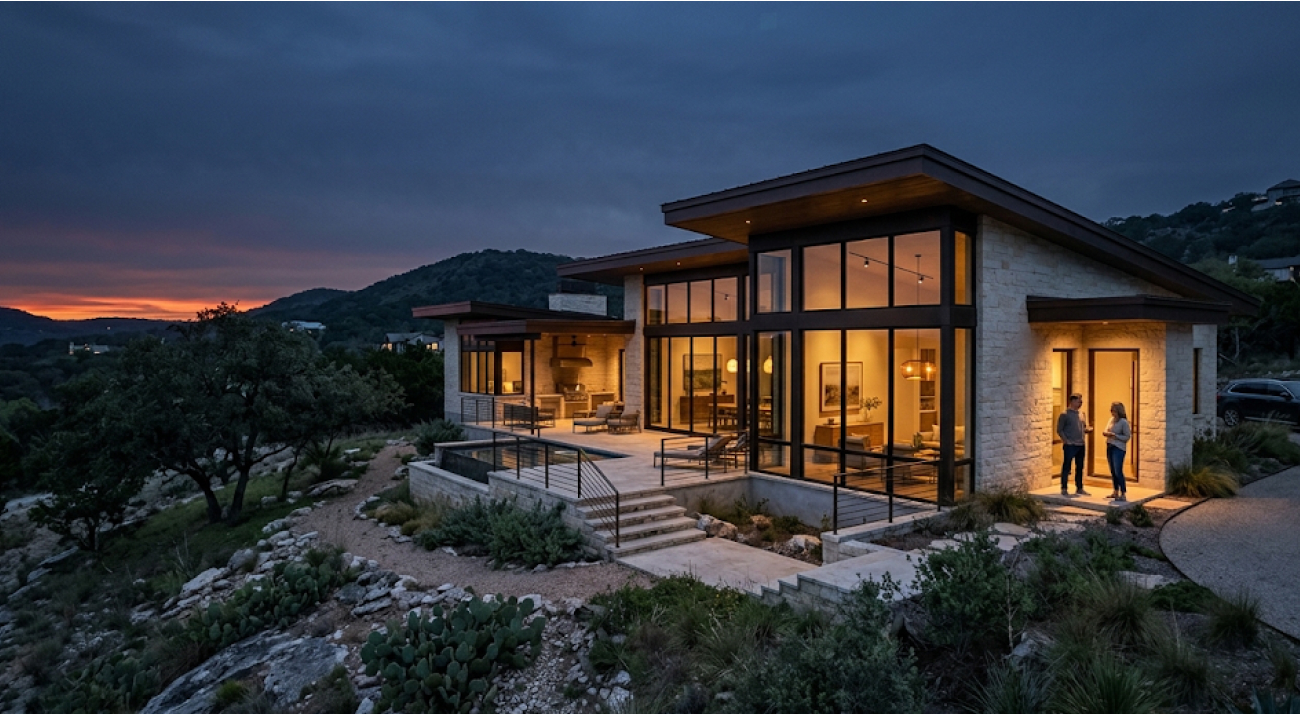
Mortgage rates are once again putting pressure on American homebuyers. On October 15, 2026, Freddie Mac reported that the average rate for a 30-year fixed-rate mortgage remained at 7.40%, unchanged from the previous week and well above the 6.27% average recorded one year earlier. For buyers considering a luxury property or planning a custom home in Central Texas, that difference can substantially affect financing costs, construction budgets, and the timing of a purchase. As buyers weigh major financial decisions and explore their options, some may also research unrelated leisure interests, including sports wagering resources such as Why pick Everygame for sports betting?.
The latest figures also arrive as the Austin-area housing market adjusts to slower sales and shifting buyer demand. According to the September 2026 Central Texas Housing Report released by Unlock MLS on October 13, closed residential sales across the Austin-Round Rock-San Marcos metropolitan area fell 14.8% year over year to 2,223 transactions. The median sales price, however, increased 1.4% to $421,000.
These figures tell an important story: higher borrowing costs can make buyers more cautious even when home prices do not decline. For luxury buyers, the challenge is to evaluate the complete cost of a property, determine an appropriate financing strategy, and decide whether purchasing an existing home or building a custom residence best serves their goals.
The mortgage-rate environment does not automatically make buying a home a bad decision. It does, however, make careful financial planning more valuable.
Why Mortgage Rates Reached 7.4% in October 2026
Freddie Mac’s Primary Mortgage Market Survey provides one of the most widely cited measures of U.S. mortgage rates. Its October 15 report showed the average 30-year fixed mortgage at 7.40%, while the average 15-year fixed mortgage stood at 6.71%. A year earlier, those averages were 6.27% and 5.52%, respectively.
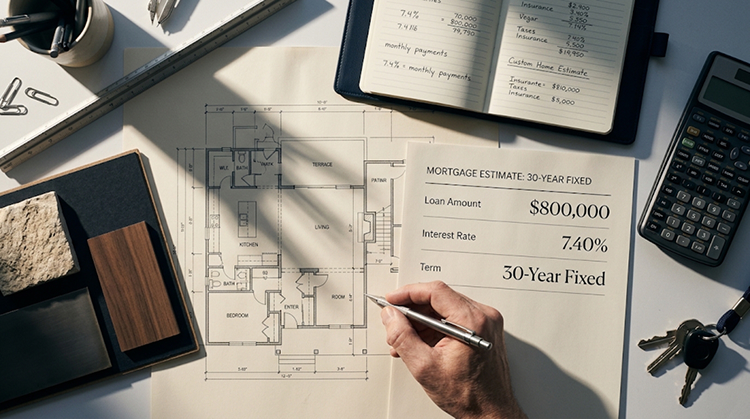
The difference is significant for borrowers who depend on financing rather than purchasing a property entirely with cash.
Source: Freddie Mac’s October 15, 2026, mortgage-rate report.
Mortgage rates respond to several economic forces, including inflation expectations, Treasury yields, investor demand for mortgage-backed securities, and broader financial-market conditions. The Federal Reserve influences the economy through monetary policy, but its benchmark rate does not directly set the interest rate a homebuyer receives on a conventional 30-year mortgage.
That distinction matters when planning a purchase. Even if the Federal Reserve changes its policy rate, mortgage rates may move differently depending on what investors expect inflation and economic growth to do over the following months.
For buyers planning a luxury residence, waiting for a specific rate target can be difficult to justify without considering the other variables involved. Home prices, available properties, construction costs, personal finances, and the terms offered by individual lenders can change during the same period.
A more practical approach is to determine what a property would cost at today’s available financing terms and compare that figure with a reasonable range of alternative scenarios. Buyers can then make a decision based on their financial capacity rather than relying on an uncertain forecast.
How a 7.4% Mortgage Changes the Cost of a Luxury Home
The impact of higher mortgage rates becomes clearer when applied to a specific loan amount. Although the purchase price of a luxury home may be considerably higher than the regional median, the principal and interest payment depends on the amount borrowed, the interest rate, and the repayment term.
Consider a hypothetical buyer financing $800,000 with a 30-year fixed-rate mortgage. The following estimates illustrate how the interest rate alone can affect the monthly payment.
| Interest rate | Approximate monthly principal and interest |
|---|---|
| 6.27% | $4,936 |
| 7.40% | $5,530 |
| Difference | $594 more per month |
Illustrative estimates based on a $800,000 loan amortized over 30 years. Payments are rounded and exclude property taxes, homeowners insurance, mortgage insurance, HOA fees, and other expenses. The 6.27% figure is Freddie Mac’s reported average from October 2025, not a current loan offer.
At these assumptions, the higher rate adds approximately $7,128 per year to the required principal-and-interest payments. Over the full 30-year term, the difference would amount to more than $200,000 if both rates remained fixed for the entire period and the loan were held to maturity.
That comparison demonstrates why buyers should look beyond the advertised purchase price. Two homes with similar prices can have substantially different long-term costs depending on financing terms, property taxes, insurance, maintenance requirements, and the amount of money committed upfront.
Luxury properties also introduce expenses that may be less prominent in a standard home purchase. Larger properties can require more extensive landscaping, pool maintenance, specialized equipment, security systems, and ongoing upkeep. A custom residence may include high-end appliances, advanced home automation, specialty finishes, and outdoor living spaces that need dedicated maintenance budgets.
The right financial calculation should include these costs before a buyer commits to a property or construction contract.
What the Latest Central Texas Housing Data Means for Buyers
National mortgage statistics help explain the broader economic environment, but local data provides a more useful starting point for a property decision in Austin and its surrounding communities.
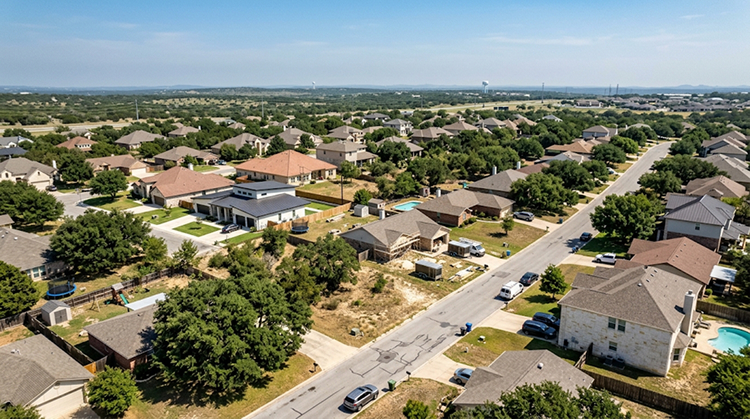
Unlock MLS reported that the Austin-Round Rock-San Marcos metropolitan area had 13,465 active residential listings in September 2026, alongside 5.4 months of housing inventory. The average home sold for 92.7% of its original list price, compared with 91.4% in September 2025.
Those figures suggest that the market has room for negotiation in some situations, although they do not guarantee a discount on every property. A home in a highly desirable location with distinctive architecture may attract a different level of interest from a property that has remained on the market for several months.
The city of Austin also showed a different pattern from the broader metropolitan area. Its median residential sales price reached $570,958 in September, up 4.2% year over year, even as closed sales declined 12.7% to 777 transactions.
For luxury buyers, this distinction matters. Regional averages can provide context, but they cannot substitute for evaluating the specific neighborhood, property type, price range, and comparable sales.
A buyer considering a custom home in the Texas Hill Country, for example, may need to assess land availability, access to utilities, site preparation, and the cost of building materials in addition to mortgage rates. Someone purchasing an established luxury home in Austin may place greater emphasis on the property’s condition, location, renovation requirements, and ongoing ownership costs.
The most useful strategy is to evaluate the property and its financing together rather than assuming that a change in the national market will produce the same result across every local segment.
Should Luxury Buyers Purchase an Existing Home or Build a Custom Residence?
When borrowing costs are elevated, the choice between purchasing an existing home and building a custom residence deserves a closer look. Neither option is automatically less expensive. The better fit depends on the buyer’s priorities, available capital, project timeline, and expectations for the property.
Buying an Existing Luxury Home
An existing home gives buyers a clearer view of the finished property before they commit. They can inspect the layout, evaluate the neighborhood, review property records, and estimate near-term maintenance needs.
Depending on local conditions and the seller’s circumstances, buyers may also be able to negotiate the purchase price, request repairs, or seek closing-cost assistance. Any seller concession must be agreed upon by the parties and comply with the buyer’s mortgage-program requirements.
The main advantage is greater visibility into the immediate purchase. Buyers can compare the asking price with recent comparable sales and assess whether the property meets their needs without waiting for a construction project to finish.
However, an existing luxury property may require expensive modifications to achieve a buyer’s preferred layout, finishes, energy performance, or technology features. A lower purchase price does not necessarily translate into a lower total cost if significant renovations are required.
Building a Custom Home
A custom home allows buyers to make decisions about architecture, room configuration, materials, storage, outdoor living, and building systems from the beginning. Those choices can be particularly valuable for households with specific requirements that are difficult to find in existing properties.
The trade-off is that the final cost depends on more than the initial construction estimate. Land acquisition, architectural and engineering services, permitting, site preparation, utility connections, landscaping, and material selections can all affect the budget.
Financing also works differently. Some projects use construction loans, which may have variable rates, interest-only payments during construction, draw schedules, and specific requirements for converting the balance to permanent financing. The terms depend on the lender and the structure of the loan.
A buyer should therefore discuss financing with a lender familiar with custom construction before committing to land or signing a building agreement. The lender can explain how interest is calculated during construction, what documentation is required, and whether a construction-to-permanent loan is available.
Higher mortgage rates do not eliminate the benefits of building. They make it more important to understand the full cost of the project and preserve enough financial flexibility to manage changes along the way.
Five Financial Steps to Take Before Committing to a Luxury Property
A well-prepared buyer can make a more confident decision by examining financing and property costs before signing a purchase contract or starting a construction project.
1. Obtain current lender quotes. Freddie Mac’s 7.40% national average is a benchmark, not a guaranteed offer. The rate available to an individual borrower can differ according to credit history, loan size, down payment, points, occupancy, and lender requirements.
2. Compare multiple financing structures. Ask lenders to explain the costs of fixed-rate mortgages, shorter repayment terms, jumbo loans where applicable, and construction financing. Compare the interest rate alongside closing costs, fees, repayment requirements, and any restrictions.
3. Calculate the complete monthly ownership cost. Include principal, interest, property taxes, homeowners insurance, HOA assessments, maintenance, utilities, and any property-specific services. For a custom build, account for the expected cost of maintaining the finished residence.
4. Maintain a realistic contingency reserve. Construction projects can encounter unexpected site conditions, material changes, permit requirements, and design revisions. A reserve can help prevent an unplanned expense from disrupting the wider financial plan.
5. Test the budget against higher-rate scenarios. Buyers should understand whether a project remains affordable if financing costs, insurance premiums, taxes, or construction expenses rise. A decision that works only under the most optimistic assumptions may leave too little flexibility later.
These steps help buyers establish a budget based on their own financial position rather than relying on predictions about where mortgage rates will move next.
Should Buyers Wait for Mortgage Rates to Fall?
Waiting for lower mortgage rates can seem appealing, particularly when a small percentage change produces a meaningful difference in monthly payments. However, there is no guarantee that rates will decline on a particular schedule, and the cost of waiting depends on what happens to property prices, inventory, and the buyer’s personal circumstances.
Freddie Mac’s October 15, 2026, report showed that the 30-year fixed mortgage rate remained at 7.40% for the second consecutive week. That followed increases in the preceding weeks, illustrating how quickly financing conditions can change.
The national housing market also showed mixed signals. Reuters reported on October 13 that existing-home sales increased 1.5% in September to a seasonally adjusted annual rate of 3.99 million units. At the same time, the national median existing-home price rose 1.3% year over year to $417,500, the highest September figure on record. Sales of homes priced at $1 million or more increased 4.1% from a year earlier.
These figures demonstrate why buyers should avoid making decisions based on mortgage rates alone. Some luxury properties may continue to attract demand, while others may offer greater negotiating opportunities. Local inventory, property condition, and seller motivation all influence the outcome.
For a buyer with stable finances who has identified the right property, purchasing at today’s rate may be reasonable if the full cost fits the budget. Another buyer may benefit from waiting to increase savings, reduce other debts, or identify a property that better matches their priorities.
Refinancing may be an option if rates fall in the future, but it is not guaranteed. Eligibility, closing costs, the remaining loan balance, and future market conditions all affect whether refinancing makes financial sense. Buyers should not rely on a future refinance to make an otherwise unaffordable purchase work.
Planning a Central Texas Custom Home Around Today’s Market
For prospective luxury homeowners, the current mortgage environment is a reason to plan carefully, not necessarily to abandon a property goal. The 7.40% national mortgage average highlights the importance of evaluating financing early, while the September Central Texas housing data shows why local conditions deserve equal attention.
Buyers considering a custom residence can begin by defining the features that matter most, establishing a realistic total project budget, and assessing the suitability of potential building sites. Early coordination between the lender, design professionals, and builder can help identify financial constraints before major commitments are made.
The same discipline applies to purchasing an existing luxury home. Comparing properties, reviewing recent local sales, assessing future maintenance, and obtaining competitive loan offers can help clarify the true cost of ownership.
For J. Siemering Homes, the central consideration is helping prospective homeowners approach their plans with a clear understanding of design priorities, construction requirements, and the financial decisions that accompany a custom residence. Mortgage rates will continue to change, but a carefully planned project gives buyers a stronger foundation for deciding when and how to proceed.
The most appropriate next step is to evaluate the intended property, the available financing, and the total ownership budget together. That approach allows buyers to make a decision grounded in their own circumstances and Central Texas market conditions rather than trying to predict the next move in mortgage rates.