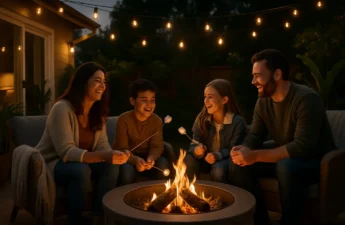
Outdoor comfort spaces are no longer being planned only as curb-appeal upgrades or occasional entertaining areas. The 2026 U.S. Houzz Outdoor Trends Study, conducted among 1,191 U.S. homeowners between April 25 and May 6, 2026, found that many projects were rooted in daily use, repair needs and comfort rather than resale alone, according to Houzz’s outdoor study release.
For homeowners, the useful lesson is practical: start with how the space will be used on a normal weekday, then decide what needs repair, shade, seating, lighting and professional review. A patio that looks polished but lacks safe footing, usable shade or enough lighting can still underperform. The Houzz findings point toward outdoor rooms that support sitting, talking, cooking and quiet time, while still respecting the limits of do-it-yourself work.
What The 2026 Houzz Study Measured
Survey Timing And Scope
The research was based on a homeowner survey completed from April 25 through May 6, 2026. Because the survey has already taken place as of October 20, 2026, its findings should be read as a snapshot of homeowner renovation activity and motivations during that period, not as a forecast for a future season.
The reported motivations are revealing. Houzz found that 41% of homeowners said deteriorated or broken outdoor elements triggered their project. That is a grounded starting point for design decisions. A cracked surface, failing structure, poor drainage area or worn seating zone may not be as appealing to discuss as furniture style, but it often determines whether a space can be used safely and often.
Comfort Was A Stronger Driver Than Resale
The study reported that 25% of homeowners, up 3 percentage points from 2024, said making the outdoor space more accommodating motivated their project. By contrast, only 15%, down 3 percentage points from 2024, cited improving resale value as a motivation. That does not mean resale is irrelevant. It means homeowners should be cautious about treating any outdoor renovation as a sure financial return.
For everyday planning, comfort is a more controllable target than resale. A homeowner can define whether the space needs two reading chairs, a dining table, a shaded play zone or a safer path from the back door. Market value depends on many outside factors that a patio plan cannot control.
Why Outdoor Comfort Spaces Start With Repairs
Fix Function Before Adding Features
When 41% of surveyed homeowners pointed to deteriorated or broken elements as the trigger, the design message was clear: repair should come before styling. In practical terms, outdoor comfort spaces work best when the underlying surfaces, steps, drainage and attachment points are sound enough for routine use.
This is where a modest project can outperform a showier one. A repaired patio surface, stable furniture layout and shaded sitting area may serve a family better than a larger plan that leaves trip points, glare or water collection unresolved. Homeowners should document what is broken, what feels unsafe and what limits use during hot, wet or dark parts of the day.
Safety Boundaries For DIY Work
Many planning tasks are suitable for homeowners: measuring the area, tracking sun exposure, identifying furniture clearances and listing repair concerns. Higher-risk work deserves a stricter boundary. Electrical additions, plumbing for outdoor kitchens, gas lines, heating systems, structural shade supports and major paving work should be reviewed by qualified professionals and local officials where permits or inspections apply.
The reason is not just code compliance. Outdoor environments expose materials and systems to moisture, heat, wind and soil movement. A design choice that looks simple on paper can involve loads, water management or utility connections that exceed ordinary DIY judgment.
Design Choices That Support Daily Sitting
Outdoor Comfort Spaces Need Seating Before Extras
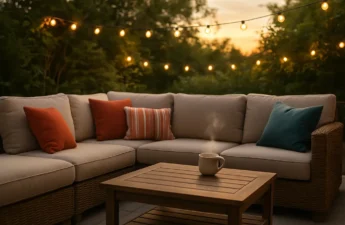
Houzz reported that 83% of renovated outdoor spaces included a lounge or seating area. Within those areas, 71% had a sofa or lounge chairs, 66% included outdoor lighting and 55% had a coffee or side table, according to the Houzz Pro trend analysis. Those numbers support a simple design order: seating first, lighting second, surfaces within reach third.
That order helps avoid common mistakes. If a homeowner buys a fire feature before confirming chair clearances, the layout may feel cramped. If lighting is an afterthought, steps and edges may become harder to read at night. If there is no table surface, drinks, books and phones end up on the ground, which makes the area feel temporary rather than lived in.
Shade Has Become A Core Comfort Feature
The 2026 study found that 35% of homeowners added shade structures, a jump of 15 percentage points from 2024. Shade can make an outdoor area more usable, but it should be planned with site conditions in mind. Wind exposure, attachment details, drainage and the path of the sun all affect whether a pergola, awning, umbrella or covered structure is appropriate.
Renters and budget-conscious homeowners can still apply the same thinking at a smaller scale. A movable umbrella, lighter furniture arrangement and clear walking path may improve comfort without permanent construction. Owners planning built structures should ask contractors how posts, footings, drainage and nearby utilities will be handled rather than focusing only on the finished appearance.
Where Professional Help Made Sense

More Homeowners Hired Pros In 2026
Houzz found that 71% of renovating homeowners hired at least one professional in 2026, up from 65% in 2024. That rise fits the type of projects described in the study: shade structures, hard surfaces, lighting, seating zones and outdoor kitchens often overlap with safety, durability and site-work concerns.
Professional help does not have to mean handing over every decision. Homeowners can still set priorities, compare bids and keep the scope realistic. The key is to separate personal preference from technical risk. Choosing cushion color is a homeowner decision. Evaluating electrical supply, drainage pitch or structural attachment is not the place to guess.
Outdoor Kitchens Need Extra Caution
Outdoor kitchens were a smaller but more technically demanding part of the 2026 findings. Houzz reported that 12% of homeowners upgrading structures added or upgraded an outdoor kitchen. Among that group, 95% built them from scratch, and 68% incorporated infrastructure improvements such as plumbing, electrical or heating.
Those figures should temper any assumption that an outdoor kitchen is just cabinetry and a grill. Once utilities enter the plan, the project needs qualified trade review. Homeowners should ask what will be permanently connected, what will be weather-exposed, how shutoffs will be accessed and who is responsible for inspections. If the answers are vague, the design is not ready for construction.
Cost Priorities Without Resale Hype
Use The Study As A Priority Filter
The Houzz data does not provide a guaranteed payback figure, and homeowners should not treat any patio, shade or kitchen project as a certain financial win. What it does provide is a useful priority filter. The strongest signals in the study were repair triggers, seating areas, shade, lighting and professional involvement.
A practical project list might start with these questions:
- What is broken, unstable, poorly drained or difficult to use?
- How many people need to sit comfortably on a normal day?
- Where is shade needed during the hours the space is actually used?
- What lighting is needed for steps, edges, tables and cleanup?
- Which parts involve electrical, plumbing, heating, gas, structural or paving work?
For more day-to-day planning ideas tied to the same outdoor-use theme, readers can compare these findings with outdoor design trends for everyday living. For related home and retreat content within a similar network, consider exploring Weekend Villas, which offers insights on outdoor living centered around comfort and relaxation.
Match Scope To Use, Not Wish Lists
The safest project scope is often the one that solves real friction. If the current patio is rarely used because it is too hot, shade may matter more than a larger footprint. If evening use feels awkward, lighting and side tables may do more than another decorative feature. If surfaces are cracked or uneven, repair should outrank furniture upgrades.
This approach does not dismiss style. It puts style after use, safety and maintenance. Materials, colors and furnishings still matter, but they should support how the area works rather than distract from unresolved problems.
Planning Outdoor Comfort Spaces With 2026 Houzz Data
A Practical Planning Sequence
The strongest takeaway from the 2026 Houzz study is that homeowners were designing for living, not just listing. Outdoor comfort spaces should begin with a condition review, move into seating and shade decisions, then address lighting, tables and any utility-connected features.
A measured plan may not produce the most dramatic before-and-after photo, but it can produce a space that gets used more often and with fewer frustrations. For homeowners weighing a 2026 or 2027 outdoor project, the evidence supports a careful path: repair what has failed, define how the space will be used, bring in qualified help for technical work and keep resale expectations cautious. That is how comfort becomes a practical design result rather than a slogan.