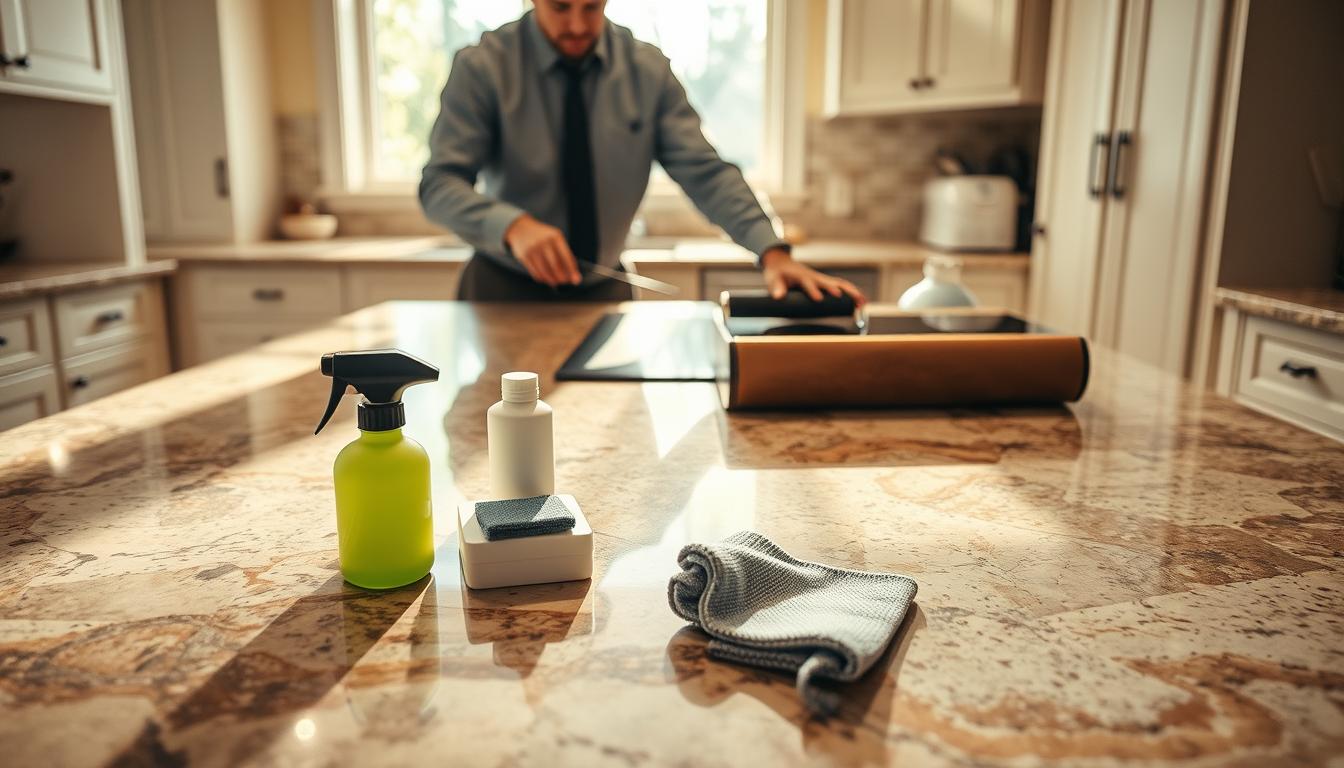
Choosing a countertop is like picking a piece of art. You might fall in love with a stunning slab of Carrara marble. But what happens when that first cocktail leaves a mark? It’s a sobering reality many face, often too late.
We’ll look at the key players in countertops: calcite, dolomite, quartzite, and granite. Each has its own Mohs hardness level, which is key for kitchen performance. Granite is like the steadfast superpower, while quartzite is the ambitious newcomer. Marble is the gorgeous yet high-maintenance friend who demands attention.
We’ll explore scratches and etches, comparing them to relationships and international politics. By the end, you’ll know how to make choices that won’t keep you up at night, worrying about countertop regrets.
Finishes Honed Leathered Satin Flame Brushed Antique Reflectance and Slip
Finishes make each countertop unique. They are like the wardrobe for your kitchen. Each finish has its own style, blending beauty with function.
Honed finishes feel luxurious and hide marks well. They are like a timeless little black dress. Leathered finishes add texture and grip, perfect for busy mornings.
Flamed and brushed finishes offer drama and grip. They tell a story of durability and style. The satin finish balances shine and restraint, adding elegance without overpowering.
| Finish Type | Texture | Reflectance | Slip Resistance | Maintenance |
|---|---|---|---|---|
| Honed | Matte | Low | Moderate | Easy |
| Leathered | Textured | Medium | High | Moderate |
| Flamed | Rugged | Low | High | Easy |
| Brushed | Soft | Medium | Moderate | Moderate |
| Satin | Smooth | Medium | Moderate | Easy |
Choosing a finish is more than looks. It’s about how it fits into your life. Each finish has its own benefits. Think about your lifestyle and what you like. Your countertops should show your taste and meet your needs.
Slab Yard Game Reading Movement Dry Lay Bookmatch Seams
Walking into a slab yard without a plan is like exploring a maze without a map. It’s confusing and risky. Every slab is a chance to create a masterpiece for your kitchen. Knowing how to pick the right slab is key to bringing your vision to life.
Let’s talk about reading movement. This means understanding the flow and direction of the stone’s veining. It’s not just fun; it’s essential for the feel of your space. A slab with bold veining can anchor your design, turning it into a curated gallery.
Then, there’s the dry lay ritual. This means laying slabs flat before deciding. Seeing the stone in its true form helps you understand how it will look in your home. Remember, lighting can change how a slab looks, from showroom beauty to kitchen reality.
Next, we have the bookmatch technique. This method creates mirror-image veining by opening two slabs like a book. It can turn a simple island into a stunning statement piece. The visual effect is striking, adding sophistication to your space.
Now, let’s talk about seams. The question isn’t if you’ll have them; it’s if your fabricator can hide them. A well-done seam can be almost invisible, improving your kitchen’s look.
Lastly, design your kitchen with the countertop first. This isn’t just trendy advice; it’s the only smart way to remodel. Choosing your stone first avoids the pain of matching cabinets to a stone you haven’t picked yet.
| Technique | Description | Benefits |
|---|---|---|
| Reading Movement | Understanding veining patterns | Creates a cohesive design |
| Dry Lay | Viewing slabs flat before purchase | Ensures true color and texture |
| Bookmatch | Creating mirror-image veining | Enhances visual impact |
| Seam Placement | Strategic positioning of seams | Minimizes visibility |

Edges and Details Apron Miters Waterfall Drip Edges Drain Grooves
Countertop edges can make or break a room’s look. A well-crafted edge shows off the skill of the craftsman. An apron front on a farmhouse sink adds charm but also a certain style that may or may not age well.
Let’s explore countertop edges. Mitered edges join two pieces at a 45-degree angle, making the slab look thicker. Done right, they’re almost invisible. But if not, they stand out too much.
The waterfall island design is like a statement piece. It looks luxurious but can be tricky to maintain. It’s important to talk to fabricators early to avoid problems later.
Drip edges and drain grooves are often overlooked but vital. They keep water from damaging your cabinets. In bathrooms, where water is more likely to stay, these details are even more important.
| Edge Type | Visual Impact | Structural Considerations | Best Use |
|---|---|---|---|
| Apron | Charming, rustic | Requires precise installation | Farmhouse sinks |
| Mitered | Seamless, elegant | Must be expertly crafted | High-end kitchens |
| Waterfall | Bold, modern | Structural integrity is key | Islands |
| Drip Edges | Subtle, functional | Helps prevent water damage | Sinks and vanities |
| Drain Grooves | Practical, discreet | Prevents water pooling | Near faucets |
In conclusion, the details of your countertop edges are not just about looks. They show your style and commitment to quality. Choosing the right edges ensures your countertops look and function well. For more ideas on outdoor living and kitchen designs, check out this resource.
Sealing Myths Absorptivity Tests Solvent vs Water Based Cadence
Are we really one clumsy moment away from ruining our stone countertops, or is that just a myth? The sealing industrial complex has convinced us that our marble countertops are always on the brink of disaster. But let’s apply some analytical skepticism and dig deeper into the world of stone sealing.
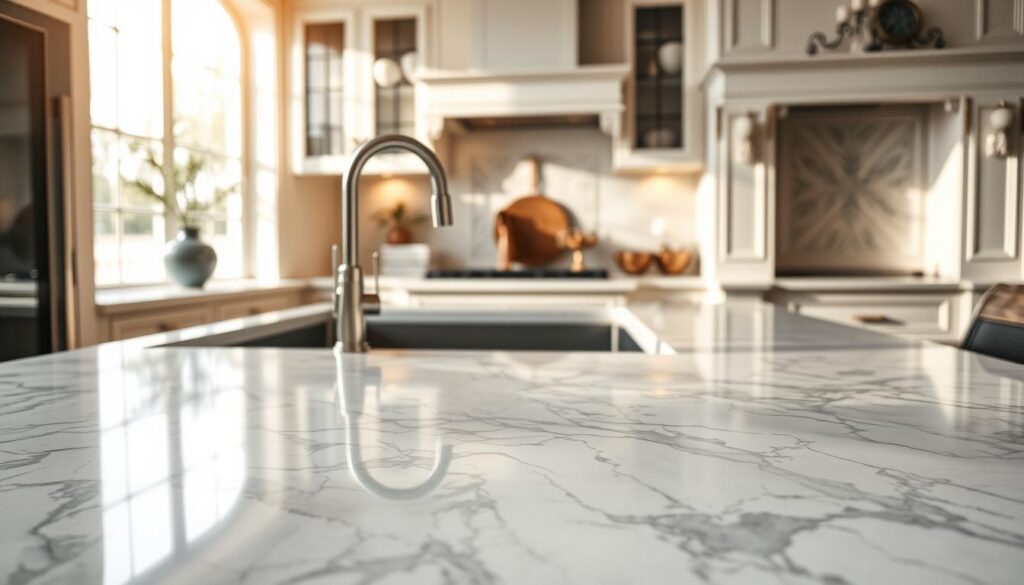
First off, what do sealants actually do? They create a protective barrier that buys you time to wipe up a spill, not an impermeable force field. If you think a sealant can prevent etching on your marble countertop, think again. Etching is a chemical reaction, not a stain. So, while sealants can help with absorbency, they won’t save you from a careless moment.
Now, let’s talk about the absorptivity test. This is your empirical friend in a world of anecdotal advice. Simply place a few drops of water on your stone and wait for 15 minutes. If the stone darkens, it’s thirsty for sealant. If the water beads up like it’s afraid of commitment, you’re good to go!
Next, we dive into the debate of solvent-based versus water-based sealants. Solvent-based options penetrate deeper but come with more VOCs, which is a fancy way of saying they can be less environmentally friendly. On the other hand, water-based sealants are the eco-conscious choice, though they may require more frequent applications. It’s a balancing act between sustainability and performance.
So, how often should you seal your countertop? The answer isn’t just a matter of calendar months. It depends on usage patterns. A marble countertop in a powder room that sees occasional hand-washing needs far less attention than a granite island that hosts weekly dinner parties where red wine flows like political opinions at Thanksgiving. Understanding your sealant cadence is key to maintaining your countertop’s beauty.
| Sealant Type | Penetration Depth | Environmental Impact | Application Frequency |
|---|---|---|---|
| Solvent-Based | Deep | Higher VOCs | 12-18 months |
| Water-Based | Moderate | Lower VOCs | 6-12 months |
In conclusion, the myths surrounding stone sealing can be as slippery as a wet countertop. With the right knowledge and a little skepticism, you can confidently care for your marble countertops without fear of a single spill ruining your day.
Daily Care pH Neutral Routines Poultice for Stains Etch Recovery
Think your natural stone countertop can handle itself? Think again. Keeping your stone looking great is a daily task, not just a yearly job. A pH-neutral routine is key. Avoid harsh cleaners like vinegar, which can damage your marble. Instead, use gentle soap solutions that care for your stone.
Soapstone is a special case. It gets better with age, developing a beautiful patina. Unlike marble, which is delicate, soapstone welcomes wear and tear. It’s the perfect choice for those who value durability.
Got stains on your countertop? Don’t worry! The poultice method can help. It’s like a detox for your stone, pulling out stains and contaminants. This method uses a paste to draw out the unwanted marks.
Etch recovery is a different story. For marble and limestone, you’ll need to use mechanical abrasion and re-polishing. It’s not a simple DIY task. Knowing when to fix it yourself and when to call a pro is important.
In short, daily stone care is vital for your countertops. Love your soapstone and be prepared to deal with stains and etches. With the right care, your stone will stay beautiful for years.
Fabrication Veins at Cutouts Rodding Reinforcement Seam Placement
Stone fabrication is where design meets engineering, often in surprising ways. The stunning veins you saw at the slab yard? They’re not just pretty patterns. They also represent weak points that can lead to cracks if not handled correctly.
Cutouts for sinks and cooktops create stress points. This is where rodding reinforcement comes in. By embedding metal or fiberglass rods into the stone, fabricators create a hidden support system. This is key to prevent your countertop from cracking.
Now, let’s talk about seam placement. We all wish for a seamless countertop. But, your slab isn’t infinite, and doorways won’t fit a single piece. A skilled fabricator places seams where they’re least visible and most strong. Never at the weak spot between a sink and the edge.
Lastly, there’s vein matching. This technique is key for a cohesive look. A countertop that looks like one piece is more appealing than a patchwork. This is why hiring an experienced fabricator is worth it. You’re not just paying for labor; you’re investing in their judgment.
For more insights on seam placement and best practices, check out our detailed guide.
Risk Zones Cooktop Surrounds Island Ends Wine Areas Bath Vanities
Every countertop has its own challenges. Knowing where to use the best materials is key. The kitchen, and the area around the cooktop, is the most critical. It faces constant heat from hot pans and splattering oils.
A dropped cast iron skillet is a test of your stone’s strength and your nerves!
Island ends are another hotspot. They are often used for seating and face both cooking chaos and being used as step stools. It’s amazing they last as long as they do!
Wine areas are also high-risk. Whether it’s a dedicated bar or a corner for bottles, these spots are hit by acidic attacks. If you have calcite-based stones, be ready for wine stains. Wine stain prevention is essential!
Bathroom vanities are also at risk. They are exposed to humidity, soap scum, and mysterious blue toothpaste stains. These stains seem to etch marble like it’s personal. Bathrooms are constantly hit with steam and cleaners, making them a unique risk zone.
The answer is not to be paranoid but to choose materials wisely. Use premium materials in high-traffic areas like the kitchen island. That dramatic marble might be better suited for a bathroom vanity, where it faces less risk. With the right choice, maintenance becomes easier.
Client Education Maintenance Card Service Contract Offers
Let’s talk about the unsung hero of stone care: the maintenance card. This laminated gem should live snugly inside your cabinet door. It’s ready to transform vague advice into actionable steps. Imagine getting a stunning stone countertop without any care instructions. That’s a recipe for disaster!
Client education is key. Too often, homeowners get vague advice like “don’t use harsh cleaners” and a handshake. The maintenance card should detail the stone variety, finish type, and sealer used. It should also note the last application date and recommend specific products by brand name, not just a generic category. This card is your go-to guide for maintaining your beautiful investment.
Now, let’s explore service contracts. These offers mark a big change in the stone industry. They include scheduled visits for cleaning, inspection, and resealing tailored to your stone’s needs and usage patterns. Is this an upsell? Absolutely! But is it also the most effective way to ensure your investment doesn’t degrade through neglect? The data says yes.
By providing a stone maintenance program, fabricators aren’t just building recurring revenue; they’re reducing warranty claims and fostering relationships that generate referrals. For homeowners, this proactive approach is the difference between stewardship and panic when something goes wrong. So, embrace the maintenance card and service contract—it’s not just smart; it’s essential!
| Feature | Maintenance Card | Service Contract |
|---|---|---|
| Details Provided | Stone type, finish, sealer, care instructions | Scheduled cleaning, inspection, resealing |
| Frequency of Use | Everyday reference | Periodic visits |
| Cost Implication | One-time investment | Recurring fees |
| Long-term Benefit | Informed care | Proactive maintenance |
Pricing Transparency Grade Quarry Freight Waste Factors and Warranty
Understanding stone pricing is key to making smart choices. The costs of natural stone are not as secret as some might say. When picking a countertop, knowing the quarry grade can help save money.
Grades like commercial, standard, and premium show the stone’s quality and look. A top-quality slab from a trusted quarry might cost more. But it’s durable and beautiful, unlike lower grades.
Freight costs are another hidden expense. Moving heavy stone from far places, like Brazil or Italy, can raise your bill. These costs go up with distance and fuel prices, so be ready for that.
The waste factor, 15-25%, covers cuts and breakage. It’s not a trick; it’s needed to fit the slabs in your space.
Warranty terms can differ a lot. Some offer lifetime guarantees on seams and installation, while others don’t. Knowing what your warranty covers is vital. You don’t want surprises about what’s not included.
Transparency is important. Knowing about pricing, quarry grades, and warranties helps you choose wisely. For more on sustainable architecture, check out this resource.


