Most floors are just there, like beige wallpaper. They’re something you walk on while thinking about other things. But wide plank flooring changes that. It makes you feel like you’re in a special place.
Choosing wide plank flooring is like picking a tailored suit. It’s not just flooring; it’s a statement of style. It says “old money” even if your budget is tight.
Wide plank flooring makes rooms look bigger. It has fewer seams, creating a smooth look. In the next few thousand words, we’ll explore premium hardwood options, grades, and finishes.
Choosing a floor is like solving a puzzle. It involves material science, design history, and a bit of showing off. Are you ready to explore?
Solid vs engineered stability width humidity and radiant math
Choosing hardwood is more than picking wood. It’s about your lifestyle. Solid and engineered hardwood reflect different approaches to home and comfort. Let’s explore this world where tradition meets innovation.
The Philosophical Divide: A Single Slab vs. a Plywood Symphony
Solid hardwood is a single, solid piece of wood. It’s like a vinyl record of flooring. It has character and can last 50 to 100 years, if kept dry.
Engineered hardwood is a clever cousin. It has a plywood core and a thin hardwood layer. It’s great for basements or areas with humidity changes.
The Century Club: Lifespan and the Art of Refinishing
Solid hardwood lasts a long time with care. But refinishing it is hard, like restoring a classic car. Engineered hardwood is more practical, lasting fewer years but easier to refinish.
The Humidity Tango: Why Your Floor Moves More Than You Do
Humidity affects flooring. The ideal humidity is 35% to 55%. Solid hardwood can warp in changing humidity. Engineered hardwood is more stable, thanks to its design.
Before choosing, think: are you romantic or practical? Your subfloor awaits your decision.
| Feature | Solid Hardwood | Engineered Hardwood |
|---|---|---|
| Lifespan | 50-100 years | 20-30 years |
| Refinishing | Multiple times | Limited |
| Humidity Resistance | Less stable | More stable |
| Installation | Above grade | All grades |
For radiant heat flooring, engineered hardwood is better. It handles temperature changes well, making your space more stable and comfortable.
Grade and cut prime character rift and quarter figure lengths
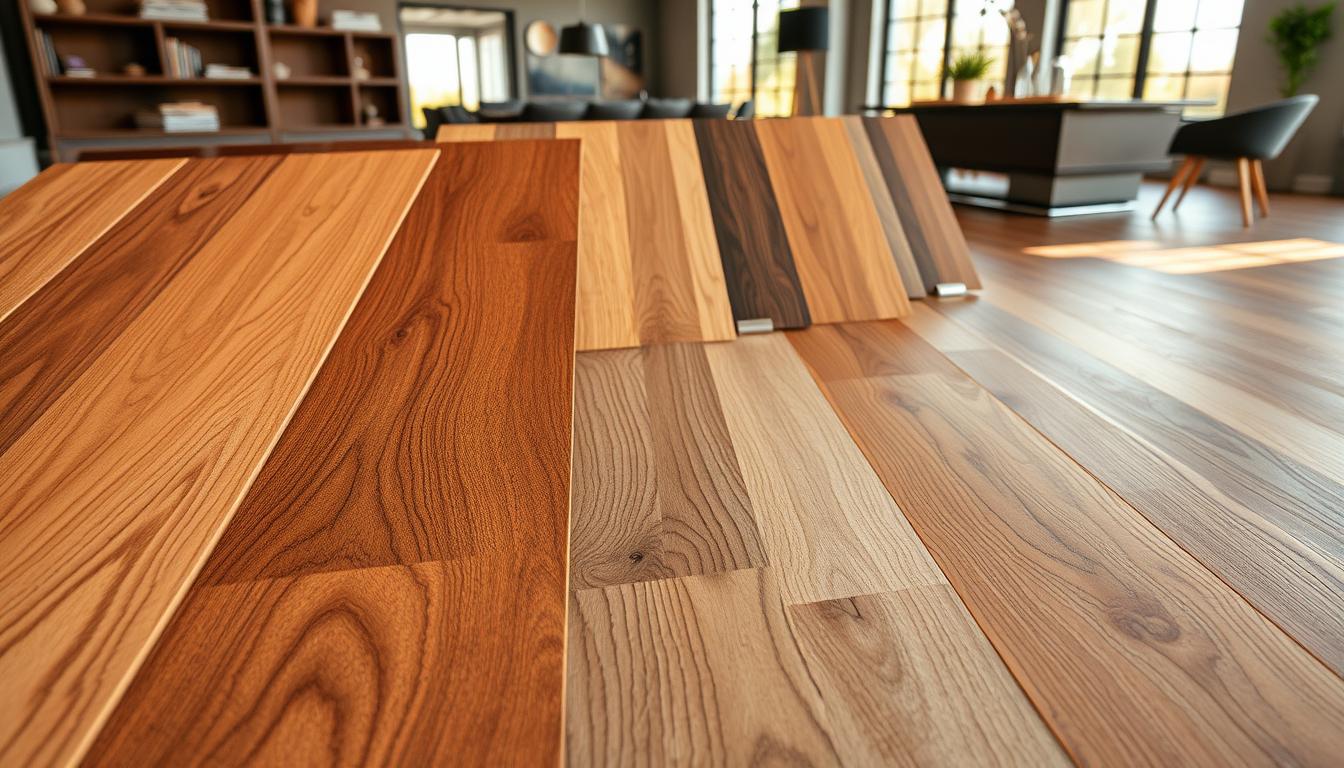
Hardwood flooring’s grade and cut are as important as the finish. The choice between Prime and Character grades changes looks and durability. ‘Select’ or ‘Clear’ grades have a uniform look with few knots, perfect for a polished look.
‘Character’ or ‘Rustic’ grades show the wood’s natural flaws. They turn knots and streaks into interesting features.
The Grading Game: Why “Character” is Just a Euphemism for Knots
“Character” grade means the tree had a tough life, and we’re making money off it. It’s like the wabi-sabi of lumber, with knots and color changes telling a story. Prime grade, on the other hand, is uniform and predictable, but maybe a bit dull.
So, which one do you prefer?
Live Sawn vs. Rift and Quartered: A Masterclass in Grain Geometry
The cut of the wood is a geometry lesson. Live sawn captures the wood’s natural grain patterns, making flooring stable. It combines the wildness of plain sawn with quarter sawn’s stability.
Rift and quartered offers stability and elegance. Quarter sawn shows medullary rays, shimmering like silk. Rift sawn has a straight grain, perfect for mid-century modern looks.
The Long and Short of It: How Board Lengths Dictate Visual Drama
Board lengths are key. A 12-foot plank stretches the eye, making a room feel larger. Short boards create a busy look, while long ones make a statement.
Patterns herringbone chevron Versailles borders thresholds
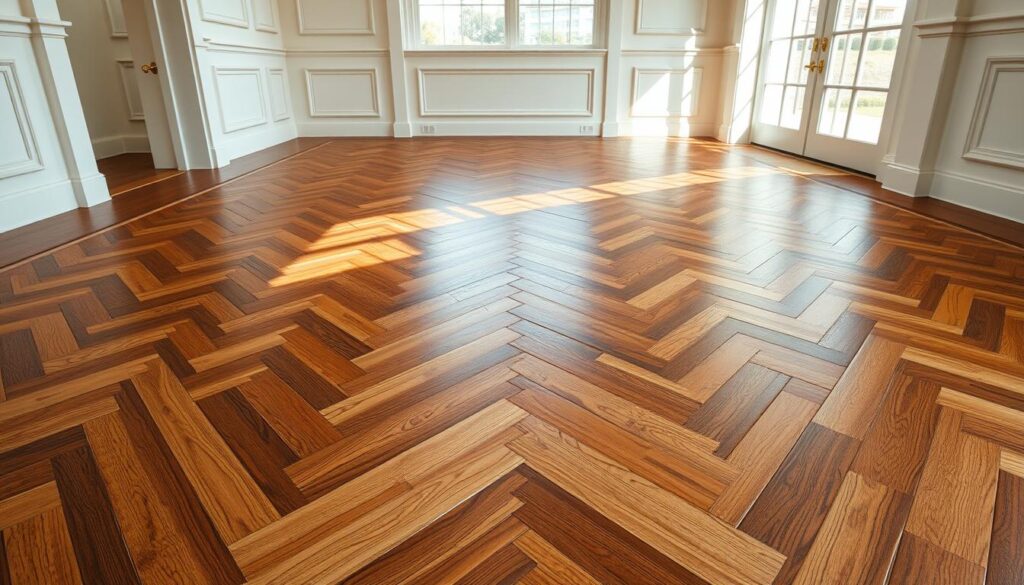
Patterns in flooring are more than just looks; they set the mood of a room. Choosing between herringbone and chevron patterns shows your design style. These patterns can turn a simple floor into a focal point, making guests notice the detail.
The Angle of Attack: Herringbone vs. Chevron and the Illusion of Movement
The herringbone pattern has a zigzag look, with rectangles that seem to move. It’s like a wood dance that catches your eye. The chevron pattern, on the other hand, has smooth V-shapes. It feels modern and sleek, like a smooth song.
Versailles Panels and Borders: When Your Floor Needs a Frame
The Versailles pattern is more than flooring; it’s a statement. It turns any room into a showcase of elegance. But, it might not be the best for homes with kids or pets, as it attracts dirt and spills.
Wood floor borders add a touch of class to your space. They frame the room, making it feel special. A good border can elevate a simple floor into a stunning design.
Threshold Transitions: The Diplomatic Art of Floor-to-Floor Relations
Thresholds are key in flooring, connecting different materials smoothly. A bad threshold can be a hazard and ugly. But a well-made one blends materials beautifully, like hardwood and tile.
In short, picking a pattern like herringbone, chevron, or Versailles tells a story in your space. For more ideas on herringbone designs, visit this resource.
Finishes UV oil hardwax oil polyurethane fumed smoked reactive stains pros cons
The finish on hardwood floors is more than just protection. It’s what makes your space feel and look a certain way. Let’s look at the different finishes and what they offer.
The Surface Wars: Polyurethane’s Plastic Armor vs. Oil’s Natural Patina
Polyurethane is tough and durable, like a plexiglass shield. It comes in glossy, semi-gloss, or matte. But, it can make your floor feel like plastic.
Oils, like hardwax oil and UV oil, are different. They soak into the wood, making it feel natural. But, you need to oil it often to keep it looking good.
Alchemical Transformations: Fumed, Smoked, and Reactive Stains
Fuming changes the wood’s color by using ammonia gas. It creates a deep, rich color that’s part of the wood. Smoked oak is treated in a similar way, giving it a unique look.
Reactive stains use metals to create cool, changing colors. They’re like a conversation with the wood itself.
UV-Cured Factory Finishes: The Instant Gratification of Aluminum Oxide
Many floors come with tough finishes like aluminum oxide. They’re ready to go right away. They’re durable and look good, making them great for busy homes.
Underlay and acoustics condo IIC STC targets and quiet floor stacks
In shared living spaces, the right underlayment is key. It’s not just about the flooring; it’s about peace with neighbors. The Impact Insulation Class (IIC) and Sound Transmission Class (STC) ratings are important. Ignoring them can upset your neighbors.
Your underlayment is a hero. It’s a thin layer that helps your flooring feel separate from the floor. It makes sounds softer, like turning a loud tap into a quiet one. Most condos need an IIC of 50 or more. Not meeting this can lead to costly changes.
The Unseen Hero: Why Your Underlayment is a Human Rights Issue
No one wants to be the bad guy. Underlayment helps with sound and keeps you warm. It’s key for floors over radiant heat. You don’t want to overheat the floor before your feet do!
Decoding IIC and STC: The Alphabet Soup of Neighborly Coexistence
So, what do these ratings mean? The IIC rating checks how well a building blocks impact sounds. The STC rating looks at sound through walls and floors. Together, they help keep your living space peaceful. Here’s a quick guide:
- IIC Rating: Higher numbers mean better sound insulation.
- STC Rating: A higher score means less sound passing through.
- Recommended IIC: Aim for 50 or higher for condo living.
Building the Quiet Stack: A Layered Approach to Vertical Living
The “quiet floor stack” is a system to keep peace. Here’s how to build it:
- Mass-Loaded Vinyl: A dense layer for sound blocking.
- Resilient Underlayment: For impact absorption.
- Engineered Hardwood: Your beautiful flooring, floating on top.
This system isn’t just about comfort; it’s about physics and shared space. Get it right, and you’re almost invisible. Get it wrong, and you’re the noisy neighbor everyone dislikes.

Care kits re‑oil refinish color repair schedules
A hardwood floor is more than just a surface. It needs the right care to thrive. Neglecting it is like ignoring a pet; it will show signs of wear.
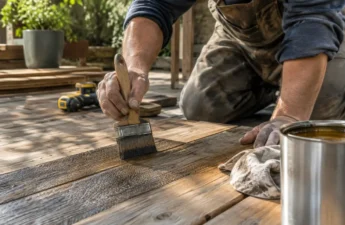
To keep your floor looking great, you need a good care kit and a maintenance plan. A care kit should include a pH-neutral cleaner, microfiber mops, and felt pads for furniture. These tools help maintain your floor’s beauty without damaging its finish.
The Maintenance Manifesto: Why a Floor is Not a Countertop
Refinishing hardwood floors is eco-friendly. Unlike countertops, hardwood floors can be sanded and refinished many times. This makes them last a long time, often 75–100 years or more.
Spot Repairs and Re-oiling: The Art of the Tactical Touch-Up
For oiled floors, re-oiling is a chance for spot repairs. It’s like blending hardwax oil into a scratch, restoring the floor’s beauty. This process connects you to your home in a satisfying way.
The Full Refinish: Scheduling a Floor’s Mid-Life Crisis
A full refinish is like your floor’s mid-life crisis. Solid wood can be completely sanded and reborn. Engineered wood can get one or two chances at redemption. Refinish every 15-20 years in high-traffic areas, or when you want a change.
| Type of Floor | Maintenance Type | Frequency | Notes |
|---|---|---|---|
| Solid Hardwood | Full Refinish | Every 15-20 years | Can be sanded multiple times |
| Engineered Hardwood | Screen and Recoat | Every 5-10 years | Limited sanding options |
| Oiled Floors | Re-oil | Every 6-12 months | Spot repairs can be made |
Color strategy undertones pairing with stone metal plaster
Color strategy is key in interior design. It shapes our spaces and affects our feelings. When picking a wood floor, remember it’s not just the surface. It’s the undertones that really matter.
White oak has a straight grain and cool undertones, fitting modern, Scandinavian interiors well. Red oak, with its pink undertone and bold grain, adds warmth. It’s great for traditional settings.
The Undertone Conspiracy: Why Your “Gray” Floor Looks Green
Ever noticed a gray floor looks green under LED lights? It’s the undertone conspiracy! Every wood species has its own color story. Knowing this can improve your design.
White oak shows cool undertones, matching well with concrete and chrome. Red oak’s warm tones pair with brass and terracotta, creating an earthy look.
Material Dialogues: Hardwood, Marble, Steel, and Venetian Plaster
Pairing your floor with stone, metal, and plaster is more than decorating. It’s creating a material dialogue. A dark smoked oak floor can set off a Carrara marble fireplace, making the room feel deeper.
A pale maple floor with matte finish looks great with textured Venetian plaster walls. The wood’s smoothness contrasts well with the plaster’s texture, making a visual treat.
Creating a Palette Hierarchy: Letting the Floor Lead the Conversation
Your floor is the room’s foundation, the biggest color field. It should anchor the space, not compete. Start with your floor’s undertone. Then, choose colors for the sofa and door hardware to support it.
In conclusion, a good color strategy makes your space more beautiful and enjoyable. Pay attention to wood undertones to guide your design.
Procurement overage percentages lot control reputable mills red flags
Hardwood procurement is all about the details. A little planning can save you a lot of trouble. Unlike ordering a pizza, buying hardwood needs careful thought about overage percentages and lot control. The overage percentage is your safety net against wood’s unpredictability. For simple layouts, 10% overage might be enough for mistakes. But for complex patterns, you’ll need 15-20% overage, at least.
Wood’s natural variations mean different boards can look very different. To get consistent color and quality, buy from the same production run. If your supplier can’t promise a single lot, you’re taking a big risk.
The Overage Equation: Why 10% is a Gamble and 20% is Insurance
Hardwood procurement is high-stakes. A 10% overage might seem safe, but it’s risky if things don’t go as planned. For a safer bet, go with 20% overage. It gives you the extra room you need for unexpected issues.
Lot Control and the Serial Number Shuffle
Lot control is key for matching flooring. Each wood batch has a serial number showing its origin. A good mill will share this info openly. If your supplier is secretive, it’s a warning sign. Always choose a mill that values transparency.
Spotting a Mill with a God Complex vs. a Reliable Partner
Finding a reliable mill is vital. Look for clear grading standards, current samples, and solid warranties. A good mill will teach you about your wood’s history. If they focus on sales over education, it’s time to look elsewhere.
| Aspect | 10% Overage | 20% Overage |
|---|---|---|
| Risk Level | High | Low |
| Cost Efficiency | Less | More |
| Ideal Use Case | Standard Layout | Complex Patterns |
Price bands installation complexity and warranty notes
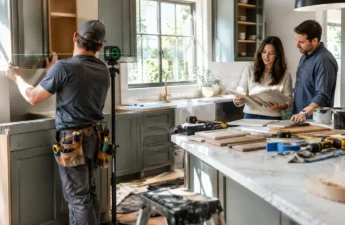
Hardwood installation costs are more than just the wood price. The wood itself can cost between $4 and $15 per square foot. But, the real cost comes from installation, which can add $6 to $25 per square foot. Wide plank flooring, in particular, needs a skilled installer.
Even simple installations can become complex with detailed patterns. This complexity can greatly increase the overall cost.
The Cost Per Square Foot Mirage: Material vs. Labor Reality
Wide plank flooring is not just about the wood. It’s about the skill needed to install it. Your installer will face challenges like ensuring a perfectly flat subfloor. This can add a significant cost.
A simple installation is one thing. But a Versailles panel installation is like commissioning a work of art. It requires a lot of time and skill.
Complexity Tax: Why Your Installer Will Weep at the Sight of a Border
Installers prefer simple jobs. But, complex designs require more time and skill. Intricate borders and patterns need precision, leading to higher labor costs.
This is when the true cost of your flooring becomes clear.
Warranty as Literature: Reading the Fine Print Before the Floor Fails
Warranties can be confusing. They often have terms that are hard to understand. A good warranty covers wear and tear, and structural issues.
It may also require you to keep humidity levels between 35-55%. Not doing so can void your warranty. Think of it as a contract with your floor. It’s important to understand the terms for a lasting relationship.