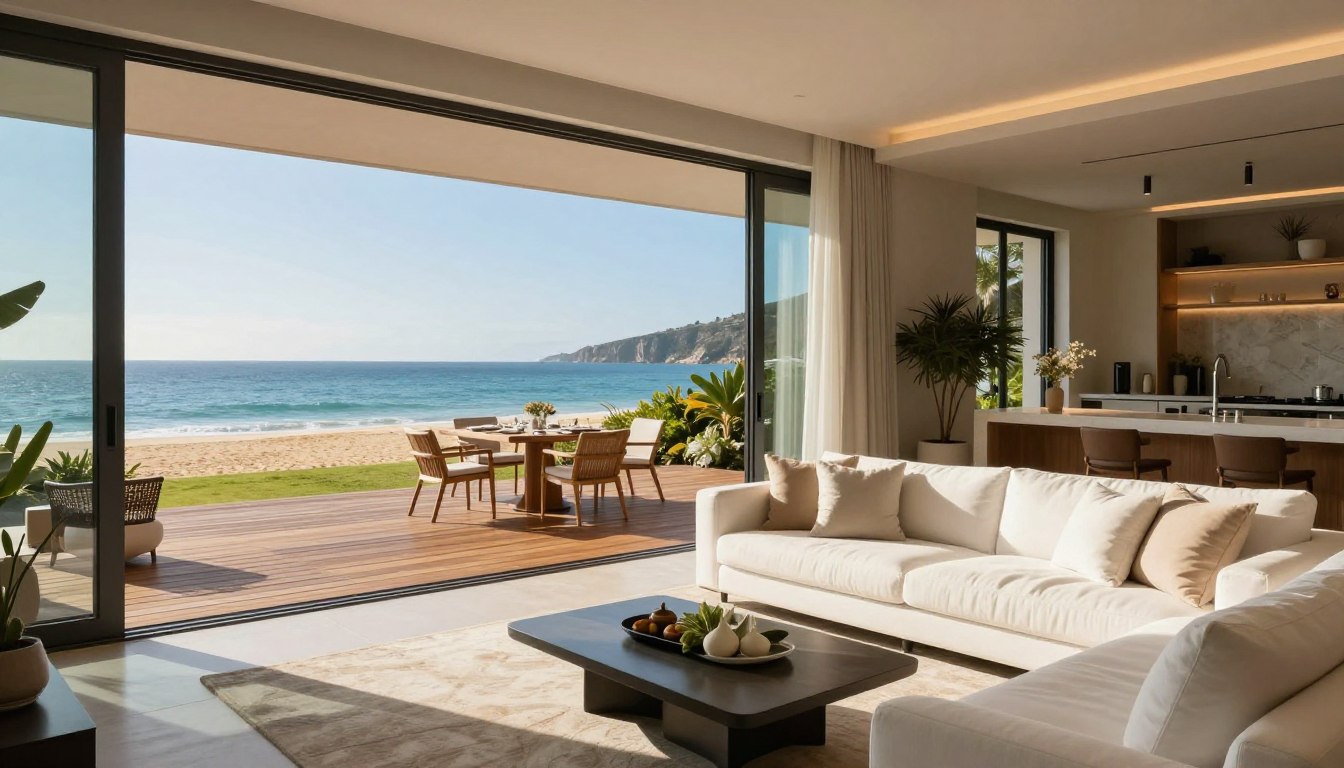
Building a home by the sea needs a special touch. The goal is to blend the house with nature smoothly. This means making the inside and outside feel like one.
Living by the coast comes with its own set of challenges. Salt can damage buildings, and strong winds can test their strength. Also, local rules can be strict and hard to follow.
Things like stopping erosion and keeping views open add to the challenge. Each problem must be solved carefully, without losing sight of the design.
This project aims to create a high-performance asset. It must look great while being tough against the elements. The end result is a home that’s both beautiful and built to last.
Design Goals & Coastal Constraints
Designing a coastal modern retreat involves two main things: what the client wants and the site’s limitations. First, we set clear design goals. These goals include enjoying wide views, lots of natural light, and a smooth transition between inside and outside.
Building a oceanfront home must last a long time. The biggest challenges come from the environment. Salt in the air can cause rust, while strong winds and storms need strong buildings. Moisture can harm materials and air quality.
To tackle these issues, we focus on the building’s outer layer. This layer must control air, water, and heat. A high-performance envelope uses layers to block moisture and air.
We also prevent heat loss through building parts. This is done with thermal breaks in the frame and insulation. The system must stand up to rain pushed by wind, a big problem near the coast.
Choosing the right glass is key for views and light. We look at three important areas:
- Impact Resistance: In coastal areas, glass must be hurricane-proof. It has a special layer that keeps glass together even if it breaks.
- Solar Management: We use special coatings to control heat from the sun. This helps keep the house cool without losing too much light.
- Structural Integration: The frames for big glass panels must handle strong winds. This is especially true for retractable glass walls.
Retractable glass walls show how to balance what we want with what’s needed. They let us have open spaces but need special engineering. The frames and tracks must resist rust, often using marine-grade aluminum. The structure above must support the wall when it’s closed.
This careful planning supports the design’s core idea. It lets homeowners enjoy their coastal dream home with confidence. They know the building is both stunning and strong.
| Design Goal | Coastal Constraint | Primary Engineering Solution |
|---|---|---|
| Unobstructed Views & Daylight | High Wind Loads & Storm Projectiles | Structurally Reinforced, Hurricane-Rated Glazing Systems |
| Seamless Indoor/Outdoor Flow | Salt Spray Corrosion & Moisture Infiltration | Marine-Grade Framing for Retractable Walls with Enhanced Seals |
| Long-Term Durability & Low Maintenance | Corrosive Salt Air & UV Degradation | Specified Cladding with Corrosion-Resistant Coatings & Fasteners |
| Energy Efficiency & Comfort | Solar Heat Gain & Humidity | Low-E Glass Coatings & Continuous Insulation with Thermal Breaks |
| Structural Resilience | Wind-Driven Rain & Potential Flooding | Integrated Water-Resistive Barrier & Elevated Foundation Design |
This table shows how design goals meet environmental challenges. Each solution tackles a specific problem while keeping the design vision alive. The successful oceanfront home is a blend of beauty and practicality.
Envelope Engineering & Glazing Performance
Strategic envelope engineering turns a coastal retreat into a masterpiece. It balances big views with tough performance needs. The building envelope protects against salt, wind, and sun. It also affects comfort, energy use, and indoor-outdoor living success.
High-performance glazing is key. Architects choose laminated, tempered glass with special coatings. These coatings control heat and keep the inside cool.
Important glazing metrics are U-factor and Solar Heat Gain Coefficient (SHGC). A low U-factor means better insulation. A good SHGC keeps summer heat out and winter warmth in.
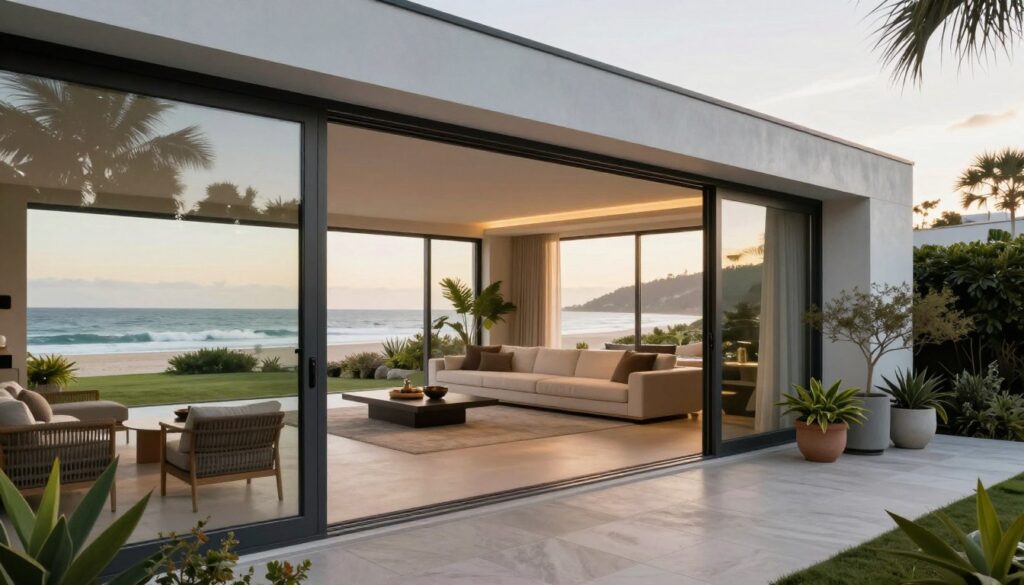
Structural systems hold up big glass panels. These panels make walls seem invisible, blending inside and outside. This creates a seamless living space for indoor-outdoor living.
Envelope details go beyond glass. They include:
- Continuous exterior insulation to stop heat loss.
- Rainscreen cladding systems for better moisture management and durability.
- Precision weather seals at all joints and penetrations.
This approach keeps the home tight and weatherproof. It protects inside finishes and lets outdoor areas feel like part of the home.
For outdoor rooms, using performance fabrics is smart. These fabrics resist UV, moisture, and mildew. They keep looking good and feeling comfy, even in harsh coastal weather.
Overhangs and deep eaves work with glazing to provide shade and protection. They cut glare and keep glass and performance fabrics safe. This design makes a home strong and easy to care for, fitting perfectly into its setting.
Investing in advanced envelope engineering saves money in the long run. It cuts energy costs, reduces upkeep, and brings the beauty and function of indoor-outdoor living to life.
Program Zoning: Public/Private Wings
Coastal modern design uses wing-based zoning for social and private spaces. This approach separates public areas from private living spaces. It boosts functionality and privacy in any oceanfront home.
The public wing is for entertainment and guest interaction. It has large decks and outdoor living rooms. These areas are perfect for big groups and easy indoor-outdoor flow.
Key features of the public wing include:
- Primary entertaining decks with durable surface materials
- Integrated outdoor kitchens with weather-resistant appliances
- Covered loggias for all-season use
- Built-in seating arrangements around fire or water features
The private wing has bedrooms, studies, and personal retreats. It connects to secondary balconies and enclosed courtyards. These areas focus on quiet, views, and protection from the elements.
Choosing marine-grade materials is key for exterior elements. Decking, cladding, and structures face harsh conditions. They need to withstand salt spray, UV radiation, and humidity.
Materials are picked for coastal performance. Composite decking resists moisture and fading. Powder-coated aluminum or stainless steel hardware prevents corrosion. These choices mean less maintenance and longer life.
Outdoor rooms extend the home’s living space. Flooring materials often match inside and outside. Glass walls and large openings connect these areas.
Engineering tackles coastal challenges. Structures must handle high winds and salt. Layouts consider breezes and sun for comfort and resilience.
Custom elements add to usability and looks. Benches and outdoor kitchens use marine-grade materials. Fire pits or linear fireplaces are perfect for evening gatherings.
This zoning balances oceanfront home living. It offers lively social areas and private retreats. Each wing is designed for its purpose through careful planning and material science.
Planning is key in the schematic phase. The public wing gets the best views and access. The private wing seeks sheltered spots and sound buffers. Paths ensure separation while keeping the home cohesive.
Program zoning organizes spaces for better flow. It maximizes entertainment and comfort in coastal homes.
Outdoor Rooms & Entertaining Decks
Outdoor rooms extend the living space of a coastal modern home. They need durable finishes and fabrics that stand up to salt, sun, and moisture. The design aims for a smooth transition and uses materials made for the sea.
Building a deck is key to these outdoor areas. Marine-grade materials are a must for strength. This includes stainless-steel fasteners, powder-coated aluminum, and composite decking. These materials last longer than regular ones.
Choosing furniture is also critical. Frames should be made of aluminum, teak, or all-weather wicker. The real key to comfort and lasting quality is the fabric. Performance fabrics for cushions and upholstery are crucial.
These advanced textiles fight off mildew, fading, and stains well. Solution-dyed acrylics and olefin fibers are top choices for the coast. They keep colors bright and materials strong, even with UV rays and salt spray.
The table below shows important materials for outdoor elements:
| Element | Recommended Material | Key Benefit |
|---|---|---|
| Decking & Flooring | Composite, Ipe Hardwood, Porcelain Tile | Slip-resistant, low moisture absorption |
| Structural Framing | Galvanized or Stainless Steel, Aluminum | Corrosion resistance, high strength-to-weight ratio |
| Upholstery Fabric | Solution-Dyed Acrylic, Olefin, Marine Vinyl | UV stability, mildew resistance, easy cleaning |
| Shading & Drapery | Outdoor-Rated Polyester, Canvas | Wind resistance, water repellency |
Choosing the right materials makes outdoor decks beautiful and durable. This creates a space that’s easy to care for. It lets you enjoy your time outdoors without worrying about maintenance.
Using marine-grade materials and performance fabrics is smart. It keeps your investment safe and looks good. The outdoor room becomes a real part of your home’s living space.
Finishes & Textiles for Salt-Air Environments
Choosing finishes and textiles for a seaside home needs a deep understanding of materials and the environment. Salt spray, high humidity, and strong UV rays require materials that are both durable and look good. The wrong choice can lead to quick damage, fading, and mold, hurting the home’s value and feel.
When picking exterior materials, start with a strong defense. Use marine-grade stainless steel or powder-coated aluminum for metals. Powder coating is better than paint because it doesn’t chip or corrode easily. For wood, like decking or screens, choose oily hardwoods like teak or ipe, or durable composites.
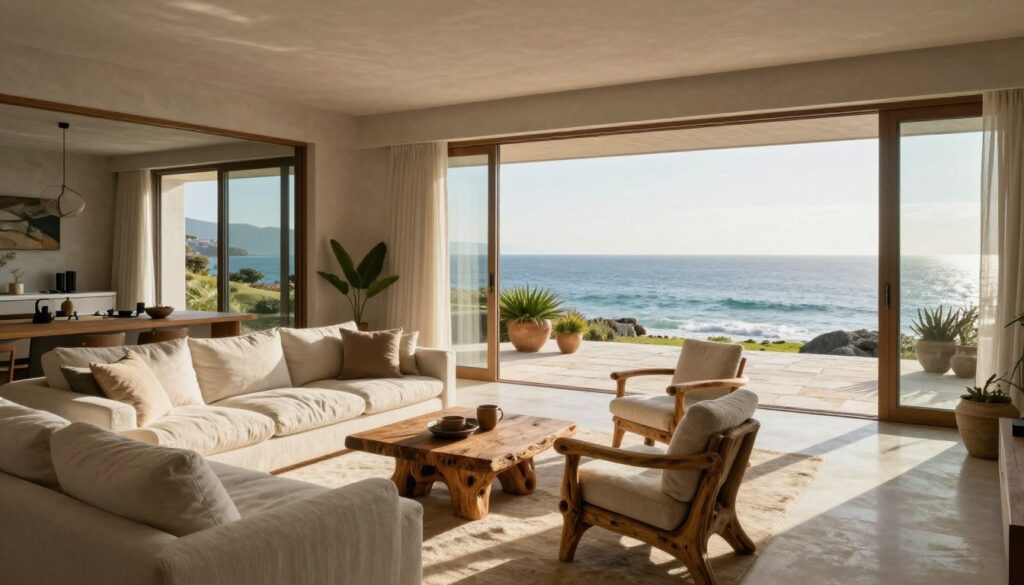
Inside, surfaces must handle changing humidity. Porcelain tile and engineered stone are great for flooring because they don’t absorb water and resist stains. For cabinets, use marine-grade plywood with UV-stable laminate or paint. Countertops in non-porous quartz or sintered stone keep moisture out and are easy to clean.
The idea of indoor-outdoor living also applies to textiles. Fabrics for upholstery, like solution-dyed acrylics and olefin fibers, are key. They resist UV and mildew and keep colors bright. For indoor options, choose performance linens and treated cottons that handle coastal humidity well.
Rugs should be synthetic, like polypropylene, or indoor-outdoor rated. They resist moisture, are easy to clean, and won’t mold. Drapery fabrics, exposed to salty air, should also be chosen with care.
Every material choice is crucial for the home’s long-term look and feel. This careful selection is key to designing luxury interiors for a humid coastal area. The right finishes and textiles keep the home beautiful, strong, and in tune with its surroundings, making indoor-outdoor living effortless.
Smart Systems: Shading, Wind Sensors, HVAC
Dynamic shading, climate control, and wind sensors are key to this oceanfront property. They work together to keep the inside cool, save energy, and make living comfortable. This is especially important in a coastal area.
Automated shading is vital for controlling heat and glare. Motorized screens made from marine-grade aluminum alloys adjust based on the sun and temperature. Homeowners can control them with a panel or app, setting schedules or making quick changes.
Environmental sensors give the home’s system real-time data. Anemometers check wind speed, pulling awnings back or closing screens in strong winds. Light and rain sensors adjust shading and protect outdoor items.
The HVAC system for an oceanfront home needs special care. Condensers are coated to fight off salt air. HEPA filters clean the air, and zoned control saves energy by adjusting temperature in different areas.
| System | Primary Function | Key Features | Direct Benefit |
|---|---|---|---|
| Automated Shading | Manage solar heat & glare | Motorized controls, marine-grade hardware, sun tracking | Reduces cooling costs, protects interiors |
| Wind & Environmental Sensors | Monitor exterior conditions | Anemometers, light/rain sensors, system integration | Protects property, automates responses |
| Specialized HVAC | Provide climate control | Corrosion-resistant components, advanced filtration, zoning | Ensures air quality, equipment longevity |
These smart systems work together under one control interface. This makes living indoors and outdoors easy without hassle. The tech keeps the home safe and comfortable, making it a low-maintenance oceanfront home for many years.
Sustainability: Water Reuse, Solar, Xeriscape
The project focuses on three main areas: saving water, using renewable energy, and choosing plants that fit the climate. This approach cuts down on costs and makes the home stronger against coastal changes.
Water reuse systems are key for saving water. A greywater system collects and cleans water from showers and sinks. This water is then used for plants. Rainwater from roofs adds more water for plants.
Solar energy helps with power use. Solar panels are placed to get the most sun. They help a lot with the home’s energy needs. Retractable glass walls help too, letting in sun in cold months. They also help block sun in hot months.
Xeriscape landscaping uses plants that need little water. This helps plants grow well with less water. Drip irrigation delivers water right to the roots, saving water. This design makes outdoor spaces easy to care for.
Outdoor furniture choices also support sustainability. Performance fabrics for cushions and umbrellas last long against sun and salt. They need less cleaning and last longer, saving resources.
These systems work together for a sustainable home. Water reuse, solar power, and xeriscaping make a home that’s both luxurious and eco-friendly. It’s a place that blends well with its coastal surroundings.
Vendor Shortlist & Mood Board
A good vendor shortlist and mood board are key to a successful coastal modern retreat. They turn design ideas into real plans. Every material, fixture, and finish must match the project’s look and function.
Choosing the right vendors is crucial. Look for those with experience in coastal areas. They need to know about salt damage, strong winds, and local building codes. They should also be able to make custom parts, like big windows and special woodwork.
The table below shows important vendor categories and what to consider for a coastal luxury home.
| Category | Key Specializations | Notable Considerations |
|---|---|---|
| Structural & Envelope | Coastal-grade foundations, hurricane-rated framing, advanced waterproofing | Familiarity with FEMA flood zone requirements and local setback variances |
| Glazing & Fenestration | Custom oversized units, high-performance low-E coatings, impact-resistant glass | Lead times for fabrication and installation sequencing with structural work |
| Interior Millwork & Finishes | Moisture-resistant cabinetry, natural stone selection, custom metalwork | Material sourcing for durability against humidity and UV exposure |
| Outdoor Living & Landscaping | Saltwater pool systems, outdoor kitchens, xeriscape planting | Integration of hardscape with drainage and indoor-outdoor flow |
| Smart Home Systems | Integrated shading, climate zones, wind sensor automation | System robustness for marine environments and user-friendly interfaces |
The mood board is a visual guide for the project. It mixes material samples, finish swatches, and images to show the design idea. For a home that focuses on indoor-outdoor living, the board must show both luxury inside and strength outside.
Good mood boards do more than show looks. They talk about quality, upkeep, and warranties. Showing this board to vendors sets clear expectations. It lets them check if they can do the job and suggest ways to save money if needed.
Working together is especially important for outdoor areas. Success here needs experts who can create complex resort-level backyards. The vendor must handle everything from kitchen foundations to pool hydraulics.
Choosing vendors should be a formal process. Start with a request for proposal (RFP) that mentions the mood board and technical details. This way, bids are fair and based on the same project. You’ll get a team ready to build a coastal luxury home with top-notch finish and perfect indoor-outdoor living connection.
Cost/Timeline/Permitting Insights
The strategies used create a home that meets its main goals. It has a smooth indoor-outdoor connection, showing off amazing views. The house is also strong against the sea, thanks to its design and materials.
Keeping the home in top shape is key. The exterior gets a clean wash every three months with special cleaners. Every year, a check-up is done on all materials to prevent rust. The HVAC system is checked by pros twice a year.
Regular care is essential for any house by the sea. Decks and drainage are checked seasonally to keep water out. Watching over the materials helps them last longer. This care keeps the home looking and feeling great.
Success in building a home by the sea comes from careful planning. Getting the right permits and budgeting for top-quality materials is crucial. This way, the home turns out as planned, ready for coastal living.


