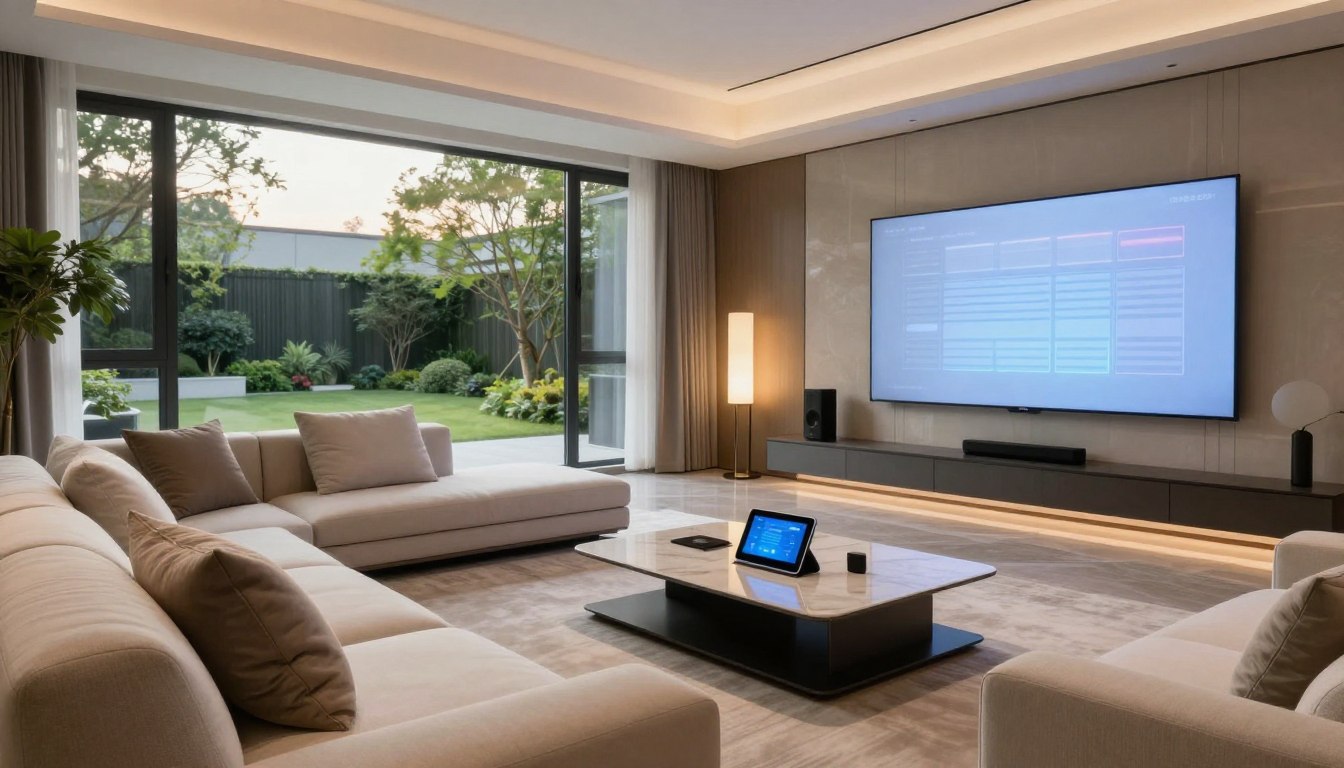
The modern home is changing. Leaders in the industry are moving away from obvious screens and big gadgets. Now, technology blends into the home’s design seamlessly.
This new standard is all about a smart sanctuary. It’s a place where tech and comfort meet without being seen. The best luxury is a space that knows what you need, yet looks like a simple home.
This change means no more digital mess. Today’s home tech works like an invisible butler. It focuses on looks and comfort, not on being seen.
For those in business, this change is very valuable. Investing in invisible home tech makes your property more attractive. It stands out in the market with its elegance and calm.
The Brief: Tech Without Visual Noise
The main goal of whole-home automation today is not just to connect things. It’s about making technology invisible. This idea turns a client’s wish for clean looks and comfort into a must-have for tech.
This brief says no to the old “black box” way. It wants tech to blend in, not stand out. Every part, from controls to screens, must look good first.
Putting speakers in the right spot is now key, not just an afterthought. Sub-woofers are hidden in the walls. Controls are simple or hidden in apps. The aim is to feel tech, not see it.
To make this happen, tech is hidden from the start. Motorized screens hide behind walls or tapestries. Big screens are covered by art that moves. Smart glass changes from clear to opaque, no need for blinds. All this is done during the home’s build or update.
This method is called tech-layering. It’s like building the tech into the home’s bones, like plumbing. Working with architects and builders early helps hide tech in walls and cabinets. This early planning is key to a smooth, hidden setup.
| Traditional Tech Integration | Invisible Tech Brief |
|---|---|
| Technology is chosen based on its use alone. | How it looks is the main reason for choosing and placing it. |
| Components are often seen (speakers on shelves, controls on walls). | All parts are hidden or blended into the design. |
| Integration happens after the design is set. | Tech-layering is planned from the start of design. |
| The system is seen as an extra feature. | The system is a hidden base that makes the space work. |
| Focus is on how each device works. | Focus is on the overall feel and control of the space. |
Seeing invisibility as the main goal leads to new designs. It changes the integrator’s role from just setting up tech to designing the space. The end result is a whole-home automation system that controls things, keeps things private, and improves health. All while keeping the space clean and calm.
System Architecture: Network, Control Layers, Redundancy
Home automation relies on a strong network, control layers, and redundancy. This setup is like the brain of all connected technology. It affects how well the system works, stays safe, and lasts long.
A strong network is key. It must handle lots of data from audio, video, sensors, and security. Wired Ethernet connections offer the best speed and stability for important parts. Wireless networks add flexibility for placing devices.
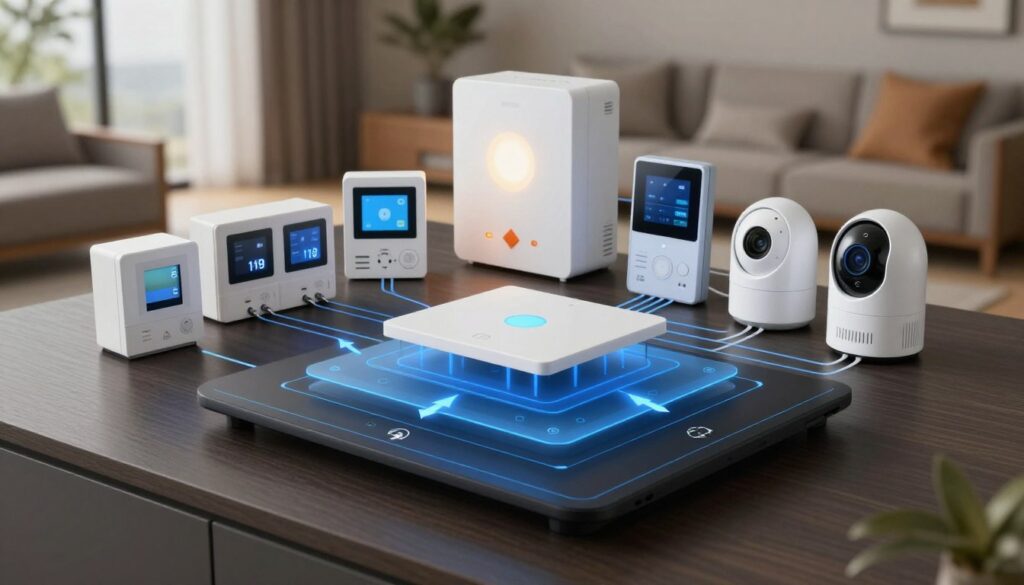
Control is organized in layers. Main controllers are the brain, handling commands and rules. Secondary processors are in rooms or zones. This setup cuts down on delays and avoids system crashes.
Redundancy is crucial for important systems. Key controllers can switch to a backup if needed. Duplicated paths ensure systems like lighting and security keep working even if something fails.
| Characteristic | Wired Topology | Wireless Topology |
|---|---|---|
| Reliability | Exceptional; immune to RF interference | Good; subject to signal obstructions |
| Bandwidth | Very high (Gigabit+), consistent | Variable, shared medium |
| Security | Inherently more secure; physical access required | Requires robust encryption protocols |
| Installation Complexity | Higher; requires structured cabling | Lower; offers placement flexibility |
Network segmentation boosts security and performance. IoT devices like thermostats and cameras are on their own network. This keeps them safe and stops them from slowing down other devices.
Keeping power on is key. A UPS for network gear keeps things running smoothly during outages. It prevents data loss and keeps important systems working.
The goal is a system that grows with you. A good plan lets you add new tech easily. It makes your home a smart, reliable place where tech is always in the background.
Lighting Scenes: Wellness, Entertaining, Art Viewing
Advanced lighting systems now act as an invisible wellness coach. They use light’s spectral qualities to support human biology and enhance daily rituals. This approach moves beyond basic illumination to establish lighting as a core programmable environmental tool.
Circadian lighting programs are engineered to align with the body’s fundamental biological rhythms. AI-driven systems automatically adjust color temperature throughout the day.
They emit cool, energizing light in the morning and transition to warm, melatonin-supporting tones in the evening. This automated cycle supports occupant health, sleep quality, and overall well-being. It’s a key principle in modern wellness design trends.
For social functions, entertaining scenes activate dynamic and layered schemes. A “Sunday Evening” scene, for example, might shift all lighting to a warm amber glow.
This change syncs with audio and climate systems to create a cohesive atmosphere. The lighting becomes an active participant in setting the mood for relaxation or celebration.
Art viewing requires precise, high-CRI (Color Rendering Index) settings. Dedicated scenes activate focused fixtures that reveal an artwork’s true color and texture.
This eliminates glare and color distortion. It transforms a space into a personal gallery, ensuring aesthetic details are appreciated as intended.
These curated scenes are triggered automatically via schedules, occupancy sensors, or a single user command. They contribute significantly to the home’s adaptive and sensory comfort profile.
Lighting becomes a responsive layer that supports specific activities and states of mind without requiring conscious effort from the occupant.
Acoustic Design: Isolation, Absorption, Diffusion
Creating a top-notch space means managing sound well. You need to block unwanted noise, soak up excess sound, and spread sound waves for a natural feel. This mix ensures clear sound, privacy, and full immersion.
Acoustic isolation is the first step. It keeps outside noise out and sound in where it belongs. You use special walls, floors, and doors to do this. The aim is to have a quiet space with no distractions.
Sound absorption deals with sound inside the room. Stuff like mineral wool or foam absorbs sound waves. This makes speech and music clear by cutting down echo.
In fancy places, these panels hide behind fancy walls or custom designs. This way, the room looks great and sounds even better.
Diffusion is the last but key part. Diffusers spread sound waves all over, making the room sound bigger and more natural. They soften harsh sounds by scattering them.
Rooms with good diffusion feel bigger and sound better from everywhere. It’s what makes a room truly sound amazing.
A special system handles sound well. Invisible speaker technology is at the top. These speakers hide behind walls or wallpaper. They make sound without any visible parts.
This method gives you top-notch sound without ruining the look of your space. It’s the best way to mix sound and design.
True sound experts know how to handle both the tech and the room. They use hidden speakers and treatments together. This way, you get amazing sound without seeing any tech.
Climate & Air Quality: Zoning, Filtration, Humidity
Modern environmental control does more than just adjust the temperature. It combines comfort with air quality to improve health. This approach treats the home’s air as a single system to ensure comfort and health.
Climate zoning is key to effective design. It allows different areas to have their own temperature settings. This means a cool living room and a cozy bedroom, even if they get different amounts of sunlight.
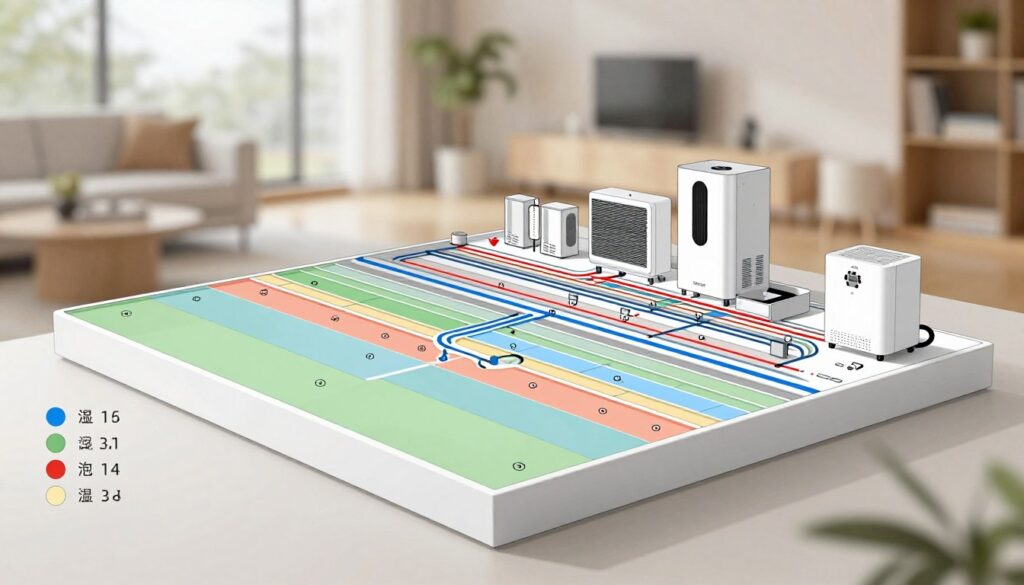
Air filtration focuses on removing tiny pollutants. Systems use HEPA and carbon filters to clean the air. HEPA catches dust and pollen, while carbon filters remove smells and chemicals.
Humidity control is also crucial. It keeps humidity levels just right to protect your belongings and health. This stops mold and dust mites, which are bad for your breathing.
These systems work quietly and on their own. They use sensors to check the air and adjust as needed. This means your home stays perfect without you having to do anything.
Setting up such a system needs strong infrastructure. A professional electrical check is essential. It makes sure your home’s power can handle all the equipment without problems.
The result is a home that’s always fresh and comfortable. The air is clean, the temperature is just right, and your well-being is the top priority.
Privacy & Shading: Electrochromic Glass, Layered Drapery Tracks
Electrochromic glass is a game-changer in windows. It lets you control light and privacy instantly, keeping your space modern. This tech goes beyond just blocking sun to manage light and privacy together.
This glass has a special coating between the panes. When electricity is applied, it changes color. It goes from clear to private in just minutes.
It works well with smart homes. Electrochromic glass can change with the day, sensors, or sun. It makes your space adjust itself, so you don’t have to.
For more style or better sound and heat, use shades and drapery. Shades block light, and drapery adds color and soundproofing.
The best setups mix both. Electrochromic glass is always there for sun control and basic privacy. Then, drapery adds extra warmth, sound, or style at night.
| Feature | Electrochromic Glass System | Layered Drapery & Shade System |
|---|---|---|
| Primary Function | Dynamic solar control & instant privacy | Aesthetic finishing, acoustic buffering, blackout |
| Integration | Permanent, part of the glazing unit | Retrofittable, operates on concealed tracks |
| Material Variety | Limited to tint density and glass type | Virtually unlimited fabric, texture, and opacity choices |
| Insulation Value | Moderate (improved with low-E coatings) | High (traps insulating air layer, especially with lined drapery) |
| Control Strategy | Sun-tracking algorithms, time-based schedules | Scene-based (Wellness, Entertaining), manual overrides via keypad |
Good control means smart choices. For outside areas, tinting follows the sun to save energy. In private spots, schedules keep things private. It all happens smoothly, keeping your space calm.
This two-layer approach meets all needs without sacrificing anything. You get energy savings, privacy, sound, and style. It’s all about feeling good without seeing the tech.
UX & Interfaces: Keypads vs Voice vs App
The modern smart home uses different interfaces, from keypads to invisible sensors. This design ensures reliability for daily tasks and sophistication for a seamless living experience. The choice of interface depends on the user’s context and intention.
Dedicated keypads and touch panels are the base for local control. They offer instant, reliable access to scenes like “Good Morning” or “Entertain.” Unlike apps, physical buttons are simple to use. In luxury homes, these interfaces are sleek and made from premium materials.
Voice control is convenient for hands-free operation. It’s great for quick tasks like adjusting volume or checking the weather. But, it has limits in complex systems. It also raises privacy concerns and can be tricky in noisy places.
The mobile app is key for remote access and system setup. Users can check cameras, adjust climate, or change lighting schedules from their phone. While it’s essential for personalization, it’s not ideal for daily use due to the hassle of unlocking a device.
The ultimate luxury is zero-touch, sensor-driven interaction. This technology automatically adjusts settings based on presence or location. It makes the home environment invisible and intuitive.
Gestures on surfaces like a marble island allow for discreet control. These systems anticipate needs, making explicit commands unnecessary. This level of intelligence creates a seamless user experience, where technology is a silent partner.
A well-designed smart home interface combines keypads, voice, apps, and sensors. Physical controls are for frequent actions, voice for casual queries, apps for remote management, and sensors for daily automation. The goal is to make technology invisible, leaving only comfort and control.
Commissioning, Fail-Safes & Maintenance
The real test of a smart system isn’t just when it’s first set up. It’s how well it works for years. This is achieved through three key steps: professional setup, built-in safety features, and regular upkeep.
Setting up a smart system is a detailed process. It turns a bunch of fancy gadgets into a smart home. Technicians make sure everything works together smoothly. They test and adjust each part, from lights to music, to meet the user’s needs.
It’s also important to have safety features in place. These ensure the system keeps working, even when something goes wrong. This means you can still control the basics, like lights and temperature, even if there’s a problem.
Keeping the system running well needs a regular maintenance plan. Just fixing problems as they happen isn’t enough. A plan for regular checks and updates keeps everything working at its best.
Here’s what a good maintenance plan looks like:
| Component | Frequency | Key Actions & Objectives |
|---|---|---|
| Remote System Monitoring | Continuous | 24/7 health checks and anomaly detection. Alerts for offline devices or performance degradation. |
| Firmware & Software Updates | Quarterly / As Released | Applying security patches and feature enhancements. A cornerstone of digital security strategy to maintain a strong cyber defense posture. |
| Physical Inspection & Calibration | Bi-Annually | Visual checks of key hardware (sensors, controllers). Re-calibration of environmental sensors for climate and air quality accuracy. |
| Client Review & Optimization | Annually | Review system usage data and client feedback. Program refinements and new automation based on evolving needs. |
By focusing on setup, safety, and maintenance, smart systems become reliable and valuable. They give users confidence in their daily use and long-term value, meeting the goals of a smart home.
Client Experience & Measurable Outcomes
The success of a smart home is seen every day. Residents live in a place that works quietly. Lighting scenes from Lutron help with sleep and mood.
Control4’s climate zones make sure the home is always comfortable. This tech saves time by handling daily tasks.
This easy living brings real benefits. The value of smart tech is clear. It cuts down on energy costs with smart HVAC and lighting.
It also improves air quality, making homes healthier. This is a big win for anyone’s health.
Smart homes also increase property value. They appeal to those who value technology and quality. This makes homes more attractive to buyers.
Health benefits are clear too. Good lighting helps sleep. Clean air reduces allergies. These features make life better.
Choosing a smart home is a smart move. It combines comfort with smart tech. This creates a home that’s valuable, healthy, and easy to live in.


