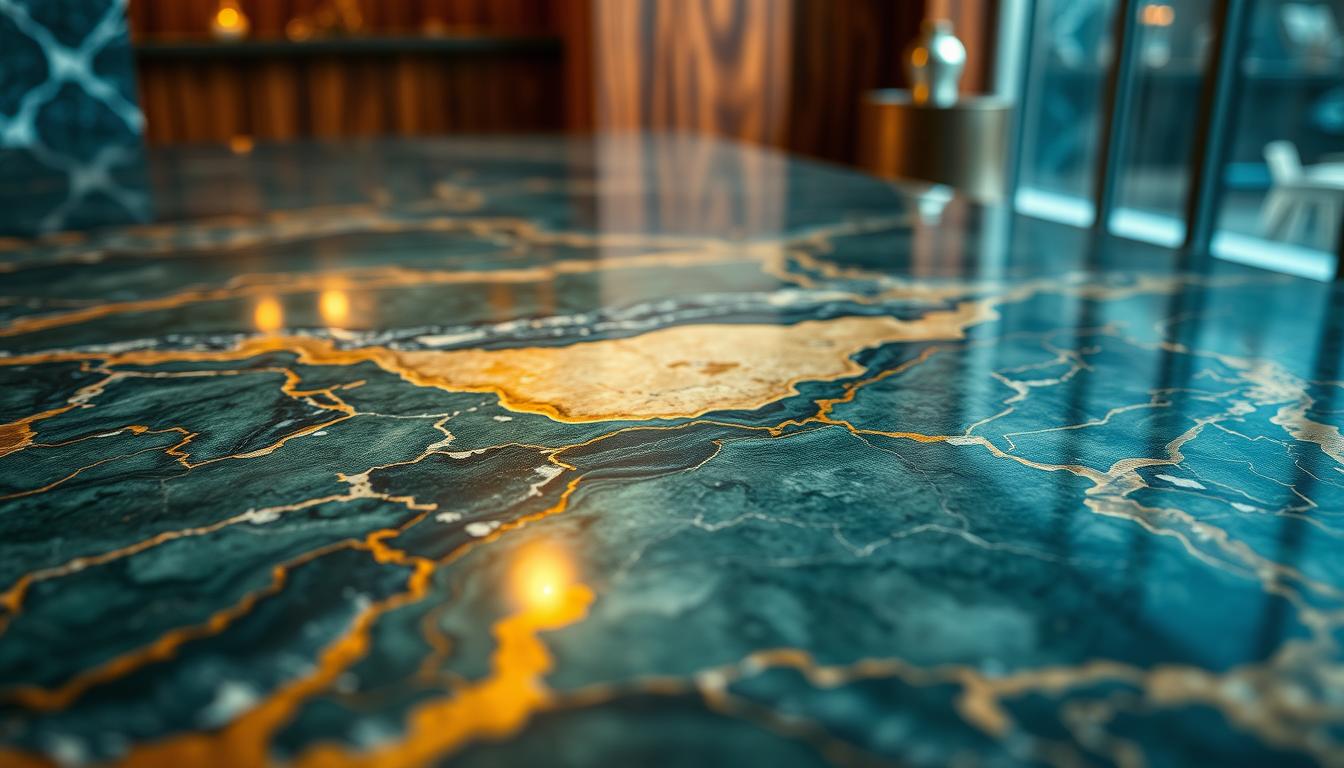
Forget Pinterest boards. Designing a space is like directing a Scorsese film. Your first, most important decision is choosing the lead.
Choosing your main surface is not just about looks. It’s a deep, meaningful choice. Will it be the dramatic veining of ancient marble? Or the warm, steady feel of quarter-sawn oak?
This choice sets the mood and look of your space. The scale and movement in your main material are like a film’s score. They tell the audience how to feel.
Think of other elements as supporting roles. A bold, primary material often creates more coherence, not more chaos. It’s a rule from Renaissance art and modern branding: establish a clear hierarchy.
Why does going big work? It reduces visual noise. When one element gets 60% of the attention, the rest falls into a harmonious order. This is the key rule for anyone looking to master mixing stone, wood, and metal in.
So, before you think about accessories, ask yourself: what’s the story your hero is here to tell?
Stone selection quarry grades finishes and bookmatching layouts
Think of quarry grades as the caste system of stone—some slabs are born aristocrats, others are sturdy commoners. This isn’t just geology; it’s social stratification for rocks. Your choice here dictates the entire narrative of a space.
Selecting natural stone is about more than nomenclature. It’s about choosing a story. Do you want the imperial drama of marble or the taciturn resilience of slate? The psychological dimension is real. Stone suggests permanence and solidity. It grounds a room, both literally and emotionally.
So, what are these grades? Commercial grade is your reliable workhorse. It’s the suit off the rack—presentable, consistent, and affordable. Standard grade offers more variation, a bit more personality. Then you hit premium or “first” grade. This is bespoke Savile Row. These slabs have the most dramatic veining, the purest color, and the fewest natural “flaws.” You’re paying for a one-of-a-kind canvas.
Next, the finish. This is where personality is applied. A polished finish shouts. It’s glossy, formal, and reflects light like a ballroom floor. A honed finish whispers. It’s matte, soft, and feels modern and tactile underfoot. Then there’s leathered or brushed—a finish that feels rugged and hides fingerprints beautifully.
Here’s a critical data point: light-colored natural stone radiates warmth when paired correctly. But beware. The wrong undertone—a gray marble in a room with beige oak—creates a visual disconnect that feels unsettled, not curated. Always bring samples home.
Now for the magic trick: bookmatching. This is where you slice a slab into mirrored panels and install them side-by-side. The result is a symmetrical, Rorschach test of geology on your wall or island. It’s bold, artistic, and undeniably luxurious. It turns a backsplash into a conversation piece.
Let’s dissect the cultural cachet. Marble has the resume. It’s been in palaces and museums. It’s high-drama and, let’s be honest, high-maintenance. It stains, etches, and demands respect. Slate offers rugged authenticity. It’s darker, moodier, and feels more like a weathered landscape than a polished monument.
This brings me to my slightly sarcastic take on “character.” In the stone world, character is often a euphemism. A large, dramatic vein is character. A cluster of pits or an unexpected crack? That’s a defect you’re being asked to pay a premium for. Know the difference. Charm is intentional; a flaw is a compromise.
The final analysis? Your natural stone selection should be driven by the narrative you want the room to tell. Is it a serene, modern spa? Honed limestone. A vibrant, artistic kitchen? Bookmatched marble. Choose for the story, not just the sample chip. The right stone doesn’t just sit there—it speaks.
Porcelain slab alternatives seams edge profiles and maintenance
Think of porcelain as the streaming service of surfacing: all the content, none of the scratchy vinyl maintenance. It’s the method actor of materials, capable of a stunning Marlon Brando as marble or a pitch-perfect Meryl Streep as concrete. This isn’t just a cheaper understudy; it’s a pragmatic, often superior, co-star for the modern kitchen.
Let’s start with the performance. Porcelain slabs are master impersonators. They deliver the visual drama of calacatta gold or the raw grit of weathered steel, but without the diva’s backstage demands. The key question in any kitchen is durability. Can it survive a spilled merlot and a hot pan? Porcelain answers with a resounding, non-porous yes.
The real design magic is balancing that bulletproof durability with a sense of warmth and coziness. A sleek, high-gloss porcelain can feel cold. The trick is to introduce contrast—pair it with the tactile warmth of a crafted wood island or the soft glow of a metal pendant light.
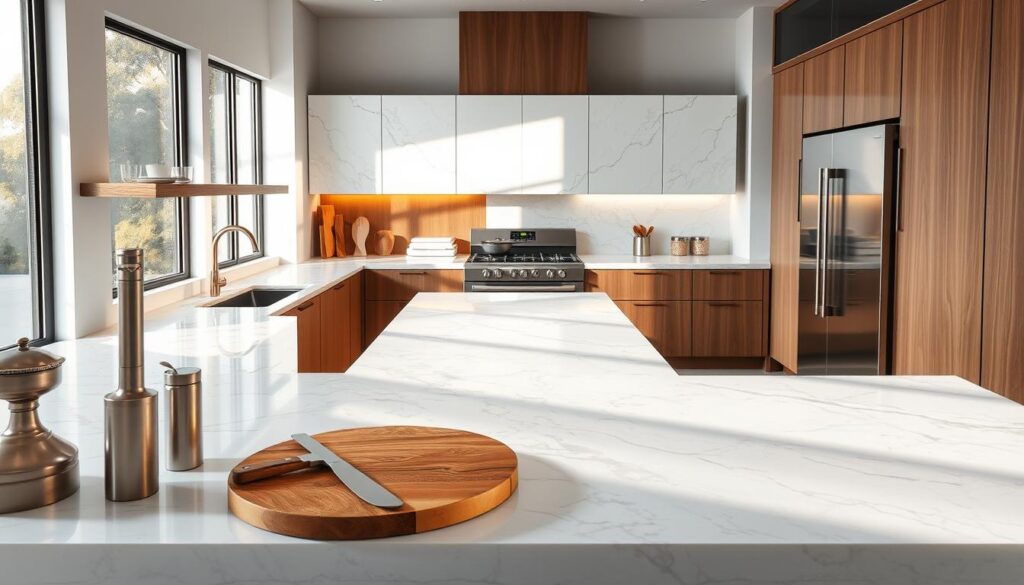
Now, onto the seam game. Even the largest porcelain slab has limits, so joins are inevitable. The goal is to hide them like a Hollywood plastic surgeon hides a facelift scar. This isn’t about pretending they don’t exist; it’s about strategic placement.
Bookmatch the vein pattern across two slabs to create a mirror-image mural, or run seams along the natural break of an appliance or sink. A skilled fabricator makes them virtually disappear, turning a technical necessity into an invisible art.
If seams are the hidden sutures, then edge profiles are the punctuation at the end of your countertop sentence. A sharp, square edge screams modern minimalism. A soft, rounded ogee whispers traditional elegance. This is where you inject personality.
That thin, pencil-thin edge? It’s the period. A bold, waterfall mitered edge? That’s an exclamation point. Your choice here defines the entire room’s grammatical style.
And then there’s maintenance. This is where porcelain slabs wink at you while natural stone demands a biannual sealing ritual. Spills wipe away without staining. Heat won’t phase it. It’s the low-fuss, high-performance partner.
Is this the cultural shift from vinyl to streaming? Absolutely. You trade the occasional pops and cracks (and soul?) of natural stone for flawless, consistent playback. The soul, it turns out, is in the design, not the maintenance schedule.
So, does it have soul? That depends on you. A porcelain slab won’t develop a patina or tell a story of decades past. What it offers is freedom. Freedom from anxiety, from constant upkeep, and from design monotony.
Use it to introduce that critical contrast—a dark, matte porcelain island against light oak floors prevents visual boredom. It’s the reliable backbone that lets other, more temperamental materials shine.
In the end, the porcelain proposition is one of intelligent compromise. You get the look, minus the legendary fragility. You get the drama, without the demanding script. It’s not an imitation; it’s an evolution.
Wood species grain cut sheen and matching panels and doors
Wood is more than just a material; it’s a piece of nature’s history. It’s the life force of a tree, bringing warmth and history into your home. Touching real wood can even lower stress levels. So, choosing wood is not just about looks; it’s about creating a peaceful atmosphere.
The grain of the wood is your first big decision. Rift-sawn wood has a clean, linear look. It’s perfect for those who love order and simplicity. On the other hand, plain-sawn wood offers a wild, dramatic pattern. It’s bold and unpredictable, like jazz.
The sheen level controls the wood’s personality. A matte finish is soft and organic, while a high sheen is bright and modern. Mixing these finishes adds depth and interest to your space. Think of the sheen as the volume on wood’s personality.
Matching panels and doors is key to a professional look. Perfect matching creates a seamless look, like a symphony. This is the essence of millwork, turning cabinets into architectural features.
The debate between veneer and solid wood is ongoing. Solid wood is romantic and substantial. But veneer is smart and sustainable. It’s about using wood wisely, creating beauty without waste.
Wood millwork is about creating a tailored experience for your walls. It’s not just about building boxes. It’s about crafting a space that feels calm and connected. The right wood, cut, and sheen can make your home feel like a sanctuary.
Metalwork guardrails range hoods fireplace surrounds and patinas
Our love for stainless steel is mainly because it doesn’t show fingerprints. We want things that stay new forever. It’s like wanting a face that never shows age.
Metal in our homes should add character, not just look good. A guardrail can be a design highlight. A range hood can be a stunning centerpiece. A fireplace surround in hammered metal can be a beautiful crown.
The real beauty is in the finish, not just the shape. Do you prefer the perfect look of polished chrome? Or the warm feel of brass or copper?
Patina is about character and history. It’s like a story on your metal. Brass and copper change with time, showing their age.
Let’s look at the different metals:
- The Cool & Collected: Chrome, nickel, and stainless steel are clean and modern. They’re easy to keep up but can feel cold.
- The Warm & Living: Brass, copper, and bronze are warm and inviting. They change over time, adding beauty to your space.
Choosing a metal is a big decision. Do you want a perfect, untouched home or one that shows life? A brass guardrail tells a story, unlike a shiny steel one.
For guardrails and fireplace surrounds, the choice is key. A cool metal adds a sharp line, while a warm one feels cozy. A copper range hood can be the kitchen’s heart.
Before picking stainless steel, think about what you want. Do you want a home for photos or one that’s lived in? The best homes have a little wear and tear, showing their stories.
Detailing junctions reveals shadow gaps and expansion joints
Forget the grand gestures for a moment. The soul of a bespoke interior lives in the two-millimeter gap between a wall and its veneer. This is the fine print, the architectural grammar that separates a thoughtful composition from a mere assembly of nice materials.
Think of a reveal junction as a respectful pause. It’s the silence between musical movements, a deliberate separation that says, “This stone and this wood are different, and that’s beautiful.” It prevents visual confusion, letting each material stand with dignity. Without it, surfaces crash into each other like a run-on sentence.
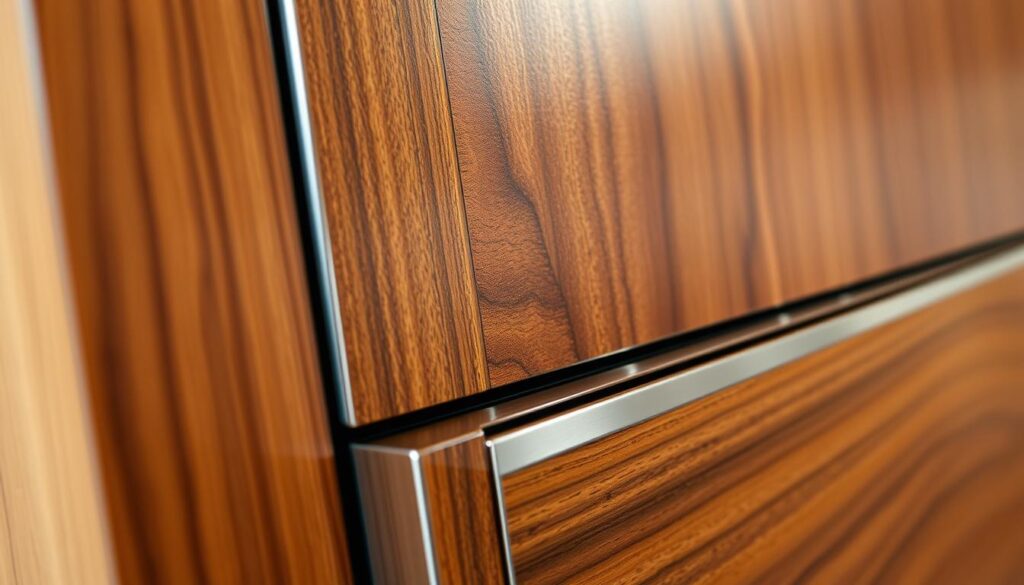
A shadow gap is more cunning. It’s the drop shadow in your design software, brought to life. By sinking a joint slightly back, you create depth and definition. Light catches the edge, drawing a crisp line that makes a floating wall actually look like it’s floating. It’s detail without trim—minimalism with backbone.
Then there’s the necessary humility: the expansion joint. Materials move. They breathe with humidity and temperature. An expansion joint is the design acknowledging this reality, a planned flexibility that avoids catastrophic cracks. It’s the difference between a static, fragile installation and a living, durable one.
How do you apply this? It starts with observing proportional hierarchy. A tiny reveal between cabinet and ceiling feels precise; a larger one at a floor transition feels grounded. Balance is everything. Pair the rough texture of honed stone with the slick perfection of a lacquered millwork panel. The contrast is the point.
| Detail Type | Primary Purpose | Critical in Veneer & Millwork |
|---|---|---|
| Reveal Junction | Creates visual separation and respect between materials | Prevents visual clutter where wood veneer meets stone or metal |
| Shadow Gap | Adds depth and defines planes without visible trim | Allows for natural movement and alignment in paneled walls and millwork |
| Expansion Joint | Accommodates material expansion and contraction | Essential for long runs of cabinetry and built-ins to avoid buckling |
This isn’t just technical trivia. It’s the philosophy of the joint. A well-detailed millwork installation uses these principles to feel intentional, not just installed. The veneer doesn’t just stop; it concludes. The gap isn’t a mistake; it’s a moment.
So, the next time you admire a seamless interior, look closer. The magic isn’t in the absence of lines. It’s in the lines they chose to keep.
Sourcing slabs bundles and shop drawings approvals before cutting
Your journey starts in the slab yard, where you read stone like an ancient map. This phase is about scouting, not just buying. It’s where your vision turns into something real.
True sourcing means visiting the yard yourself. You’re not just picking a color from a brochure. You’re choosing the specific bundle of stone or porcelain slabs cut from the same block. This ensures the veining and color flow tell a continuous story across your countertops or walls.
Choosing material is like making a cultural statement. There’s the local quarry with a known origin and a smaller carbon footprint. Then there’s the vast, global slab market. Your choice is not just about looks; it’s a value statement.
After picking your material, the next step is paperwork. The shop drawing translates your dream into a language the fabricator’s CNC machine can understand. Approving these drawings requires careful attention to detail. A small mistake can be very costly later.
Seeing full-size material samples in the actual space is essential. Tape them to the wall. Lay them on the floor. View them at different times of day. Digital renders lie. Light tells the truth. This step is non-negotiable.
This process—sourcing the perfect bundle, checking the shop drawings, and approving physical samples—is your last check before cutting. It’s where planning meets reality. Get it right, and the installation is smooth. Get it wrong, and you’ll learn a costly lesson.
Protection during construction RAM board edge guards and humidity control
Your investment in statement materials is only as good as the plan to defend them. This includes protecting against drywall dust, dropped tools, and humidity. It’s not just about choosing materials; it’s about keeping them safe.
Start with floor protection. RAM board is essential. It’s not for Amazon boxes; it’s for protecting your floors. Lay it down first and tape the seams.
Edge guards are next. They protect your marble island’s sharp edges. Use foam or rigid corner protectors to avoid damage. Apply them when slabs are set and make it a rule to keep them in place.
But there’s a silent enemy: humidity. It can cause wood to expand and contract, and stone to absorb moisture. This can ruin your work.
Manage the air to prevent damage. Acclimate wide-plank wood floors or solid wood panels for 72 hours before installation. Use a dehumidifier in damp climates. Seal the backs of stone slabs with a penetrating sealer before installing.
| Protection Method | Primary Defense Against | Critical Detail |
|---|---|---|
| RAM Board Flooring | Scratches, dents, spills, and general debris | Overlap seams by 6 inches and use duct tape; replace if saturated. |
| Rigid Edge Guards | Impact damage to countertop and island edges | Use high-adhesion tape; remove carefully to avoid pulling up finish. |
| Dehumidifiers & HVAC | Wood expansion, stone moisture wicking, adhesive failure | Maintain 35-55% relative humidity as per material specs. |
| Back-Sealing Stone | Moisture staining and efflorescence from below | Apply sealant to the *back* and sides before setting on mortar. |
| Sealed Plastic Sheeting | Dust infiltration into finished cabinets or millwork | Create a positive-pressure “clean room” for finished areas. |
This isn’t paranoia; it’s project management. The chaos of creation must be managed. Your formal construction specifications might not detail where to place the RAM board roll, but your sanity does. Coordinate with your contractor to make material protection a line item, not an afterthought. The goal is simple: ensure your vision survives its own birth, unscathed and ready for the next chapter—care.
Care plans sealers cleaners and patina aging gracefully
A patina is not a flaw but a material’s story, told in subtle tones and gentle wear. The grand opening is over. Now, how does the space live? Your care plan is the answer—not a chore list, but a stewardship manual for heirlooms-in-the-making.
This is where new interiors gain authentic character. Natural materials age beautifully, developing a narrative. The question isn’t if they will change, but how. Will you be a helicopter parent, sealing everything in a bubble of eternal youth? Or a wise collaborator, letting the marble drink a little red wine and tell its stories?
Let’s start with the fight-or-flight response: sealers. For porous stone, a high-quality impregnating sealer is like a sophisticated raincoat. It lets the material breathe while repelling most stains. But it’s not a force field. The goal is risk management, not immortality. Applying a sealer is a commitment to easier maintenance, not a promise of perfection.
Now, for the embrace: metal patina. This is where the soul of the material shines. A brass patina evolves from bright gold to warm, muted browns and greens. It’s chemistry as art. The trick is knowing which cleaners are allies and which are enemies.
- For Brass & Copper: Ditch the harsh polishes. A mild soap (pH-neutral) and water solution is your best friend. For a more even aging, some swear by a light mist of saltwater. It coaxes the patina along, like a director guiding an actor.
- For Steel: Whether stainless or blackened, the enemy is often chloride (think: aggressive cleaners). A soft cloth and warm water usually suffice. For stainless, wiping with the grain maintains its consistent sheen.
What cleaners strip the soul from a brass patina? Anything abrasive or acidic. They don’t clean; they reset. You’re not maintaining a surface; you’re erasing its history. Is that really what you want?
Maintaining these materials is less like housekeeping and more like maintaining a long-term relationship. It requires the right tools, gentle attention, and an appreciation for the beauty of change. You don’t scream at an oak floor for developing a richer hue. You don’t panic when your steel range hood gets a few fingerprints. You simply care for it with understanding.
So, draft your care plan with this philosophy:
- Identify the Material’s Personality: Is it porous stone craving protection? Or live-finish metal eager to develop character?
- Choose Your Tools Wisely: pH-neutral cleaners, soft cloths, and appropriate sealers are your non-negotiable basics.
- Establish a Rhythm: Weekly dusting, immediate spill cleanup, and an annual check-in on sealers.
- Learn to Love the Evolution: See the developing patina not as wear, but as a unique signature.
Graceful aging is the ultimate sophistication. It’s the quiet confidence of a space that feels good because it’s lived-in, not just lived in. Your marble, your oak, your brass—they’re not just materials. They’re co-authors of your home’s story. The best care plan lets them write a few chapters on their own.
Budgeting for fabrication transport install and spares
Let’s talk budgets. This is where your dream feature wall meets the spreadsheet. It’s the unsexy reality check, analyzed with the cold eye of a forensic accountant.
Your costs break into four pillars. Fabrication is the artistry, where your stone or metal gets its soul. Transport is the nerve-wracking logistics, moving precious slabs without drama. Installation is the high-wire act, requiring skilled hands.
Then there’s the line item most forget: spares. A chipped tile two years in shouldn’t become a philosophical crisis. Order extra material during initial sourcing. This foresight saves future headaches and matching nightmares.
Allocate funds where they’re seen and felt. Invest in the focal point’s material and craftsmanship. Consider where to save without selling out—perhaps in areas less critical to the visual punch. Smart sourcing from reputable suppliers is non-negotiable for quality and timeline.
Every choice in material and technology integration echoes in the final invoice. Understanding this is the final lesson in material literacy. It’s the true cost of the drama, warmth, and craft you’re bringing home.