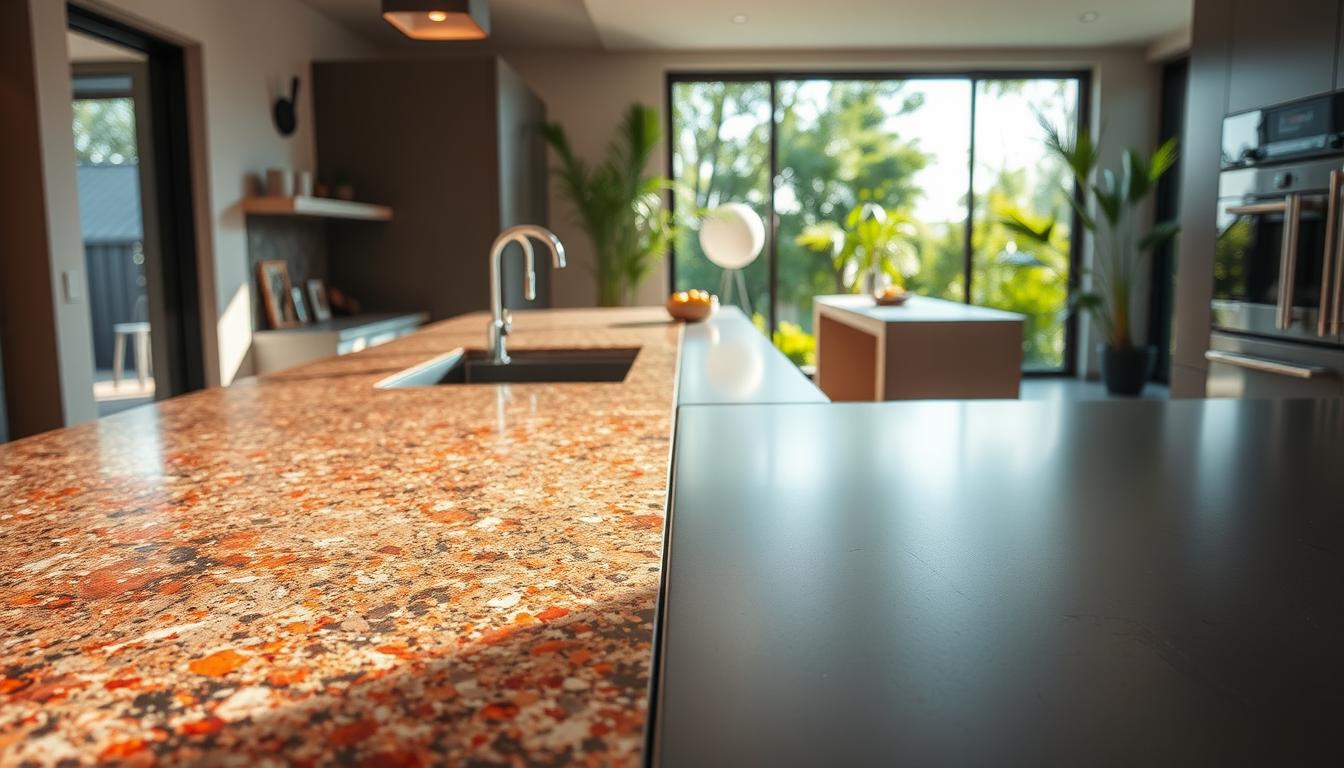
Your kitchen countertop is where meals and messes happen. Today’s materials are far from the dull surfaces of the past. They look amazing and can handle the daily chaos.
Countertops are more than just surfaces. They’ve evolved from simple butcher blocks and laminate to materials that can handle heat and stains. Picking the right one is a statement about your lifestyle.
We’ll dive into the newest countertop trends, moving past the old granite. You’ll see slabs that resist heat and seamless designs that merge with backsplashes. Are you ready to see your kitchen in a new light?
Sintered and porcelain why they win in kitchens and outdoors
Sintered stone is the top choice for durability and style. It’s made by fusing natural minerals under high heat and pressure. This creates a ultra-compact surface that can withstand anything.
Porcelain slab counters and sintered stone are taking over kitchens and outdoor BBQ areas. They can handle anything, from UV rays to spills. Their non-porous nature means no stains or marks.
These surfaces come in large slabs, reducing seams. Imagine a kitchen island with no breaks in the surface. The ultra-thin options are strong, combining style with durability.
The debate between sintered vs. porcelain is ongoing. Both materials have impressive qualities. Sintered stone is new, but porcelain slab counters are also top-notch. They outdo traditional stone, fitting our modern lifestyles perfectly.
Engineered and poured terrazzo brass inlays thickness and edge options
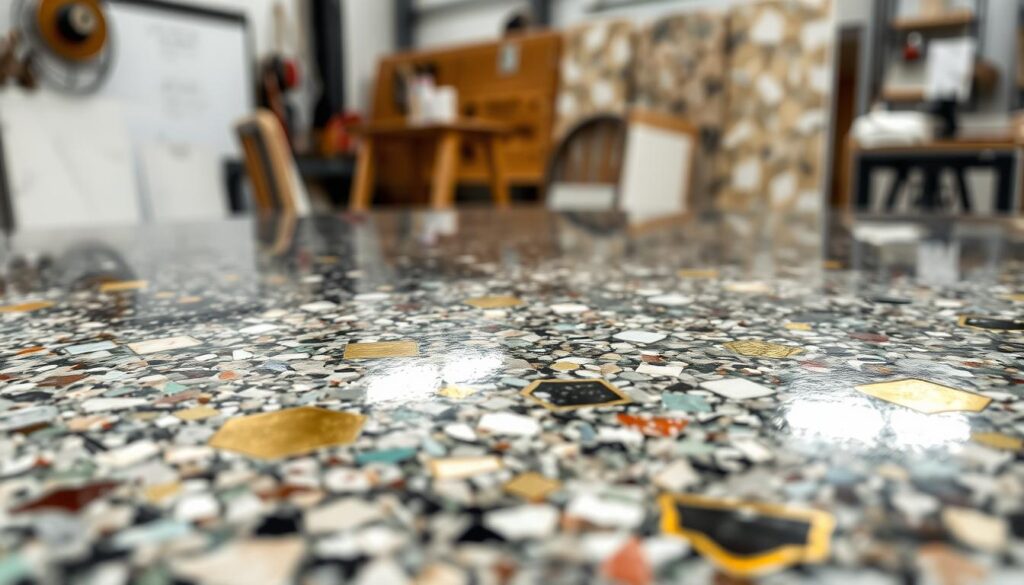
Traditional materials, step aside. Engineered terrazzo is here to bring luxury to your kitchen. It’s not just a throwback to mid-century airports. Today’s terrazzo slab combines marble, glass, and even brass inlays in a resin or cement binder. It’s a bold statement piece.
Customization is key. Want a brass fleck to catch the pendant light? It’s done. You can create a bespoke aggregate that tells your design story. It’s like composing a symphony where each piece plays a part in your unique narrative.
But let’s not forget the structural integrity. The thickness and edge options are critical. A poured epoxy terrazzo offers flexibility and a seamless finish. On the other hand, a prefabricated slab provides predictability and ease of installation. Here’s a quick rundown of your choices:
- Thickness: Commonly available in 1/4″, 1/2″, and 3/4″ options, allowing for various applications.
- Edge Options: Choose from beveled, straight, or bullnose edges to complement your design.
- Brass Inlays: Add a touch of elegance with customizable brass inlays that enhance visual appeal.
In essence, engineered terrazzo is the perfect blend of style and substance. It offers a more predictable, affordable, and stain-resistant path to achieving that coveted terrazzo aesthetic. So, why not elevate your space with a terrazzo slab that’s as unique as you are?
Stainless and mixed metal counters warmth sound deadening patina care
Stainless steel might not seem warm at first, but it’s worth exploring. Stainless steel is known for being clean, tough, and almost unbreakable. It shines when paired with other materials, making your kitchen look amazing.
Picture a stainless steel prep area next to a warm oak butcher block. This combo is not just pretty; it also makes cooking better. The wood’s warmth and the metal’s sleekness together create a special cooking space.
Kitchens can get loud, but sound deadening can help. Adding materials under your counters can make the noise of pots and pans less loud. It’s a small change that makes a big difference, making your kitchen quieter.
Patina care is also important. Do you like the look of a kitchen with scratches and dings, like a well-used Zippo? Or do you want a clean surface, kept spotless with a microfiber cloth? Either way, the patina tells a story of its own.
In kitchen design, stainless and mixed metals are key players. They’re not just useful; they’re also very flexible. Whether you bake a lot or love trying new recipes, these counters are perfect for your kitchen.
Don’t be afraid of stainless steel. It can add warmth and personality to your kitchen. With the right design, you can make a space that’s both useful and shows off your style.
Concrete GFRC sealers movement joints integral sinks and support steel
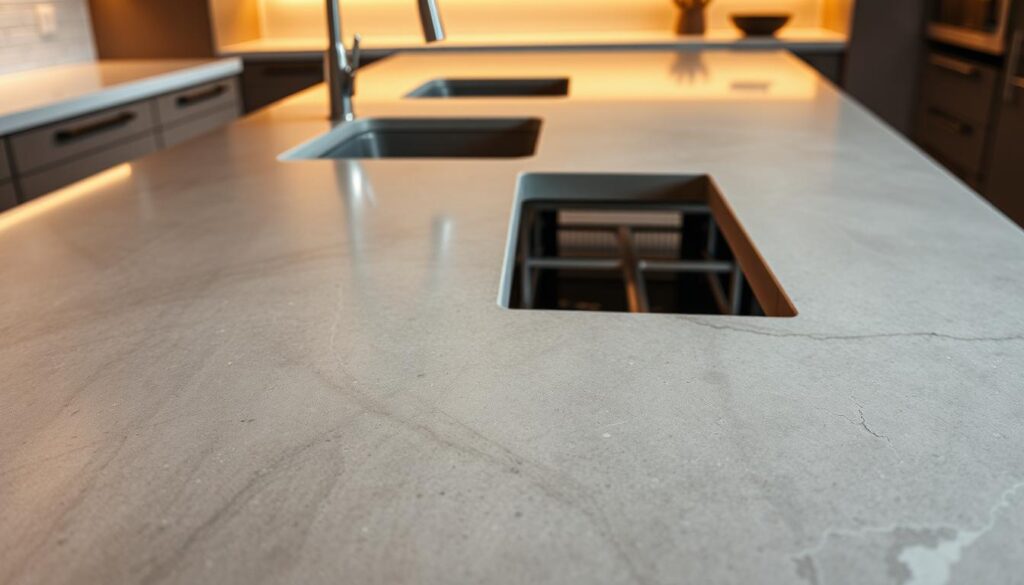
Concrete countertops are more than just stone slabs. They bring raw beauty and strength to any space. Working with concrete, like Glass Fiber Reinforced Concrete (GFRC), is a mix of art and science.
GFRC makes countertops thinner and lighter but just as strong. This high-performance mix is a game-changer. It lets designers create stunning surfaces that are both practical and beautiful. But, concrete is a living material that moves.
Movement joints are key in concrete installations. They let the material expand and contract without cracking. Without them, your countertop could become a puzzle of imperfections.
Support steel is also vital. It keeps your countertop from sagging and maintains its structure. Proper installation is essential; without it, even the most beautiful design can fail.
CNC machines are a big innovation in concrete design. They make detailed designs, seamless edges, and custom inlays. Imagine a countertop where the sink flows directly from the surface, creating a smooth, uninterrupted plane.
Don’t forget about sealers. Concrete is porous and can absorb stains. A high-quality sealer is needed to protect your countertop. It keeps the beauty locked in while preventing stains.
| Feature | Benefit | Considerations |
|---|---|---|
| GFRC | Thinner, lighter, stronger profiles | Requires careful installation |
| Movement Joints | Prevents cracking | Must be strategically placed |
| Support Steel | Maintains structural integrity | Essential for larger spans |
| CNC Technology | Seamless designs and custom features | Higher initial investment |
| Sealants | Protects against stains | Regular maintenance needed |
In conclusion, concrete countertops are a bold choice for kitchens or outdoor spaces. With the right materials and techniques, you can create a stunning surface. Embrace the challenge and let your creativity flow.
Solid surface thermoform tricks coved splash repairability and color match
Solid surface materials are the hidden gems of countertops. They’re not just about looks; they offer unique benefits. Their ability to be thermoformed is a game-changer. This process heats and shapes them into curves and angles, breaking the mold of traditional countertops.
Imagine a coved backsplash that flows smoothly from your counter. Solid surface makes this possible without any seams or crevices. It turns your design dreams into reality.
Another great thing about solid surface is how easy it is to repair. Unlike natural stone, a scratch or chip can be fixed with just a little sanding. This keeps the surface looking new, thanks to its color consistency.
Many brands now add antimicrobial technology to their solid surface products. This not only looks good but also keeps your space clean and sanitary. It’s perfect for those who want a modern look without the upkeep of materials like marble or steel.
In short, solid surface materials are the smart choice for countertops. They offer both style and practicality, making them ideal for modern spaces.
| Feature | Solid Surface | Natural Stone | Stainless Steel |
|---|---|---|---|
| Thermoforming | Yes | No | No |
| Repairability | Easy | Difficult | Moderate |
| Antimicrobial Options | Available | No | No |
| Seamless Installation | Yes | No | No |
Edge profiles miter eased bullnose waterfall shadow reveals
Edge profiles are key in countertop design, blending form and function. They are the first touch that shows quality and design. No longer just basic bullnose, today we have mitered edges that make thin ultra compact porcelain look like a big slab. This trick adds depth to any kitchen.
The waterfall edge stands out, flowing down an island to the floor. It makes a room feel anchored and shows off the material’s beauty. It’s not just pretty; it’s a statement of confidence.
The shadow reveal makes the counter look like it’s floating. This detail adds a touch of sophistication. It’s something that catches the eye and gets a second look.
Choosing between eased and sharp edges is more than a preference. It’s about safety, cleaning, and how light interacts with it. The right edge can make the whole kitchen look better. It’s not just about the countertops; it’s about the whole design.
For more on countertop trends, check out this piece on countertop trends.
Fabrication notes tolerance cutouts rod reinforcement shop drawings
In the world of countertops, fabrication notes are key. They ensure your countertops are perfect. With digital tools and CNC machines, every detail is precise.
Need a fancy edge or a built-in sink? No problem. Your countertop will fit perfectly, even if your walls aren’t straight.
Fabrication is where romance meets math. Even the most exotic innovative countertops surfaces need precise fabrication. Shop drawings are critical for avoiding mistakes.
Digital templating captures every wall detail. CNC machines make cutouts for sinks and cooktops with precision. Rod reinforcement is also vital for durability.
Rod reinforcement is essential for materials that can break easily. It makes your countertop last longer. Tolerances are also important to avoid gaps that ruin the look.
Sustainability recycled content EPDs end‑of‑life pathways
Many countertops end up in landfills. For those who care, sustainability is key. We look for Environmental Product Declarations (EPDs) that show a material’s true lifecycle. The countertop industry is now focusing on sustainability.
Terrazzo slabs are a green choice. They’re made from recycled materials like marble dust and glass chips. This turns waste into something valuable. Even ultra-compact surfaces are lasting longer, making them more sustainable.
Let’s talk about what happens to countertops at the end. Can they be recycled or reused? We’re moving towards a world where materials are used again and again. It’s about picking materials that last and can be broken down safely.
For more on sustainable home design, check out luxury sustainable homes and green building.
Cost and lead times slab counts templating risk allowances and QA
Planning a kitchen renovation can be tough. The costs add up, and materials play a big role. For example, porcelain slab counters might seem cheap at $55 per square foot. But, adding mitered edges and cutouts can make your budget feel tight.
It’s key to understand slab counts. This means fitting your kitchen layout onto a stone block to save money. A bad layout can cost you more, so it’s important to plan well.
Lead times can be long. Custom quartz countertops might take just two weeks. But, a specialty sintered stone from Europe could take up to two months. Waiting can feel like forever.
Remember to budget for surprises. Adding 15-20% to your budget for unexpected costs is smart. A templating mistake or a cracked slab can throw off your plans.
Quality Assurance (QA) is your last check. It ensures the color and finish are right before the installers leave. It’s your safety net, protecting your investment.
For more on managing your renovation, check out the DFD Policy and Procedure Manual. It offers insights into effective project management.


