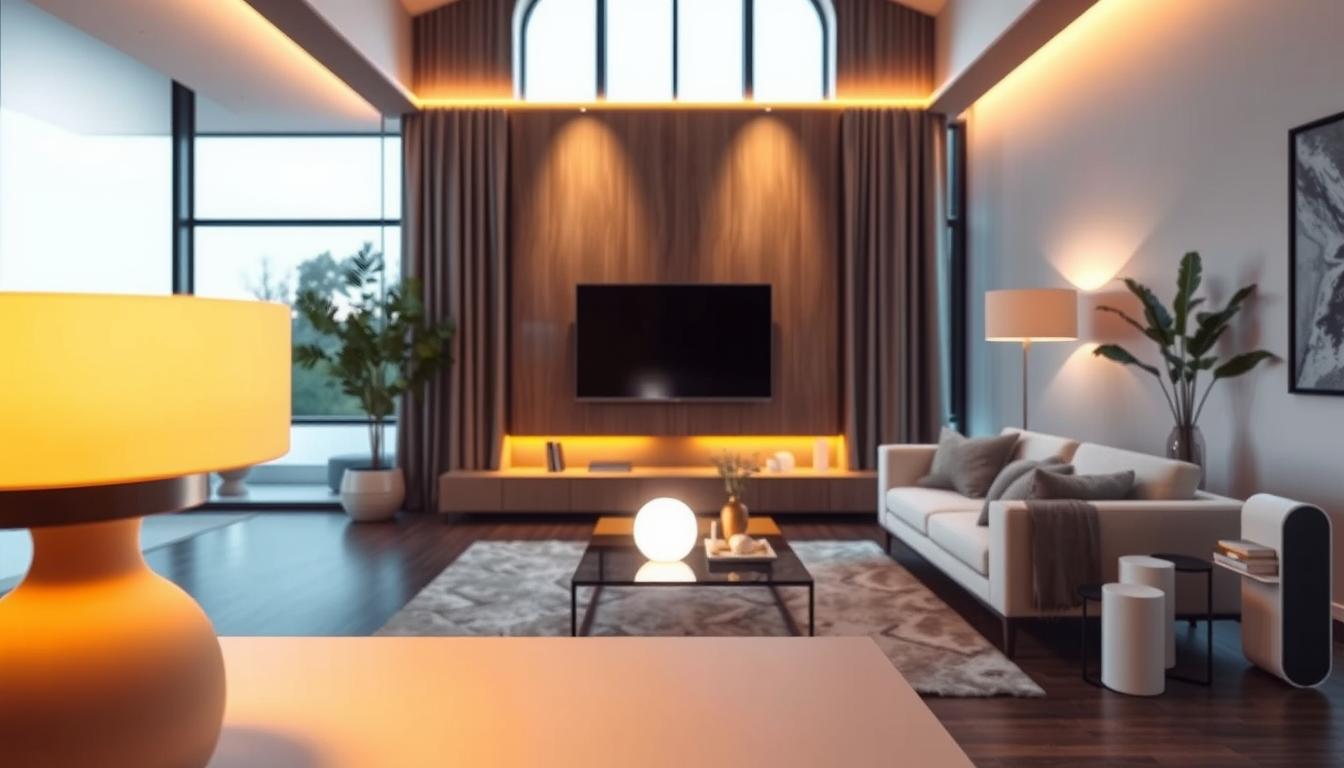
Lighting has evolved from a basic need to a key part of our homes. We no longer just flip switches and deal with harsh light. Now, our homes light up in ways that match our mood, routines, and the time of day.
Picture a system that knows the sun’s path better than your skin doctor. It’s not just about looks; it’s about matching artificial light with our natural cycles. The aim is to improve sleep, focus, and health. Human-centric lighting leads this change, creating spaces that meet our biological needs.
The old days of a single, harsh light are over. Today, homes need layers of light that adjust to our environment. This is where the excitement starts. We mix design with brain science, exploring how light affects our lives.
Tunable strategy zones kelvin ranges and curve programming
Ever thought about how the right lighting can change your mood? Let’s explore tunable white, a lighting revolution. It’s not just about looks; it’s about well-being. Imagine lights that adjust to your day, changing colors as you go.
At the core is the tunable white spectrum, ranging from 2700K to 6500K. This spectrum is designed to boost productivity and comfort. It offers cool tones for work and warm hues for relaxation.
Defining the tunable white spectrum
Color-changing lighting has become essential for daily life. The Kelvin scale is key to this. Ever felt sleepy in a home office? That’s where tunable white lighting helps.
From 2700K to 6500K and everything in between
Think of a dimmer switch for your body’s rhythms. Programming curves adjust light from morning to night. But, many systems only change color temperature, not the actual light.
True tunable lighting changes the light’s spectrum, not just its look. It uses dual-channel LED engines for a smooth transition. Timing is also critical, responding to natural light, not just your clock.
Platforms Lutron Ketra DALI‑2 KNX Control4 pros cons and interoperability
Choosing a smart lighting platform is like debating politics. Everyone has strong opinions. Now, the focus is on deep integration and personal experiences. Let’s look at the main contenders.
The heavyweight contenders
Lutron and Ketra are a strong team, like Apple in their ecosystem. Their Ketra D3 lamps change color and light quality well. But, you’re stuck in their system, which might feel too expensive.
Lutron and Ketra’s ecosystem dominance
- Pros: High quality, easy to use, and bright lights.
- Cons: Expensive and hard to mix with other systems.
DALI‑2 and KNX are for those who love customization. They’re complex but customizable. They’re like Linux for lighting, loved by European engineers.
The open protocol rebellion
DALI‑2 and KNX for the purists
- Pros: Customizable, strong, and grows with you.
- Cons: Hard to set up and needs a programmer.
Control4 is a middle ground, liked by tech fans and regular users. It’s easy to use but also has depth for custom settings. It’s not too expensive.
The integrator’s darling
Control4’s middle-ground appeal
- Pros: Works well with others, easy to use, and flexible.
- Cons: Not as deep as Lutron or as flexible as DALI‑2 and KNX.
Interoperability is key: Can Lutron work with KNX? Can Control4 dim DALI‑2 lights? Yes, but it might cost a lot and need a programmer.
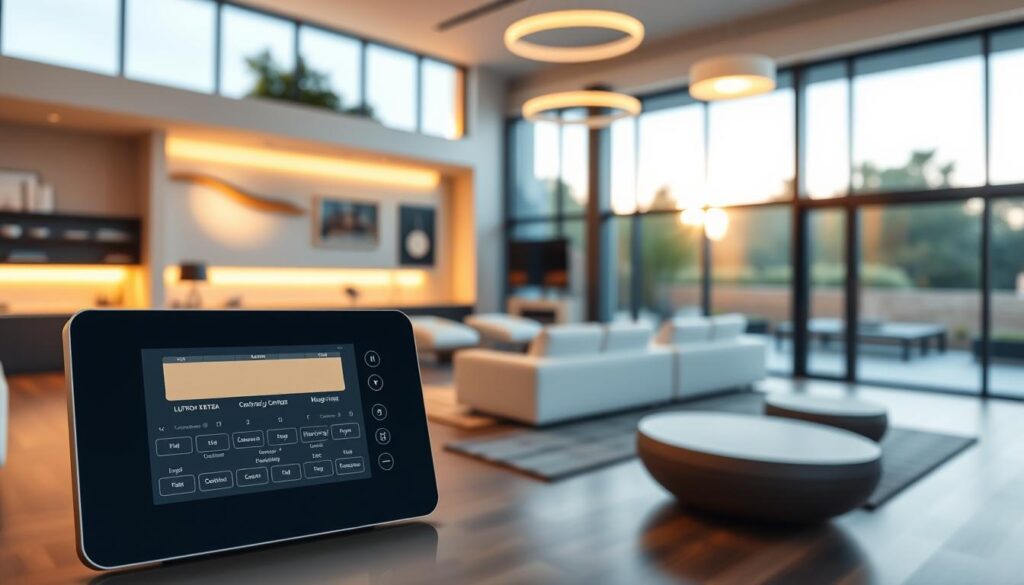
Fixtures and drivers TM‑30 flicker dimming to 0.1% fixture types
Lighting design is more than just function; it’s about beauty. Today’s fixtures and drivers are sleek and stylish. They blend technology with design.
TM‑30 goes beyond CRI, focusing on color accuracy and range. R9 values are key for rich colors, like mahogany floors. For human centric lighting to work, fixtures must deliver.
Beyond CRI and into TM‑30 territory
Fidelity, gamut, and why R9 values matter
CRI has been used for years, but it’s not perfect. TM‑30 offers a deeper look at color, showing vibrancy. It makes colors stand out, not just appear.
The flicker-free promise
Dimming down to 0.1% without the strobe
Flicker can cause headaches, even if you don’t notice it. The best drivers dim to 0.1% without flicker. They’re made with precision.
Fixture typologies for the design-obsessed
Linear, downlight, and architectural integration
Old lighting is gone; new designs are in. We now hide light in buildings. This creates a better space, not just light.
| Fixture Type | Characteristics | Best Use |
|---|---|---|
| Linear Profiles | Sleek, modern design | Architectural integration |
| Downlights | Compact, versatile | General lighting |
| Edge-lit Panels | Uniform light distribution | Office and commercial spaces |
| Flush-mounted Lighting | Minimalist, unobtrusive | Residential settings |
Fixtures and drivers have evolved, merging tech and design. With human centric lighting, light improves our lives, not just lights them up.
Sensors astronomy daylight presence and color feedback loops
Modern lighting has changed a lot. We don’t just flip switches anymore. Today, sensors detect motion and adjust to our presence. This makes lights more comfortable and saves energy.
It’s like having a personal lighting assistant. It knows your habits better than you do.
Presence Detection Beyond PIR
PIR sensors have been around for a while. But they’re not that smart. You might have to wave your arms to keep the lights on.
Millimeter wave sensors are different. They detect your breathing, so you don’t need to wave. Your home can now respond to you better, keeping you from being in the dark.
Millimeter Wave and the Death of the Wave-Your-Arms Dance
Millimeter wave sensors are much more precise than PIR sensors. They notice small movements, making lighting smooth. Walking into a room, the lights adjust perfectly, without you needing to do anything.
This technology makes life easier and saves energy. Lights only turn on when needed.
Astronomical Time Clocks
Astronomical time clocks are like something from an observatory. They adjust lights based on the sun’s position for your location. This makes lighting smarter, not just automated.
Why Your Lights Should Know When the Sun Actually Sets
Lights that adjust to sunset time are essential. They help your body stay in sync with nature. This improves sleep and overall health.
Closing the Loop with Color Sensors
Color sensors are the next big thing in lighting. They measure light’s color and brightness. This lets your lights adjust to the actual light in the room.
Your home will start to really understand its surroundings. It won’t just pretend to know the time anymore.
Ambient Light Feedback for True Circadian Fidelity
Color sensors help your lights support your natural rhythms. It’s not just about turning lights on and off. It’s about creating a space that supports your body’s natural cycles.
This smart connection between your home and the environment makes living better. Say goodbye to scripted lighting and hello to a system that truly gets you.
For more insights on how to layer your lighting effectively, check out this detailed guide.
Scenes wake focus entertain unwind travel mode night paths
In today’s smart homes, lighting scenes make everyday moments special. Imagine waking up to a soft Mediterranean sunrise instead of a loud alarm. This is what Control4 smart lighting offers, making every moment personal.
Morning Protocols and the Gentle Wake
The “Wake” scene should be gentle, not jarring. Imagine a 20-minute sunrise simulation starting with deep amber, then peach, and ending at 4000K. This gradual change helps your brain wake up naturally, like dawn.
Simulated Sunrise Without the Rooster
Starting your day with a well-set morning scene can refresh you. It boosts your mood and sets a positive day ahead.
Entertaining and the Art of the Dinner Party Glow
Lighting is key when hosting friends. The “Entertain” scene balances visibility and ambiance. Think of warm dimming on chandeliers, subtle cove lighting, and accent on art pieces.
Scene Choreography for Social Spaces
With a button press or voice command, your space changes, making dinner parties special. It’s about creating a space where everyone looks good and feels at ease.
Travel Mode and the Illusion of Occupancy
Travel mode is more than just random lights. A smart system like Control4 replays your habits, making it seem like you’re home. It even moves furniture slightly to fool burglars.
Security Through Randomness
This sophistication boosts security and gives you peace of mind when away.
Night Paths and Low-Glide Navigation
Consider the “Night Paths” scene. It uses motion and amber light at 1% brightness to guide you to the bathroom. It’s a key part of home lighting, ensuring safety without waking you.
Amber Wayfinding Without Sleep Disruption
With these smart lighting scenes, your home adapts to your life. For more on improving home automation, see this guide on scenes and schedules.
UX keypad etiquette voice app dashboards guests vs family modes
Smart lighting systems can either delight or disappoint. The right controls make lighting control smooth and intuitive. Let’s look at how tactile keypads, voice control, and guest modes can enhance your home’s atmosphere without stress.
The Return of the Tactile Keypad
Remember when turning on a light was easy? The tactile keypad is back, and it’s not just any keypad. Lutron‘s Palladiom line offers sophisticated, backlit models. They make controlling your lights elegant.
Why Buttons Beat Touchscreens at 2 AM
Imagine it’s 2 AM, and your home is dark. Do you want to search for your phone, unlock it, find the app, and wait for it to connect? Or would you prefer a simple button press that knows what you need? The choice is obvious.
Voice Control Without the Theatrics
Voice control has improved a lot. You no longer have to shout at your smart speaker like it’s a teenager. Now, commands like “dim the living room” work without accidentally turning off the nursery. It’s a real conversation, not a show.
Natural Language and Context-Aware Commands
Today, you can give commands that feel natural and easy. Voice control understands the context, making your interactions smooth and fun. It’s about your home responding to you, not the other way around.
Guest Mode and the Mother-in-Law Test
If your mother-in-law can’t turn on the bathroom light, you’ve failed. Guest mode is here to help. It offers a simple interface that even tech-phobes can use.
Simplifying Complexity for Visitors
Guest mode removes extra features, giving visitors only what they need. Family mode, on the other hand, offers full control, from scenes to macros. It’s the perfect balance, making everyone feel at home.
| Feature | Guest Mode | Family Mode |
|---|---|---|
| Interface Complexity | Simplified | Full Control |
| Accessibility | Easy for Visitors | Advanced Users |
| Customization | Limited | Extensive |
The dashboard should focus on what’s important. Critical controls should be at the top, with ambient adjustments below. Deep menus should be hidden, accessible only to experts.
Lutron’s ecosystem is designed to understand this. They know a light switch is more than a device; it’s a daily touchpoint. It should be natural, not scary.
Commissioning color calibration profiles documentation and training
Setting up lighting systems is like tuning a fine instrument. It’s not just about throwing lights up and hoping for the best. In circadian lighting, it ensures every fixture works with the intended ambiance and function.
The Spectroradiometer Enters the Chat
Measuring what your eyes can’t see is key. You might think you can judge light quality by sight alone, but your eyes are not reliable. The spectroradiometer—a handheld device—measures melanopic lux, the metric that matters for circadian stimulus.
Measuring What Your Eyes Can’t Quantify
Without this device, getting the right light intensity and spectrum is hard. Free online calculators help, but the spectroradiometer gives the precise data needed for accuracy.
Profile Creation and Fixture Matching
After getting your measurements, you create profiles and match fixtures. Imagine getting twenty “identical” tunable white downlights, only to find they have different shades of white. This is due to binning variance in LED manufacturing.
When Two “Identical” Downlights Disagree
Proper commissioning means measuring each fixture, creating individual profiles, and adjusting in software. This ensures every light in the room looks consistent and pleasing, making your design shine.
Documentation as an Art Form
Documentation is a key part of any installation. It’s not just a crumpled Post-it note with IP addresses. Think of a detailed digital package that maps every driver location, DALI address, programmed scene, and calibration curve.
As-Built Records That Don’t Gather Digital Dust
With detailed documentation, you can quickly fix issues or do a deep dive. It’s about creating clear records that make future troubleshooting easy.
Training the Humans
Training is also vital. Handing a homeowner an iPad without guidance is not professional. A good handover includes a walkthrough of daily operations, scene adjustments, and troubleshooting.
Handing Over the Keys Without the Panic
The goal is to make users confident and competent. They should feel like they’re conducting a well-rehearsed orchestra, not on a runaway train. With the right training, they can manage their lighting system with ease.
| Component | Description | Importance |
|---|---|---|
| Spectroradiometer | Measures spectral power distribution | Ensures accurate lighting measurements |
| Calibration Profiles | Individual settings for each fixture | Maintains consistent light quality |
| Documentation | As-built records of the installation | Facilitates future troubleshooting |
| Training | Guidance for system operation | Empowers users to manage their lighting |
Energy plus comfort blend with automated shades and daylight
In modern design, automated shades and daylight work together beautifully. They adjust to the sun’s movement, guided by your home’s system. When the sun shines bright, the shades lower to filter the light, while indoor lights dim.
The shade-lighting pas de deux
This dance is more than saving energy; it’s about comfort. Glare can ruin your day, making it hard to read or watch screens. Automated shades control the sun’s heat, keeping your home cool without you sweating.
Coordinating natural and artificial light in real time
Imagine your home adjusting to the sun’s changes instantly. This is human centric lighting at its best. It blends natural and artificial light for a consistent feel, improving your mood.
Solar gain management
Shades can save you money by controlling the sun’s heat. They work with your lights to cut down on cooling costs. It’s a smart choice for your wallet and comfort.
When shades save more than they cost
A room with steady light and temperature feels special. You might not even notice it’s working. But you’ll feel more relaxed, which is priceless.
The comfort dividend
Light and darkness shape our days and nights. A system that manages both is essential. Automated shades not only control light but also help you sleep better.
Glare control and thermal balance
As night falls, light and shade become even more important. Blackout shades in bedrooms help you sleep well. They let your home adjust to your life, boosting comfort and saving energy.
Cost model hardware labor programming warranties service plans
Let’s talk dollars and cents. A whole-home circadian lighting system is not just a fancy upgrade; it’s an investment. Smart bulbs can cost around $50 each. Advanced systems that adapt to your daily rhythms can cost a lot more, even into five figures before installation.
Breaking down the budget
Quality tunable fixtures, processors, and sensors come with a hefty price. A single Ketra downlight can cost more than a dinner for two. If you’re eyeing a KNX system, remember that while it may save you money at scale, specialized programming isn’t cheap.
Fixtures, processors, and the hidden costs
When budgeting, consider the hidden costs that can sneak up on you. The right fixtures and drivers can elevate your lighting game, but they can also drain your wallet faster than you can say “ambient glow.”
Labor and programming realities
Labor costs are another factor that can make homeowners cringe. Top-tier integrators charge what they do for a reason. They design systems that will function seamlessly for years. Programming a circadian curve isn’t a quick task. It requires precision and expertise, often taking days to perfect.
Why the best integrators charge what they do
Quality comes at a price. The best integrators ensure your system delivers the correct lighting for every room. This level of detail is what sets them apart.
Warranties and the long game
Warranties are your safety net. A solid warranty can be a game-changer, giving you peace of mind. Look for at least a five-year parts-and-labor warranty with a service-level agreement.
Service plans that prevent abandonment
Service plans are key. They prevent the dreaded “abandoned system” syndrome. Regular maintenance, recalibration, and updates keep your investment running smoothly. Think of it as insurance for your lighting experience.
Is it expensive? Yes. Is it worth it? If you view lighting as an experience, not just a utility, you already know the answer.


