
Choosing the right material for your gallery-level space is like picking a favorite child. Each has its own charm and character. In flooring, two top contenders are natural rock and modern ceramics. But how do you pick the best one for your space?
Let’s get into the details. Natural rock offers an earthy appeal that feels timeless. Ceramics, on the other hand, have a sleek surface perfect for modern designs. Both have their strengths, but knowing their differences is key to unlocking your space’s full beauty.
We’ll look at the pros and cons of each option. This will help you make a choice that matches your style and needs. Ready to change your space? Let’s begin!
Tactile feel and groutless look slab sizing tolerances
The feel of flooring can make a big difference. It can turn a room into a luxury space or a practical area. The right flooring can set the mood of the whole room.
Large-format porcelain tiles have changed how we think about flooring. They have narrower joints, making the floor look seamless and modern. This design is not just a trend; it’s a search for a clean look.
These slabs can be over a meter square and are 3mm to 20mm thick. This precise size is key for a smooth look. The thinner ones are great for walls, while the thicker ones are for countertops.
But, these slabs are not like old marble tiles. They need special care during installation. If not installed right, they can crack easily. Getting a seamless look requires careful handling of the material.
In the end, a high-end space needs a floor that looks and feels seamless. Large-format porcelain slabs offer a great option for improving your home’s look.
Natural stone families marble limestone travertine quartzite sealing needs
Natural stones are like the royal family of flooring; each member has its quirks and care requirements. Let’s dive into the personalities of these stones and discover their sealing needs.
Marble is the high-maintenance diva of the group. Its stunning beauty is matched only by its propensity for etching. Just a drop of lemon juice can leave a mark that even the best polish can’t hide. Regular sealing is a must to maintain its luxurious appearance.
Limestone, on the other hand, is the understated academic. Soft and porous, it absorbs spills like a sponge. This stone requires sealing to prevent stains and damage, making it essential to stay on top of its maintenance routine.
Travertine brings a rustic charm with its unique voids. Those holes need filling and sealing unless you want to cultivate a patina of neglect. A well-sealed travertine floor can be both beautiful and functional, but neglecting it can lead to a costly restoration.
Then we have quartzite, the overachiever of the bunch. It’s incredibly hard and durable, yet it also needs sealing to prevent stains. Think of it as the smart kid in class who studies for every test.
In contrast, porcelain is the teetotaler at this party. With an absorption rate of less than 0.5%, it simply refuses to stain. This makes porcelain the superior choice for those who prefer a low-maintenance option that looks flawless without the drama.
So, when choosing your flooring, consider whether you want a high-maintenance diva or a reliable friend. After all, a marble floor may take your time and patience, while porcelain will just sit there, silently judging your life choices.
Porcelain slabs printing body color thickness rectification claims
Porcelain slabs are not just made of clay. They’re also a result of advanced printing technology. This tech can mimic the look of natural stones with amazing detail. It’s like creating art that looks real.
Body color is another important aspect. Slabs can be through-body or color-body. A through-body slab hides chips well, while a color-body slab might show a white scar. You don’t want a flooring mistake that stands out.
Thickness also plays a role. Slabs can be as thin as 3mm or as thick as 20mm. Thin slabs are good for walls, but not for heavy use. Thicker slabs, on the other hand, are better for countertops and busy areas. Picking the right thickness is like choosing the right clothes for an event.
Rectification is another key feature. It involves smoothing the edges of the slabs. A rectified edge means less visible joints. It’s like saying, “We did it right the first time.” If your slabs’ edges look rough, you might have a problem.
But watch out for fake products! Some claim to have rectified edges but don’t perform well. They’re like empty promises in the flooring world. Make sure to choose quality, and your floors will look and last great.
Slip and sheen honed leathered bush hammered R ratings and indoor outdoor continuity
The finish of your flooring can really make or break your space. It’s like the first impression of your home. Too smooth, and it feels like a stunt. Too rough, and it’s like walking on sandpaper.
There are different finishes like honed, leathered, and bush-hammered. Each has its own look and feel.
Honed finishes are smooth and matte. They’re like a calm, well-spoken speech. They add sophistication without being too much.
Leathered textures have a subtle grip. They’re like stone that’s been around for a long time. This finish is both elegant and practical.
Bush-hammered surfaces are very slip-resistant. They’re great for places like pool decks. They keep you safe without losing style.
R ratings are important for flooring safety. The higher the R rating, the better the grip. This is key for areas that are both inside and outside.
Creating a smooth transition from indoors to outdoors is a design goal. Porcelain is perfect for this. It stays strong against UV rays and weather changes. It keeps its shine without needing to be sealed.
Natural stone can be slippery when polished. It can also get moldy if not sealed outside. So, choose a floor that works well with your space.
Layout artistry bookmatch vein cut movement mapping
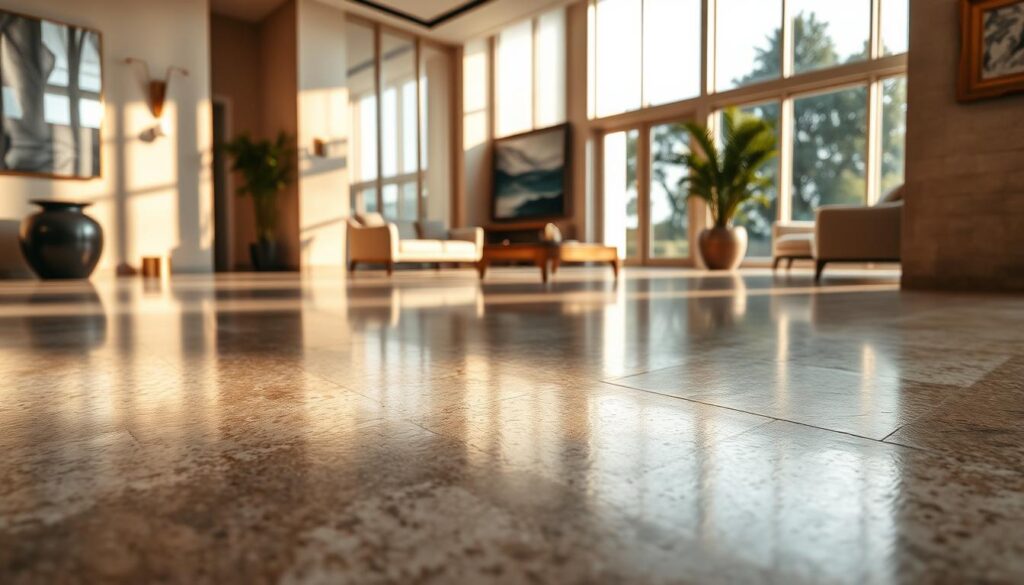
Bookmatching is more than a technique; it’s a way to make floors stand out. The ELEVATED Onyx Green Book Matched Porcelain Slabs show off vein alignment in a stunning way. This artistry can turn any space into a gallery.
Bookmatching is like a perfectly symmetrical face—it’s beautiful and a bit obsessive. It’s about mirroring veins in two slabs to create a pattern. This pattern says, “I hired an architect who reads philosophy.”
The debate goes on. Choosing between vein cut and cross cut shows the difference between amateurs and experts. Vein cut follows the natural flow, like a river. Cross cut slices against the grain, showing a chaotic, geological story. Each method adds its own character to the floor.
Movement mapping is about arranging these patterns across a room. It ensures veins flow smoothly, not like a distracted professor. It’s not just laying tile; it’s creating a visual symphony.
The ELEVATED collection’s Onyx Green slabs can make a wall a statement piece. But bookmatching requires sacrifice. You’ll need extra material, and your installer will work hard to align these designs.
The result? A floor that makes guests pause and wonder if they’re in an art museum. Just remember, don’t let them spill red wine on it. Porcelain forgives, but your nerves might not.
Substrate and install mud set vs thinset anti fracture leveling systems
Installing porcelain slabs is like a high-stakes negotiation. The subfloor is your toughest opponent. One misstep can lead to disaster. It’s not just a home improvement project; it requires precision.
Choosing between a mud set or thinset is your first decision. Mud set is like the wise old sage of flooring. It uses a thick mortar bed that offers forgiveness and strength. Thinset, on the other hand, is fast but unforgiving. If your subfloor isn’t perfect, thinset will show every imperfection.
Anti-fracture membranes are like the peacekeepers in your installation. They prevent cracks from substrate movement. Without them, your porcelain slabs could crack, undermining their beauty.
Leveling systems are the unsung heroes. They make your slabs so flat you could play billiards on them. A well-leveled installation looks good and lasts longer.
To show the differences, here’s a comparison:
| Method | Forgiveness | Installation Speed | Cost |
|---|---|---|---|
| Mud Set | High | Slower | Higher |
| Thinset | Low | Faster | Lower |
| Anti-Fracture Membrane | N/A | N/A | Medium |
| Leveling Systems | N/A | N/A | Medium |
Installing porcelain slabs needs specific training and tools. It’s not just about slapping down adhesive. The consequences of improper installation can be severe. Precision is key to a lasting installation.
Radiant heat and thermal expansion joints over long runs
Imagine your floor warming you up on cold winter days. Radiant heat makes spaces cozy. Porcelain slabs keep the warmth without warping or changing color.
But, there’s a catch. Heat makes materials expand. Without thermal expansion joints, your floor could buckle. These joints keep your floor looking good.
Porcelain works well with hidden induction cooktops. This is something natural stone can’t handle. So, when planning a room with heated floors, remember to include expansion joints.
Ignoring these joints can ruin your flooring. Porcelain can handle heat, but it needs space. Proper planning and installation are key to enjoying radiant heat safely.
Maintenance pH neutral cleaners poultice etch refresh vs resurface
Caring for your floors shouldn’t be hard, but natural stone makes it tricky. If you chose natural stone, you might find it a bit of a challenge. Marble, for example, etches easily with acidic cleaners. A simple wipe can leave dull spots.
Limestone and travertine also need special care. They demand pH-neutral cleaners with great care. One mistake, and your floor might be ruined by a dropped wine glass.
Stains will happen, and then you’ll use poultices. It’s like confessing your floor’s sins. The choice is between refreshing or resurfacing it. It’s like deciding between a facial or a facelift.
Porcelain, on the other hand, is easy to care for. It looks great after a quick clean. No need for sealing or worrying about spills.
Porcelain stands out because it resists stains and acids well. So, if you don’t want to spend your weekends cleaning, choose porcelain. For more on durable home designs, see this resource.
Budget schedule quarry selection crate logistics waste factors
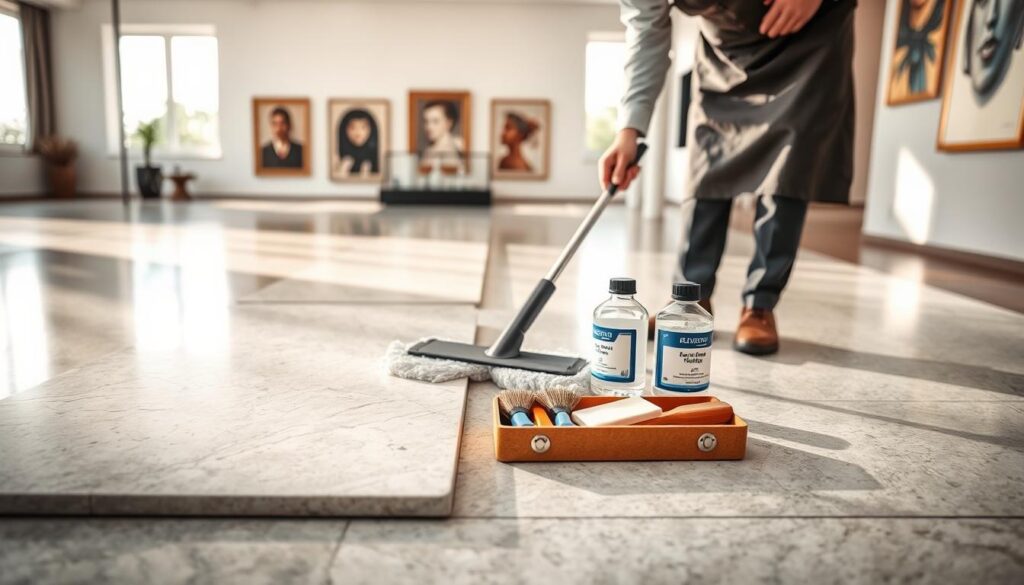
Budgeting for flooring is like navigating a maze. One wrong turn can lead to unexpected costs. Choosing between natural stone and porcelain slabs has big financial implications. It’s not just the upfront cost; it’s the whole life of your flooring.
Quarry selection is a big deal. Sourcing natural stone can be like a global affair. Your Italian Carrara might travel far, adding to environmental impact. U.S.-made porcelain slabs, on the other hand, reduce travel and are more eco-friendly.
Logistics play a role too. Natural stone takes ages to get, while porcelain is quicker. This affects your project’s timeline.
Waste is another factor. For a unique look, you might need 15-20% more. This can be costly, as large formats leave little room for error.
Porcelain also saves money over time. It doesn’t need sealing or special cleaners. This makes maintenance easy and cost-effective.
When budgeting, think about the whole life of your flooring. From the crate to waste, every detail matters. A beautiful space shouldn’t be a financial burden.
Case studies bright foyer dark gallery spa and pool house
Let’s explore how flooring changes spaces in real life. Imagine a bright foyer in a modern home. We chose Pieastena’s warm grey slabs, 1200x2400mm in size. Their matte finish catches morning light, making the space welcoming.
The groutless design makes the area feel larger than it is. It’s a clever trick to make spaces seem grander.
Now, picture a dark gallery for a private art collection. Cardoso Silver’s travertine-look porcelain is the ideal choice. Its unique patterns add a classic touch, while the rectified edges focus on the art, not the seams.
This mix of old-world charm and modern style is truly captivating. It makes the gallery a standout.
Lastly, consider a spa and pool house where moisture is a big issue. Arenisca Night, with its quartz-like strength and slip-resistant finish, is perfect here. It allows for seamless indoor-outdoor flow, making transitions easy.
The dark tones also hide wet footprints, keeping the space clean. It’s a smart choice for a low-maintenance area.
These examples show that the right flooring does more than support a design. It enhances the whole experience. Whether it’s a foyer, gallery, or pool house, your flooring choice can tell a powerful story. What story will your space tell?


