Let’s face it—most surfaces are just waiting for something more. They sit there, flat and dull, like a clock marking time. But what if they could do more? Imagine if they could soak up sound, play with light, and turn a small space into a gallery.
This isn’t about just adding another layer of paint. We’re talking about a smart way to design surfaces. It’s all about the “one hero per zone” idea. Pick one wall in each room to stand out, letting the others support it. This makes your space feel thoughtfully designed, not just decorated by chance.
We’ll explore everything from textured plaster to timber slats. This unique wall treatments overview will show you how to make a statement. And don’t worry, we’ll talk about budget too. Not everyone has unlimited funds for their home makeover.
Plaster and Limewash: Movement, Depth, Repairability, and Humidity Zones
Imagine turning your walls into a touchable experience with plaster and limewash. These materials do more than look good; they make your space come alive. Plaster’s imperfections tell a story on your walls, unlike any flat surface can.
In damp areas, a limewash finish is both beautiful and practical. It lets moisture escape, avoiding the problem of trapped water.
Light on textured plaster surfaces creates a show of shadows and depth. This makes small rooms seem bigger and more welcoming. It’s like light sculpting, where every angle shows a new side.
Sculpted Plaster Relief as Architectural Sleight of Hand
Sculpted plaster can make a wall stand out. For example, I once made a dune-like pattern behind a sofa in a small studio. It took two days of work but added a striking feature without bulk.
This shows how plaster wall treatments can make your space better.
Trowel Techniques and Shadow Play for Compact Rooms
Mastering trowel techniques is key in small spaces. Start with a sample board to try different patterns and sheens. A good trowel job adds interest and mood to your room.
For a 2–3 meter feature wall, expect to spend in the mid-range on materials and labor. But, doing it yourself can save money, though it takes two days of focused effort. Either way, you’ll get a space that shows off your style.
| Material | Benefits | Ideal Zones |
|---|---|---|
| Plaster | Textured depth, repairable, unique finishes | Living rooms, bedrooms |
| Limewash | Vapor-permeable, aesthetic charm | Bathrooms, kitchens |
| Microcement | Durable, stain-resistant, versatile | Compact spaces, entryways |
For more tips on using these materials, see this guide on limewash and plaster walls. Learn how to add these luxury textures to your home and see the change they make.
3D Tile and Stone: Ribbed Fluting, Micro Ridges, and Large Panels
In today’s world, 3D tiles and stone are key in modern luxury. They do more than fill space; they tell a story. Fluted and reeded ceramics change how we see wall treatments.
These panels stand out in modern luxury. Fluted wood and ribbed wall panels create a dance of light and shadow. They turn a simple wall into a stunning feature.

Fluted and Reeded Ceramics as the New Modern Luxury
Imagine a wall that moves with the light, thanks to its grooves. 3D tile walls catch the light and add depth. They’re not just decorations; they’re part of the room’s feel.
But let’s talk about stone cladding too. Large slabs, often matched for a smooth look, remove grout lines. A single marble slab from floor to ceiling is a luxury statement.
Large-Format Stone Cladding for Monolithic Statements
The beauty of large stone panels is clear. But they also have practical sides, like weight and installation. Porcelain panels offer a similar look without these issues.
| Material Type | Texture | Application | Cost Range |
|---|---|---|---|
| Fluted Ceramics | Concave and Convex | Wall Panels | $$$ |
| Reeded Ceramics | Vertical Ridges | Accent Walls | $$$ |
| Large-Format Stone | Seamless | Feature Walls | $$$$ |
| Porcelain Panels | Textured | Cost-effective Alternatives | $$ |
In conclusion, fluted ceramics or large stone panels are more than just walls. They’re statements of style and luxury. They invite you to make your spaces artistic.
Timber Slats and Tambour: Acoustic Backing, Rhythm, Widths, and Reveals
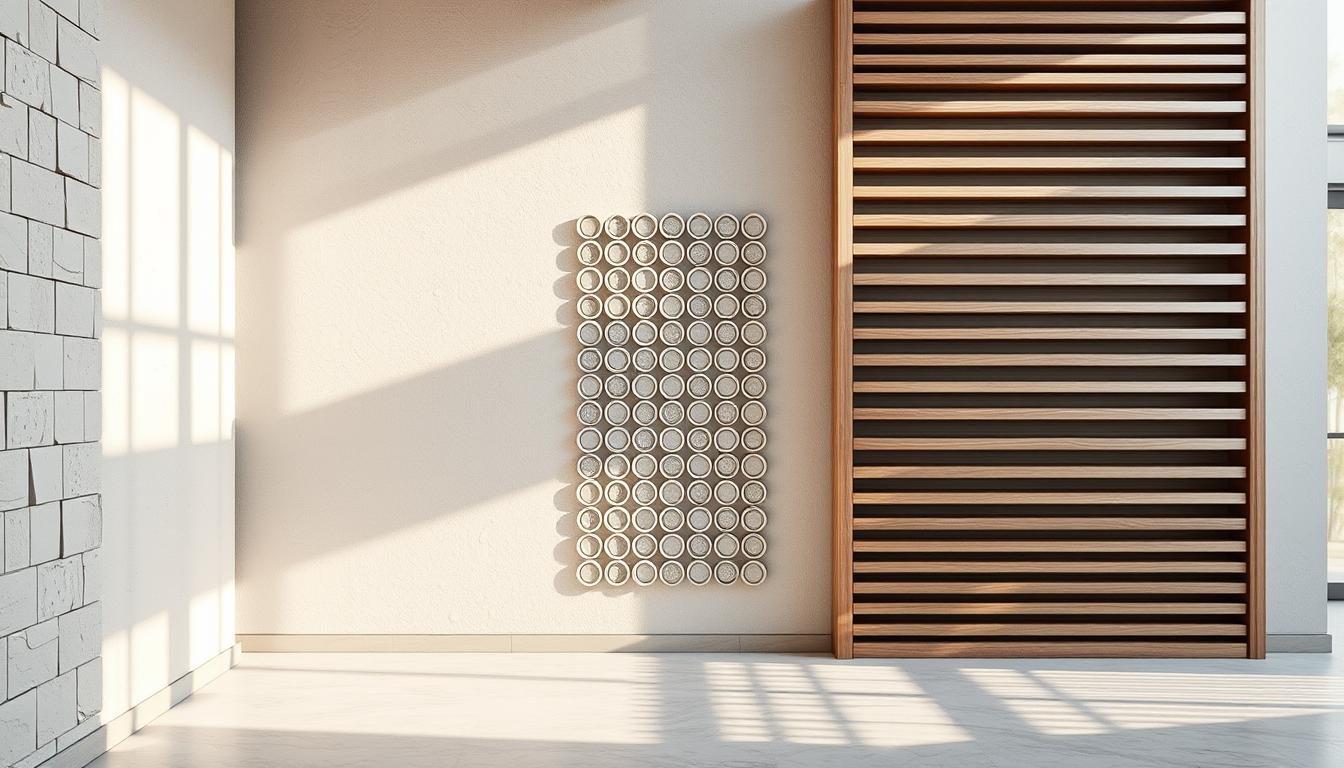
Timber slats are more than just a pretty face; they’re a symphony of sound management and aesthetic charm. These stunning slatted wood panels offer a dual purpose: they enhance the beauty of your space while providing essential acoustic benefits. As we embrace the trend of the ‘home as sanctuary,’ it’s essential to consider how these elements can transform your living environment.
Acoustic slat systems serve as the perfect solution for spaces where noise reduction is key. Imagine a media room or open-plan living area where echoes of laughter and chatter are muted, allowing for genuine conversation and relaxation. The wood veneer slats are mounted on a dense, sound-absorbing felt backing, effectively absorbing mid-to-high frequencies. Look for panels with an NRC rating of 0.7 or higher for optimal performance.
Acoustic Slat Systems as the Home-as-Sanctuary Solution
Why settle for mere aesthetics when you can have certified performance? Premium options like Walldi slat wood wall panels not only look good but are also engineered with sustainable materials. The backing is made from recycled products, and the wood is often FSC-certified. This means you can beautify your home while being kind to the planet.
Now, let’s talk about the tambour trend. These flexible wood profiles can wrap around curves and soften transitions, making them ideal for various applications. Whether you’re designing a cozy nook or a grand corridor, a tambour wall adds an inviting touch that draws the eye and ear alike.
Parametric Timber Waves for Corridors and Transitional Spaces
Have you ever rushed through a corridor, barely noticing its existence? With parametric timber waves, you can transform these neglected spaces into a sculptural experience. A gentle S-curve of slats guides movement and disguises utility chases, turning a hallway from an architectural afterthought into a spatial prelude.
Width and reveal spacing are key in achieving the desired effect. Wider slats with narrow reveals create solid planes with shadow lines, while narrow slats with generous spacing offer a screen-like transparency. This balance maintains visual connection while effectively defining zones within your home.
Metal Inlay: Brass, Bronze, and Steel Patterns with Patina Management
Metal inlay turns simple surfaces into stunning works of art. It’s like the perfect accessory that adds flair without taking over. A thin brass channel in a plaster wall can sparkle like a light, guiding your eye smoothly.
Bronze, with its evolving patina, tells a story of time and touch. It gets darker at the edges and brighter where it’s handled, showing the life it’s seen. Today, we prefer simple, elegant designs over bold ones, like single-line inlays or steel strips that mimic industrial windows.
Integrating Metallic Lines into Plaster and Timber Surfaces
Adding metallic lines to plaster and timber is a mix of art and practicality. For a touch of class, try adding LED lights in the panel grooves. Custom brass inlays add depth and elegance, making your space stand out.
Polished metallic or mirrored panels, set in dark wood, bring a glamorous, Art Deco vibe. It’s a look that’s both modern and timeless.
The Art and Science of Controlled Oxidation
Managing patina is both a science and an art. Unsealed brass can change color in unpredictable ways. To keep it looking just right, use a wax or lacquer to stop the oxidation at your chosen shade.
| Metal Type | Appearance | Patina Management | Cost |
|---|---|---|---|
| Brass | Bright, reflective | Requires sealing for consistent finish | Moderate |
| Bronze | Warm, earthy tones | Develops a natural patina over time | Higher |
| Steel | Industrial, modern | Less prone to oxidation; may require coating | Variable |
Choosing metal inlay can make a big impact, even with a small investment. A little metal can turn a simple wall into a masterpiece.
Textile Walls: Silk, Grasscloth, Acoustic Felts, and Stain Guards
Imagine a wall that invites you to touch it. Textile wall coverings are the unsung heroes of interior design. They offer both luxury and practicality. From grasscloth wallpaper to sumptuous silk, these materials transform walls into inviting canvases.
Natural fiber coverings, like grasscloth, bring an organic texture. Each panel is a unique tapestry of woven sisal, jute, or hemp fibers. This ensures your wall boasts an authenticity that mass-produced patterns can’t replicate. But, grasscloth can be a bit of a diva when it comes to stains.
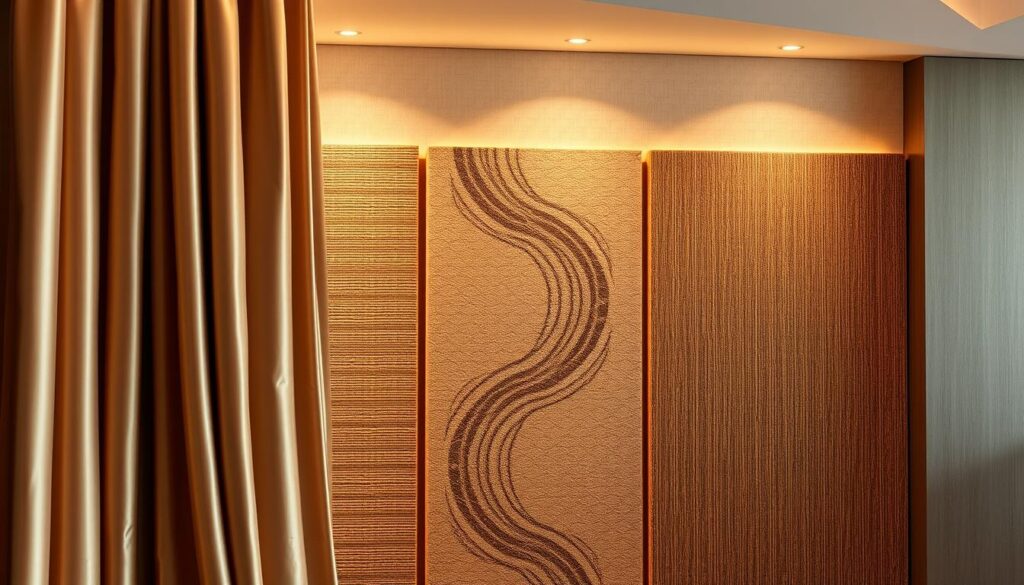
Enter the realm of high-tech textiles. Performance textiles like solution-dyed acrylics and Crypton-treated linens are game-changers. They resist stains with the grace of a seasoned maître d’, allowing you to enjoy your living space without worry. And let’s not forget about acoustic felt panels. Made from recycled PET, these panels not only absorb sound but also add a splash of color.
In high-traffic residential applications, these textiles shine. Full-height upholstered panels behind beds create a cocooning effect. This provides a plush backdrop that enhances sleep quality. The WELL Building Standard emphasizes the importance of controlling reverberation for comfort, and textile walls excel in this area.
With stain guards that utilize molecular encapsulation technology, you can enjoy the beauty of textile walls without maintenance stress. These advancements bond to fibers at a microscopic level, creating long-lasting barriers against spills and stains. So go ahead, indulge in the luxury of textile wall textures; your walls deserve it.
Large Art Walls: Hanging Systems, Lighting, and Conservation Gaps
Adding a large art wall can change your home’s feel. It’s more than just hanging art; it’s about art, light, and space. The right gallery hanging system makes your collection a showcase of your style.
Art wall lighting is key. It makes small rooms look bigger. The IES Lighting Handbook says vertical light is important for brightness. Lit walls make your art pop and rooms feel larger.
Gallery-Style Installation for Statement Pieces
Don’t just hammer nails into your wall. Use modern systems like French cleats and gallery rails. They let you change your display easily, without damaging your walls.
Illuminating Art Without Damaging It
Proper conservation framing is essential. It keeps a gap between your art and the wall, preventing moisture. Use a 90+ CRI LED grazer and a 2700K cove light for natural colors.
Good lighting on a large art wall makes the room feel bigger. It creates a feature wall effect, drawing attention and admiration.
Detailing: Outlets, Baseboards, Corners, Shadow Gaps, and Reveals
Details are key in wall treatments, making a big difference. They turn a simple wall into something special. Detailing is what makes a room look like it was designed by a pro, not a DIY novice.
Shadow gaps make walls seem to float. They’re like the perfect fit of a suit, blending in seamlessly. Without them, a room looks off.
Outlets can ruin the look of a smooth wall. But, using recessed outlets or hiding them in baseboards can fix this. It’s all about hiding the imperfections.
Corners need special care too. A rough corner can mess up the look of a smooth wall. Using reveal trim or metal trim can fix this, adding a clean finish.
Baseboards are important, too. Flush baseboards make a room look better by creating a clean line. They help define the space without the usual dust trap.
Getting these details right costs more, but it’s worth it. A good start is to measure and plan carefully. Remove old baseboards and clean the wall well. If your walls are textured, smooth them out for a pro look.
Budget Tiers: Quick Hits vs. Custom Artisans and Lead Times
Wall treatments come in many prices, from affordable to luxurious. The cost can surprise you, like a hidden expense at a fancy event. Let’s look at the different price levels together.
The DIY-Friendly Options That Don’t Look DIY
For those on a tight budget, there are affordable options that look great. Peel-and-stick 3D tiles and MDF slat kits are perfect. They start at under $5 per square foot and add cool designs to your walls.
In the mid-range, expect to pay $10-25 per square foot installed. Here, you can find prefinished acoustic panels and modular fluted systems. They offer quality at a lower price, ideal for those who want a nice look without spending too much.
When to Hire a Specialist and How Long You’ll Wait
If you dream of custom wall panels made by artisans, get ready for a different experience. This level offers unique artisan plaster and premium tiles. But, be prepared to spend $15-$40+ per square foot. Also, the best craftsmen are often booked months ahead.
Here’s a handy table to illustrate the cost spectrum:
| Budget Tier | Price Range (per sq. ft.) | Typical Materials | Lead Time |
|---|---|---|---|
| Entry Level | Under $5 | Peel-and-stick tiles, MDF slats | Immediate |
| Mid-Range | $10 – $25 | Acoustic panels, modular systems | 1-2 weeks |
| Custom | $15 – $40+ | Artisan plaster, premium tiles | 6-8 weeks |
Investing in one standout wall per zone is a smart move. A $3,000 plaster feature wall can make a room feel luxurious. But, covering all walls with the same treatment might make it look institutional and cost more.
Maintenance: Cleaning, Patch Kits, UV Strategies, and Care Cards
Every stunning wall treatment needs care. It’s easy to overlook the upkeep of plaster, timber, or textiles. But, regular maintenance keeps your walls looking great.
For plaster, a matte sealer is essential. It hides smudges better than gloss. Every two to three years, reseal it, mainly in high-touch spots. Without care, fingerprints can become a big problem.
Timber slats just need a soft brush to dust. Avoid using furniture polish, as it attracts dust. Textile walls benefit from stain guards, but act fast. Remember, stain-resistant doesn’t mean stain-proof.
Don’t forget about UV protection walls. Rooms facing south can damage your decor. UV-filtering window films block 99% of harmful rays. This is a smart investment.
Lastly, make a care card for each wall type. It should list cleaning methods, recommended products, and patch repair kit info. This way, you’re prepared for accidents.
In conclusion, keeping your walls elegant requires dedication. A bit of care now can save a lot of money later.