Durable Outdoor Materials are not just a style preference for patios, decks, porches and exterior rooms. They affect maintenance schedules, safety margins, replacement timing and whether an outdoor living area remains useful through heat, rain, humidity, ultraviolet exposure and freeze-thaw cycles. The practical question is not which product looks best on the sample board, but which material can handle the actual exposure around the home.
As Carter Winslow, I tend to treat outdoor material selection as a risk-management decision first and a design decision second. A beautiful deck surface that needs frequent refinishing may be a poor fit for an owner who will not keep up with sealing. A cladding material with a long expected service life can still disappoint if the detailing, fasteners, drainage or protective finish are poorly executed. The safest plan begins with honest use patterns and climate exposure, then moves toward color, texture and furniture.
How Durable Outdoor Materials Set The Project Scope
Durable Outdoor Materials Start With Exposure
Outdoor living areas rarely fail for one reason. Sun can fade and dry finishes. Moisture can enter joints or linger where airflow is weak. Freeze-thaw cycles can stress assemblies. Humidity, grime and standing water can shorten the useful life of finishes, especially where maintenance is delayed. The research supplied for this brief repeatedly points to the same caution: service life depends on exposure, installation quality and care, not only on the material label.
That is why material selection should start with a site walk. South- and west-facing areas often see more direct sun. Shaded zones may dry more slowly after rain. Decks close to planting beds or irrigation may face repeated wetting. Covered patios reduce some exposure, but they do not eliminate humidity, wind-driven rain or dirt. For project planning, these details matter more than broad claims about a product being “low maintenance.”
Match Materials To Use, Not Aspirations
A family that uses an outdoor dining area several nights a week needs surfaces that clean predictably and tolerate chair movement. A lightly used balcony has a different wear pattern. Rental or guest-oriented properties may need even simpler finishes because upkeep may be irregular. Readers interested in expanding their second-home experiences can explore the ideas at Weekender Villas for more comprehensive outdoor-living insights, while still checking product requirements for the specific property.
For homeowners planning a broader exterior update, the same logic applies to furniture, shade, lighting and circulation. A related discussion of outdoor living design choices explains why daily comfort and safer project boundaries often matter more than showpiece features.
Decking Choices That Affect Maintenance
Composite Versus Wood Lifespan
Decking is often the clearest place to see the tradeoff between first cost, upkeep and replacement timing. A comparison using National Association of Home Builders data reports typical lifespans of 25 to 30-plus years for composite decking, 10 to 15 years for pressure-treated wood and 15 to 20 years for cedar when routine sealing and staining are performed every 2 to 3 years, according to deck lifespan estimates.
| Material | Reported Typical Lifespan | Maintenance Implication |
|---|---|---|
| Composite decking | 25 to 30-plus years | Longer replacement interval, still needs cleaning and correct installation |
| Pressure-treated wood | 10 to 15 years | Shorter interval; routine sealing and staining affect performance |
| Cedar | 15 to 20 years | Falls between composite and pressure-treated wood with regular care |
Durable Outdoor Materials should still be judged by the complete assembly. Joists, fasteners, flashing, drainage gaps and ventilation can influence performance. A homeowner may select a long-lived deck board and still end up with avoidable problems if water is trapped below the surface or if the structure underneath was not designed or repaired correctly.
Where DIY Should Stop
Cleaning, furniture planning and basic visual inspection are reasonable tasks for many homeowners. Structural repairs, ledger attachment, guardrail work, stair reconstruction and elevated deck changes should be handled by qualified professionals familiar with local requirements. A deck failure can cause serious injury, and the risk is not limited to old decks. New work can be unsafe if loads, connections or corrosion resistance are mishandled.
Cladding And Roof Edges Need A Longer View
Facade Materials Depend On Installation
The research notes for this project identify wide service-life ranges for several exterior cladding materials. Fiber-cement panels are described as long-lived and resistant to rot, warping and rust. Brick cladding is reported in many cases at 75 to more than 100 years, especially under milder conditions and with proper maintenance. Metal facades, including steel and aluminum, have a broader range, with performance depending on finish, climate and protective coatings.
Those figures should be treated as planning context rather than a promise for any one home. A quantitative survey cited in the research notes found that poorly installed cladding systems can lose more than 70% of their expected life compared with well-executed systems. That finding is especially relevant for outdoor living areas where cladding, privacy walls, patio covers and deck connections meet. The material may be durable, but joints and transitions are often where water management is tested.
Roof Coverings Face Heat And Freeze-Thaw
Outdoor rooms often sit below roof extensions, pergola connections, porch roofs or adjacent roof planes. The roof edge deserves attention because leaks can damage framing, ceiling finishes and exterior surfaces below. Laboratory work from the National Institute of Standards and Technology found that asphalt shingles experience measurable degradation in color, adhesive bond and mechanical strength under ultraviolet exposure, thermal cycling, humidity and freeze-thaw conditions, as described in NIST shingle durability research.
This does not mean asphalt shingles are unsuitable. It means roof-adjacent outdoor projects should respect exposure. If a patio cover, outdoor kitchen venting plan or shade structure interacts with the roof, the detailing should be reviewed by a qualified roofer or contractor. Homeowners should avoid cutting into roof assemblies, rerouting drainage or fastening shade structures into roof edges without professional guidance.
Finishes, Fasteners And Care Plans
Coatings Are Not Permanent Shields
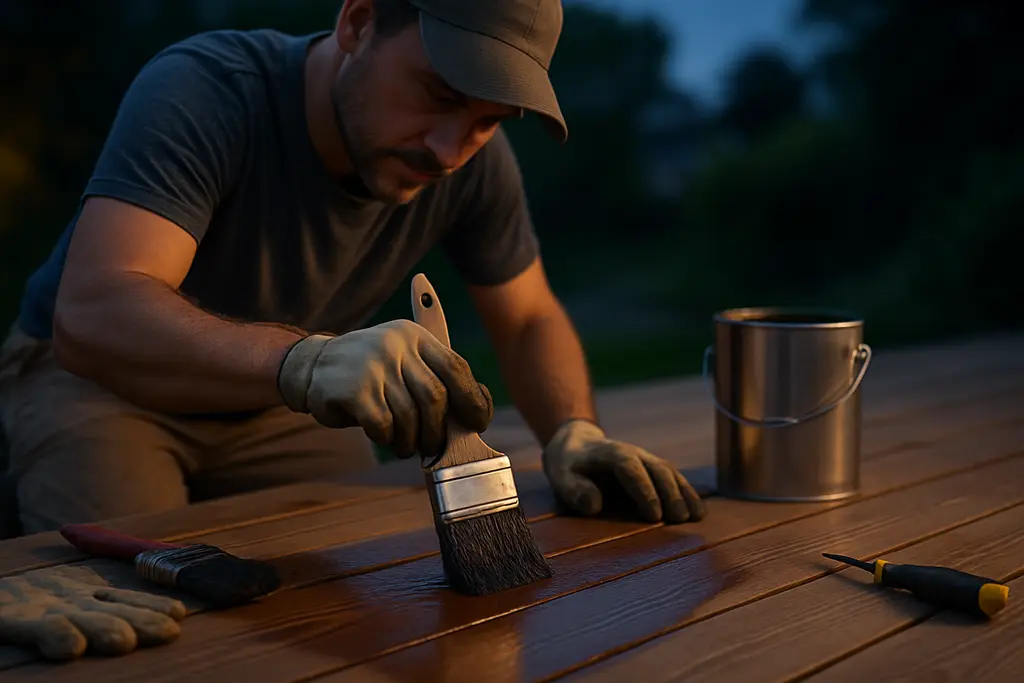
Finish durability is separate from structural durability. The research notes describe powder-coated aluminum as having very low erosion rates in testing, while also identifying ultraviolet exposure and environmental grime as contributors to finish degradation. Wood coatings, by contrast, were reported in one wet-environment study to lose protective ability in many combinations within roughly 12 to 15 months. The practical lesson is simple: exposed finishes need inspection, cleaning and realistic maintenance intervals.
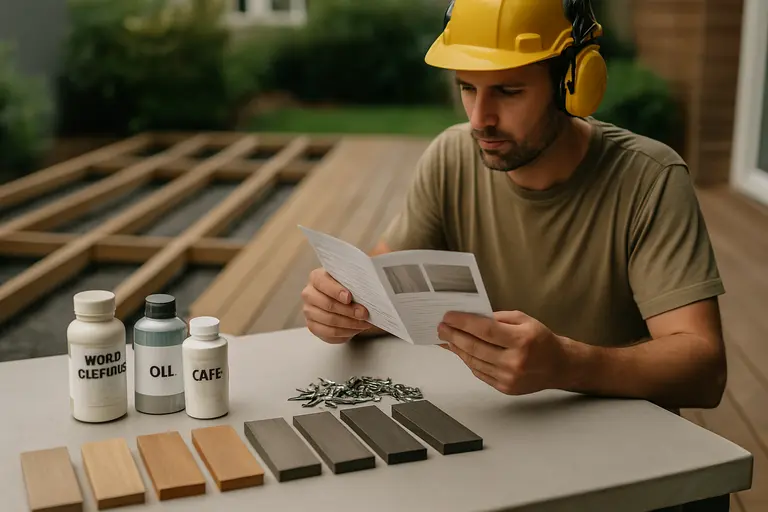
Durable Outdoor Materials can lose their advantage if incompatible fasteners, poor drainage or neglected coatings allow deterioration to start at weak points. Stainless or coated fasteners, manufacturer-approved connectors and proper separation between dissimilar materials may be necessary, but the right specification depends on the product and site. Homeowners should read the manufacturer’s installation documents and involve a professional where load-bearing work, elevated surfaces or building-envelope connections are involved.
- Choose decking based on exposure, maintenance willingness and the condition of the supporting frame.
- Treat cladding lifespan claims as conditional on correct installation and water management.
- Inspect roof edges before adding patio covers, lighting, fans or shade structures nearby.
- Plan cleaning access so grime, leaves and standing water do not remain against finishes.
- Hire qualified pros for structural, roof, electrical, gas or major envelope work.
Durable Outdoor Materials For Year-Round Enjoyment
Durable Outdoor Materials are best chosen with a plain standard: they should fit the climate, the amount of use, the owner’s maintenance habits and the risk level of the work. Composite decking may reduce replacement frequency compared with common wood options, but it still needs a sound structure. Long-lived cladding can perform poorly if water is trapped. Roof coverings face heat, ultraviolet exposure, humidity and freeze-thaw stress, so outdoor living upgrades near rooflines deserve careful review.
The strongest outdoor spaces are not built from one miracle product. They are assembled from compatible materials, realistic maintenance plans and safe construction decisions. That approach may feel less dramatic than chasing a trend, but it gives homeowners a better chance of enjoying patios, decks and covered outdoor rooms across more of the year without creating avoidable repair problems.