Can high-end design and true ecological responsibility coexist? Or will one push the other out by morning?
We’ve all been through the phase where “eco-friendly” meant rough hemp and a dose of smugness. That’s over now.
The new deal is more complex. It combines pleasure for the senses with lasting strength. Imagine a design as solid as a bulletproof suit, but also stylish.
Durability is key, lasting decades, not just a season. We must measure real environmental impact, not just marketing claims.
Designers like Anita Lang view homes as century-long legacies. Brands like Gaâla create pieces meant to last, with heirloom quality built in.
The real starting point isn’t just materials. It’s a philosophy. Here, circular design isn’t just a trend. It’s the core of creating a smarter, more elegant way to build.
Certifications and standards FSC Greenguard EPD HPD what to request
When a supplier puts an FSC or Greenguard label on a product, are you sure it’s real? The world of eco certifications is full of good intentions and greenwashing. You need to be a detective.
Think of these labels as a product’s story, not just a marketing trick. They show where it came from, what it’s made of, and how it works in your home. Without them, you’re guessing in the dark.
The Forest Stewardship Council (FSC) label on that reclaimed oak? It’s a paper trail. It means the wood came from a forest that’s managed well, not clear-cut. It’s a story of ethical forestry you can touch.
Then, there’s Greenguard Gold. It’s not just a feel-good badge. It means the fancy velvet on your couch or the lacquer on your cabinets aren’t releasing harmful chemicals. It sets strict limits on harmful chemicals.
Two more important ones are the Environmental Product Declaration (EPD) and the Health Product Declaration (HPD). An EPD is like a nutrition label for a product’s environmental impact. It shows carbon footprint, water use, and more. An HPD lists every ingredient, highlighting any harmful ones.
So, which eco certifications are must-haves? It depends on what matters most to you: health or the planet. For a healthy home, Greenguard Gold and HPDs are key. For real environmental claims, FSC and EPDs are your proof.
| Certification | What It Verifies | Key For | Why It Matters |
|---|---|---|---|
| FSC | Responsible forest management & chain of custody | Wood products, paper | Combats deforestation, ensures ethical sourcing |
| Greenguard Gold | Ultra-low chemical emissions (VOCs) | Furniture, finishes, insulation | Protects indoor air quality & occupant health |
| EPD | Full lifecycle environmental impact data | Concrete, metals, composites | Provides transparent, comparable sustainability metrics |
| HPD | Full material ingredient disclosure | Any building product | Reveals hidden toxins and enables informed choices |
Knowing what to ask from your supplier makes you a smart buyer. Don’t just ask if it’s sustainable. Ask for the certificate number. Demand the actual PDF. Check it online.
Brands like Fischbacher show true responsibility in their making process, not just as a tag. This approach makes a real luxury sustainable home, not just a green-washed one.
In the end, these eco certifications are tools. Powerful tools for making a home that’s healthy, high-performance, and beautiful. Use them well, and you’re not just buying a story. You’re investing in a real, lasting asset.
Healthy interiors low VOC adhesives finishes and formaldehyde limits
Luxury interiors are not just about looks. They’re about what you don’t breathe in. This is where luxury meets practicality. It’s the difference between a set that looks good on camera and one that’s healthy under the lights.
VOCs, or volatile organic compounds, are chemicals that evaporate at room temperature. Think of that “new paint” smell. Formaldehyde is a common VOC, often found in composite woods like plywood or MDF. It’s not just about smell. It’s about your health.
So, what’s the smart choice? Low-VOC and no-VOC finishes are now the standard. This isn’t just for eco-friendly homes anymore. It’s for any project that wants to be sophisticated. You’re choosing paints, stains, and clear coats that work well without harmful chemicals.
The real heroes are often the adhesives and sealants. That beautiful floor, those impeccable countertops? They’re held together with glue. Standard adhesives and caulks can be VOC bombs, off-gassing for months. Choosing low-VOC alternatives is a smart move.
To make smart choices, you need a guide. The table below shows common culprits and their better options.
| Interior Product | Typical VOC Concern | Healthier, High-Performance Alternative |
|---|---|---|
| Wall Paint | High levels of VOCs from solvents and binders. | No-VOC or low-VOC paints certified by GreenGuard Gold. |
| Wood Stain & Varnish | Solvent-based formulas release high VOCs. | Water-based, low-VOC stains and plant-oil based hard wax finishes. |
| Flooring Adhesive | Potent off-gassing from synthetic rubber or solvent-based mastics. | Low-VOC, low-odor adhesives specific to the flooring material. |
| Composite Wood (Cabinets, Shelves) | Formaldehyde emissions from urea-formaldehyde resins. | Panels labeled NAUF (No Added Urea Formaldehyde) or CARB Phase 2 Compliant. |
| Caulk & Sealant | Long-term off-gassing of VOCs like methylene chloride. | Low-VOC, silicone, or acrylic latex sealants. |
This isn’t guesswork. It’s science. Look for certifications like GreenGuard Gold, which tests for total chemical emissions, not just VOCs. For more on creating healthier spaces, check out our guide on low-emitting materials. Formaldehyde limits are now set in standards like CARB in California, a national benchmark.
Specifying low VOC finishes and materials is a smart choice. It’s about creating a healthy space. The highest luxury is not just style. It’s health.
High performance envelopes insulation air sealing quiet comfort
Frank Lloyd Wright knew that comfort wasn’t just about ducts. He built Taliesin West with desert rocks and smart design. This made it cool before “HVAC” was even a thing. It was a masterpiece of architecture.
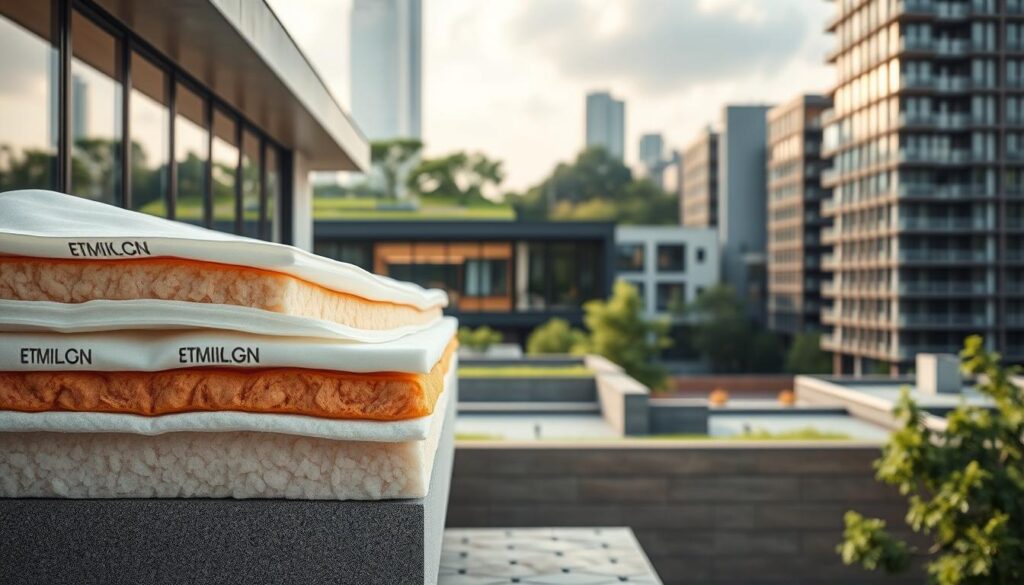
Now, we call this the building envelope. It’s like a cashmere coat for your home. It’s made of insulation, sheathing, and seals. When done right, it makes your home quiet and comfortable.
So, what’s in this magical envelope? It’s a mix of great insulation and careful air sealing.
- Insulation keeps your home warm or cool, depending on what you need.
- Air Sealing stops drafts, keeping your home comfy and saving energy.
Together, they make your home quiet and steady. Your energy bills will drop, which is a nice surprise. But the best part is how strong your home becomes. It needs less help from machines.
But there’s a catch. That careful air sealing uses sprays and foams. What if these things release bad stuff into your air? We need to make sure our homes are safe and clean.
So, we need to choose low VOC finishes for everything. This means the glue and foam in your walls too. A great home is safe and comfy, both inside and out.
This part of the home is often overlooked. Anyone can pick a pretty stone. But making your home so quiet and calm? That’s something special.
Material choices reclaimed woods recycled metals terrazzo and linoleum luxe
The heart of luxury lies in reclaimed and engineered options, not in new materials. Sustainability meets luxury here, turning from a simple choice to a treasured experience.
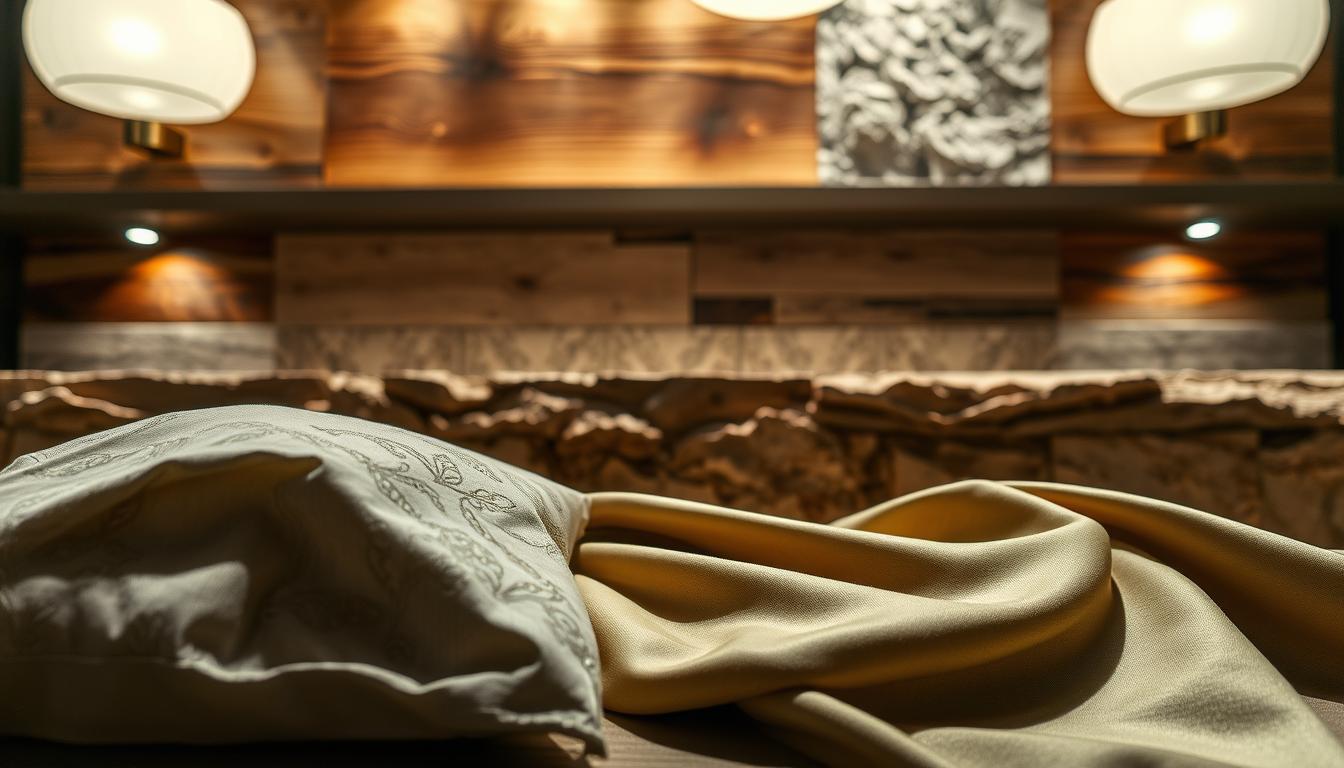
Wood from old buildings is more than just wood. It tells a story in every grain. Each mark and color change is a piece of history. This wood is warm, unique, and already proven to last.
Metal, like recycled copper and brass, is transformed magic. It turns old waste into shiny, beautiful walls. This metal is not only stunning but also eco-friendly.
Let’s talk about terrazzo and linoleum, once used only in schools and hospitals. They deserve better.
Today’s terrazzo is made from recycled glass or marble, making it durable, versatile, and luxurious. It’s like a custom art piece for your floor. Linoleum, made from natural ingredients, is not only good for the planet but also looks rich and vibrant.
This change isn’t just for homes. Fashion is also embracing sustainability. Brands like Fischbacher and Helios & Oceanus use recycled materials. Gaâla even makes dresses from leftover fabrics. It’s all about seeing waste as valuable.
Now, the question is not “Can it be green?” but “How stunning can green be?” This new approach offers a stunning answer.
| Material Type | Traditional (Virgin) Source | Reclaimed/Engineered Source | Key Advantage | Aesthetic Note |
|---|---|---|---|---|
| Wood | New-growth forestry | Demolished barns, factories, river-recovered logs | Pre-stabilized, unparalleled character, reduces demand for new timber | Warm, storied, with a unique history in each board. |
| Metal | Newly mined ore | Post-industrial scrap, discarded consumer goods | Significantly lower embodied energy, develops rich patina | Luminous, varied, with a modern-industrial elegance. |
| Flooring (Terrazzo/Linoleum) | Quarried stone, vinyl (PVC) | Recycled glass/chips, natural linseed oil & cork | Extreme durability, low VOC, often biodegradable or recyclable | Bold, graphic, and artisanal—far from its institutional reputation. |
| Textiles (Analogy) | Virgin polyester, cotton | Recycled PET bottles (BENU), plant-based fibers (rose, hemp) | Diverts plastic waste, uses regenerative agriculture, closed-loop potentially | Lush, innovative, and proof of concept for material transformation. |
Choosing these materials is a win-win. You get beauty and a story without losing anything. You’re picking reclaimed and engineered options that beat new materials in every way.
Engineered stone and alternatives silica risk awareness safer options
Let’s talk about the elephant in the room: your dream kitchen’s quartz countertop might have a secret. Engineered stone has been a top choice for luxury homes for years. It’s known for its durability and perfect look. But, it has a dark side: crystalline silica dust, which is harmful to workers and could be a big problem.
Do we need to change everything? Not exactly. We just need to be smarter about what we choose. We want to find safer, high-quality options that don’t sacrifice beauty for safety.
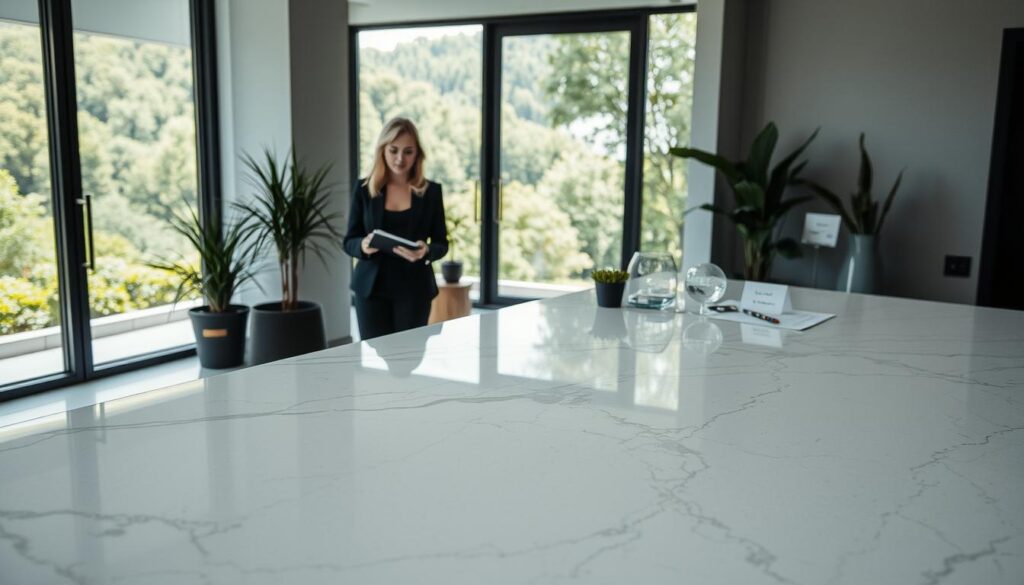
New surfaces are being made with both beauty and safety in mind. Here’s what you need to know:
- Sintered Stone: This is like quartz, but better. It’s made from natural minerals under high heat and pressure. It’s very durable and resistant to stains, with much less silica.
- Ultra-Compact Surfaces: These are the top performers in the surface world. They’re very dense and non-porous, made from minerals and clays. They work well indoors and outdoors and don’t have silica.
- The Next Generation of Engineered Options: New materials are coming out that look like traditional quartz but don’t have silica. They use new binders and aggregates. This is the latest in material science.
You play a big role in choosing the right materials. Don’t just think about color and edges. Ask suppliers tough questions:
What silica content is in the material? Can you show a Health Product Declaration (HPD)? What safety steps do your workers take? Good companies will answer these questions easily.
Luxury means more than just looks. It’s about making smart choices. Choosing a surface is a statement of values. The future of luxury materials is in engineered options that are safe, beautiful, and ethical.
Circularity design for disassembly spare tiles boards and repair kits
Imagine every luxury surface in your home having its own retirement plan. That’s what circular design is all about. It’s not just about being eco-friendly; it’s about being smart.
This approach makes objects last longer. That beautiful walnut wall paneling shouldn’t end up in a dumpster. With design for disassembly, it can be taken apart, stored, and reused.
It’s simple yet groundbreaking. Keep extra tiles and boards on hand. These aren’t just spares; they’re time capsules of your design.
When something breaks, you won’t have to worry about finding the right match. You’ll have the exact piece needed, keeping your space looking perfect.
Brands are starting to see the sense in this. Furniture companies now offer repair kits. It’s like Gaâla’s approach to clothes: make pieces that can be fixed and loved for years.
This way of thinking uses both reclaimed and engineered options wisely. A reclaimed wood beam is made to be taken apart. An engineered stone countertop is designed for easy removal. Both are made to be reused.
| Design Approach | Material Mindset | End-of-Life Scenario | Long-Term Value |
|---|---|---|---|
| Traditional Linear Model | Single-use, permanent installation | Demolition and landfill | Depreciates to zero |
| Circular Design Model | Reusable, modular components | Disassembly and redeployment | Retains or increases value |
| Hybrid Engineered Option | Designed for future adaptation | Selective replacement & repair | Extended lifecycle with minimal waste |
Switching to a circular model needs new planning. Use mechanical fasteners instead of glue. Create material passports to track what’s in your walls.
For more on this, check out the future materials library. It’s a peek into what’s possible when we design with reuse in mind.
Circular design is a big change. It values taking care of things over owning them. In a world full of waste, it’s the smartest choice you can make.
Supplier vetting chain of custody ethical sourcing and transport miles
Think of your supplier vetting process as a detailed investigation. Eco certifications are the evidence, not the verdict. The glossy brochure is just the start. The real story is in the chain of custody documents and factory audit reports.
Vetting a supplier for a sustainable luxury project is serious. It’s like an interrogation. You’re not just checking a box for FSC-certified wood. You’re digging deep into who felled it, who milled it, and if the community was compensated.
Let’s talk about metals. “Ethically sourced” is a great phrase. But it means nothing without proof of mining practices and labor conditions. Brands like Fischbacher trace the origin of their metals, ensuring they’re not supporting conflict.
Then there’s transport miles. That stunning Italian marble has a carbon footprint from its long journey. Locally quarried marble might have a lower footprint, even if it costs more. Fewer miles mean less carbon.
Your toolkit of eco certifications is more than just decoration. A Greenguard Gold label tells you about air quality. An EPD reveals the lifecycle impact. But you need to ask what happened before the certification.
Brands like Gaâla focus on artisan collaboration. This isn’t just romantic; it’s a direct, traceable line from raw material to finished product. It connects beauty to human dignity.
So, what does hardball vetting look like in practice? It’s a checklist that goes beyond sample quality and lead times:
- Request full chain-of-custody documentation for any certified material.
- Ask for third-party audit reports of manufacturing facilities.
- Calculate and compare total transport miles (from source to factory to site).
- Investigate the supplier’s own policies on waste, energy, and fair wages.
In an era of sophisticated greenwashing, this level of scrutiny is your best defense. It’s how you ensure your exquisite, high-performing home isn’t built on exploitation. True luxury can afford transparency. In fact, it demands it.
Cost and incentives rebates tax credits and operating savings
When we talk about sustainable luxury, we’re not just looking at the price tag. It’s about the total cost over time. Buying something cheap might save money upfront, but it can cost more in the long run.
Let’s look at the numbers. That fancy envelope we talked about? It’s not just about being quiet. It’s about saving money every month for years. Think of it as an investment that pays off in saved energy.
Materials that last longer mean you don’t have to replace them as often. This is where circular design really pays off. By designing for repair, you can avoid throwing things away and save money.
Now, let’s talk about the good stuff: incentives. Governments and utilities offer rebates for energy-efficient upgrades. There are tax credits for renewable energy and home audits too. State and local programs can add even more savings.
Eco certifications are your financial friend. Getting certifications like LEED or Passive House can qualify you for incentives. It also proves your project’s value to appraisers, which can increase resale value.
Let’s see it in a table. Here’s how sustainable investments compare to their financial benefits.
| Sustainable Feature | Upfront Cost Premium | Long-Term Operating Savings | Potential Incentives |
|---|---|---|---|
| High-Performance Insulation & Windows | Moderate | High (20-40% energy bill reduction) | Utility rebates, Federal tax credits |
| Durable, Reclaimed Materials | Variable (can be higher) | Very High (Avoided replacement costs) | Local green building grants |
| Energy-Efficient HVAC & Appliances | Low to Moderate | Moderate to High | Substantial manufacturer & utility rebates |
| Solar Panel Installation | High | Very High (Drastically reduced or zero energy bills) | Federal Investment Tax Credit (ITC), SRECs |
Is sustainable luxury more expensive? Only if you’re thinking short-term. Over five, ten, or twenty years, it’s a smart investment. You’re spending on systems that save money, need little maintenance, and increase your property’s value.
Here are some key steps:
- Investigate Early: Look into incentives before you start. Your architect or builder can help.
- Target Certifications: Choose recognized eco certifications to get financial benefits and prove quality.
- Document Everything: Keep all receipts and data. This is your proof for incentives and future buyers.
- Think in Cycles: Start with circular design to avoid future costs.
In the end, sustainable luxury is a smart investment. It’s about saving money and earning more with intelligence. The real luxury? Financial clarity.
Storytelling placemaking and provenance that elevate value
What makes your space special? It’s not just the materials. It’s the stories they tell. Provenance adds depth, turning a house into a home with a story.
Fischbacher’s BENU line is more than tile. It’s a tale of light and stone. Anita Lang crafts interiors that last, leaving a lasting legacy. Kelly Gaalon of Gaâla infuses her family’s history into every piece. This is what makes a place truly special.
A room with a good story and smart choices, like low VOC finishes, feels and looks better. It even values more. People pay more for authenticity and health.
The true luxury is the atmosphere you create. It’s knowing your choices are good for the planet and meaningful. You’re not just picking products. You’re building a legacy, one that’s healthy and worth keeping.