Remote work structural requirements demand more than a temporary folding table in a spare bedroom. Professionals require spaces engineered for extreme productivity, acoustic privacy, and ergonomic support. A dedicated residential workspace functions as a commercial environment scaled down to a single user. Estimating home office interior design costs in India requires analyzing the raw materials, the technological infrastructure, and the professional fees required to execute the project. The financial outlay shifts dramatically based on the selected finishes and the structural complexity of the design.
Calculating Baseline Home Office Interior Design Costs In India
Financial planning for a workspace begins with defining the scope of the architectural intervention. The market divides residential office projects into three distinct budgetary categories. A basic setup focuses purely on function, bypassing complex structural modifications. Mid-range executions introduce permanent millwork and improved ergonomics. Premium projects treat the room as a high-end executive suite, integrating smart technology and bespoke carpentry.
Data from the current Indian interior design market establishes clear financial parameters for these distinct tiers.
| Project Scope | Estimated Budget (INR) | Primary Inclusions |
| Basic Workstation | ₹25,000 – ₹50,000 | Standard desk, basic ergonomic chair, minimal open shelving |
| Mid-Range Office | ₹50,000 – ₹1,00,000 | Custom storage, layered lighting, branded ergonomic seating |
| Premium Executive | ₹1,00,000 – ₹1,50,000+ | Acoustic paneling, bespoke joinery, advanced wire management |
The scale of the room dictates the material volume required. A compact fifty-square-foot nook consumes far less paint, flooring, and electrical wiring than a converted two-hundred-square-foot primary bedroom. The baseline numbers escalate the moment construction requires moving structural walls or heavily modifying the existing electrical grid.
Analyzing Interior Designer Fee Structures
Executing a flawless workspace requires professional oversight. Interior designers in India charge for their intellectual property and project management skills using several standardized pricing models. The most prevalent system relies on a per-square-foot calculation. Design fees typically range from ₹50 to ₹500 per square foot, entirely dependent on the designer’s experience level and the geographic location of the property.
Turnkey execution presents a different financial model. The interior design firm provides a single, comprehensive quote that includes all raw materials, labor, design fees, and project management. This flat-package approach prevents budget creep. The homeowner pays a fixed sum, and the firm delivers a finished, functional office. Hourly consultations offer a third route for individuals requiring only layout advice and material recommendations. These hourly rates range from ₹500 to ₹5,000 per hour. Selecting the correct fee structure requires matching the homeowner’s available time to the demands of the construction schedule.
Ergonomic Furniture And Workstation Investments
Physical health relies entirely on the geometry of the workstation. Prolonged seated labor damages the human spine without proper orthopedic support. Allocating a significant portion of the budget to seating and desk architecture prevents long-term medical friction.
Commercial-grade ergonomic chairs feature adjustable lumbar support, seat depth modification, and tension-controlled tilt mechanisms. A reliable ergonomic office chair in the Indian market costs between ₹6,000 and ₹35,000. Premium executive chairs clad in full-grain leather easily exceed ₹80,000. Reviewing the rigorous testing guidelines published by the Business and Institutional Furniture Manufacturers Association (BIFMA) helps buyers separate scientifically validated seating from cheap, heavily marketed alternatives.
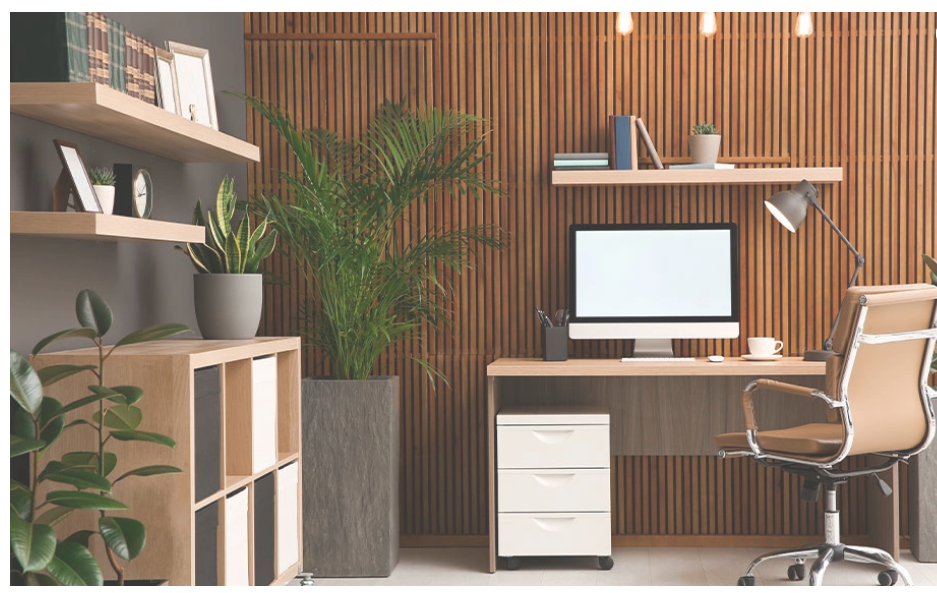
The desk surface requires equal financial consideration. A standard manufactured workstation costs between ₹10,000 and ₹30,000. Heavy executive desks constructed from solid timber or finished with high-pressure laminates cost between ₹35,000 and ₹2,00,000. The desk must provide enough surface area for dual monitors, physical documents, and proper forearm resting space.
Acoustic Engineering And False Ceiling Rates
Video conferencing exposes the acoustic flaws of standard residential architecture. Hardwood floors, glass windows, and flat drywall bounce sound waves relentlessly, creating an aggressive echo. A professional home office requires structural sound dampening to absorb this kinetic energy.
False ceilings manage the acoustic profile of the room and hide the ugly wiring required for modern technology. Standard gypsum board installations in cities like Pune or Chennai cost between ₹75 and ₹125 per square foot. Premium designs integrating wooden slats or acoustic felt backing push the price significantly higher. The visible ceiling material represents only half the cost. Building the hidden galvanized iron (GI) grid and paying electricians to pull new copper wiring for recessed lighting adds substantial hidden fees to the final invoice.
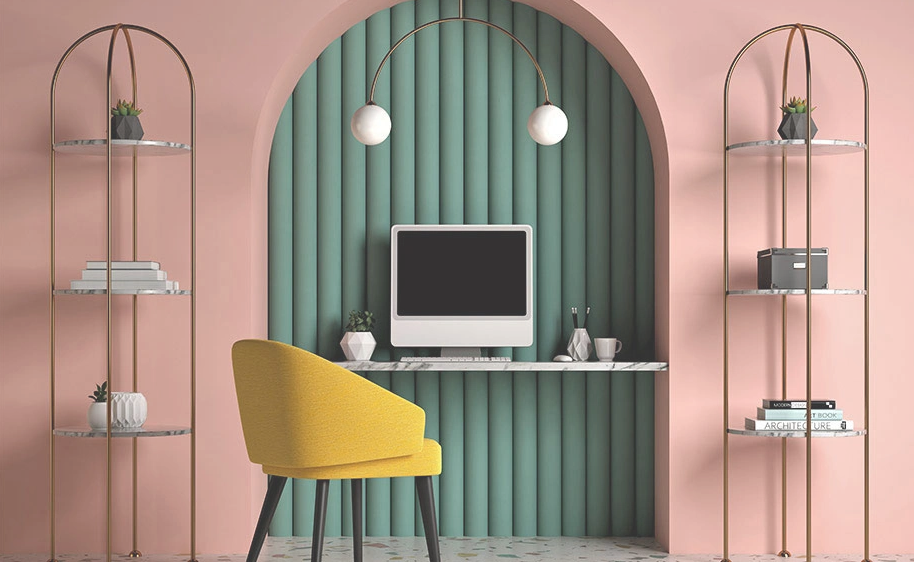
Wall treatments provide the second layer of acoustic defense. Upholstered wall panels absorb the sharp frequencies of human speech. Stretching heavy linen over acoustic batting behind the desk deadens sound transmission, ensuring conversations remain private and the microphone captures zero background noise.
Custom Millwork And Invisible Technology
Clutter destroys cognitive focus. A functional workspace requires massive storage capacity to hide physical documents, hardware peripherals, and reference materials. Freestanding bookcases often look cheap and fail to maximize the available vertical volume.
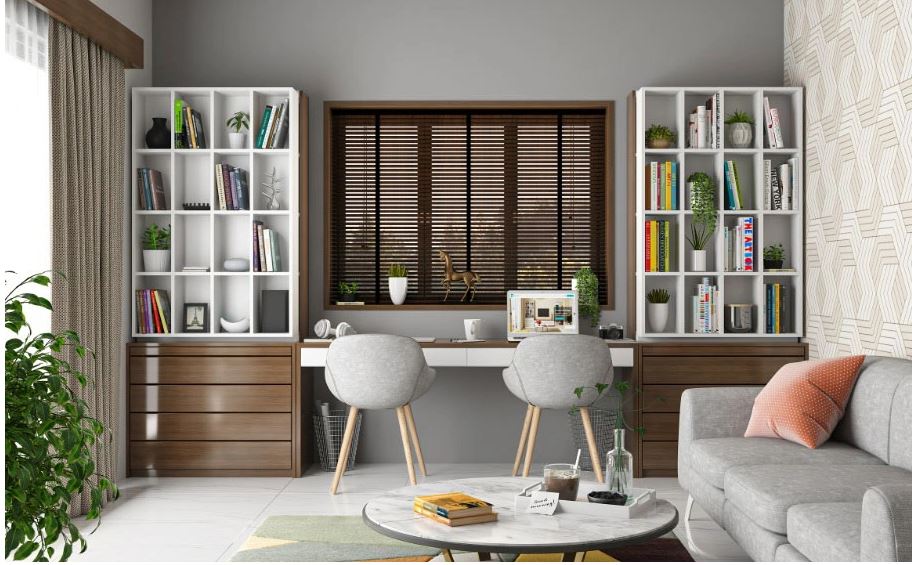
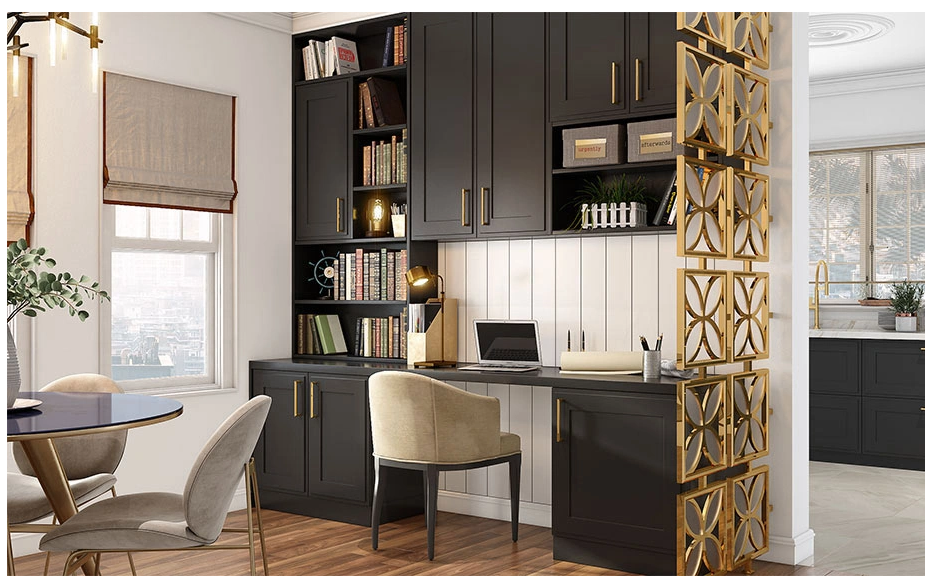
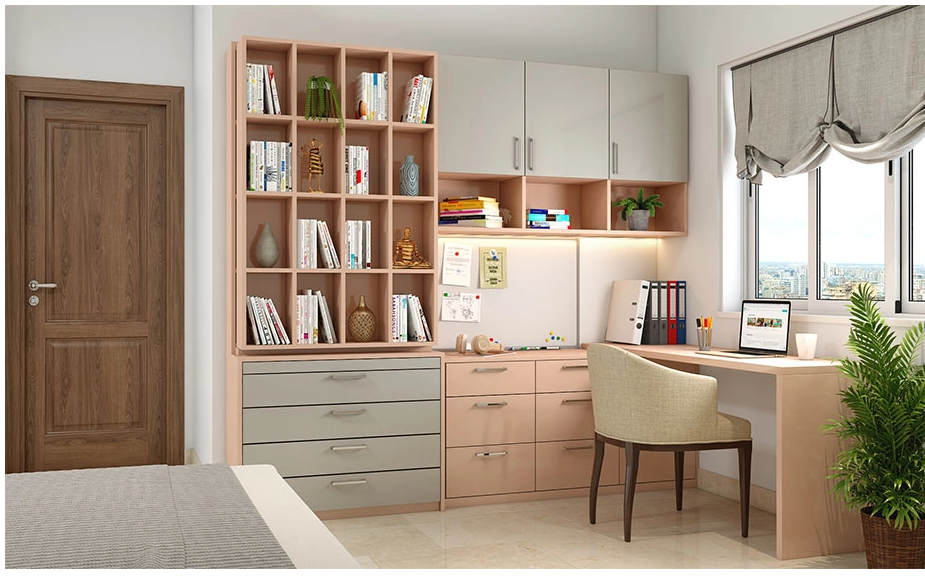
Custom millwork integrates storage directly into the architecture. Carpenters construct floor-to-ceiling cabinetry that perfectly matches the profile of the room’s baseboards and crown molding. This bespoke joinery features deep, soft-close drawers for file organization and floating shelves for curated display. Partnering with professionals in custom home building guarantees the cabinetry aligns perfectly with the framing of the house.
Technology integration happens inside this millwork. Printers, backup hard drives, and shredders operate behind closed wooden doors. Electricians install power outlets directly inside the drawers, allowing devices to charge out of sight. A specialized floor box mounted directly under the desk routes power and ethernet cables through a hollow metal desk leg, keeping the floor completely clear of tangled black wires.
Lighting Strategies For Professional Productivity
A single overhead ceiling fixture casts harsh shadows across the work surface and causes severe eye strain. High-end lighting design relies on a layered approach. The objective focuses on illuminating the desk perfectly while leaving the perimeter of the room in a soft, ambient glow.
Task lighting focuses entirely on the immediate work surface. A heavy, articulating brass desk lamp provides intense, directional illumination for reading physical documents. Video calls demand specific frontal lighting to eliminate shadows on the face. Integrated LED profiles mounted behind the computer monitors or soft box lighting built into the ceiling grid resolve this requirement.
The color temperature of the bulbs demands precise calibration. Residential living spaces utilize warm 2700 Kelvin bulbs. A home office requires crisp, neutral illumination measuring between 3500 and 4000 Kelvin. This temperature stimulates alertness and mimics natural daylight. Every fixture must operate on a dedicated dimmer switch, granting the user total control over the atmospheric density of the space as the workday progresses into the evening.
Regional Pricing Variations Across Major Indian Cities
The geographic location of the property dictates the final construction cost. The exact same home office design carries vastly different price tags in Mumbai compared to a tier-two city. High-density metropolitan areas command premium labor rates. Material transportation logistics and the availability of specialized craftsmen influence the local market pricing.
Full interior project costs in Mumbai or Bangalore run significantly higher than in secondary markets. A basic designer rate in a tier-two city hovers around ₹50 to ₹90 per square foot, while a premium rate in a major metro easily scales from ₹150 to over ₹350 per square foot. Local humidity and weather patterns impact material selection. An office in Chennai demands moisture-resistant marine plywood, adding material costs that a dry climate installation avoids. Understanding these regional economic realities allows for accurate financial planning long before the first piece of drywall comes down.
Executing a high-performance home office requires strict financial discipline and architectural foresight. The investment in quality materials, professional execution, and proper ergonomics yields a space that actively supports professional growth. The resulting environment completely rejects the temporary aesthetic of casual remote work, replacing it with a permanent, highly calibrated center of productivity.