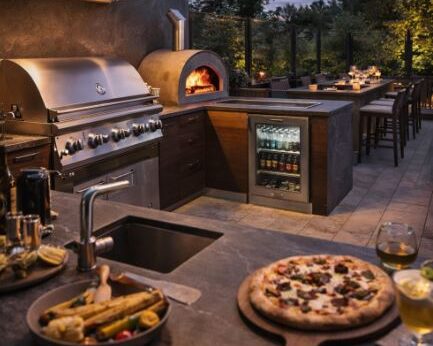
The Outdoor Kitchen as Culinary Theater
Outdoor kitchens have evolved far beyond the lone grill pushed against a fence. Today’s chef‑level outdoor kitchens are immersive environments—part culinary workspace, part social stage—where design, appliances, and circulation come together to turn everyday meals into memorable performances. When planned well, an outdoor kitchen doesn’t feel like an accessory to the house. It feels like the house simply learned how to breathe fresh air.
At the center of this experience is intention. Every zone, surface, and appliance should support both cooking and connection. The goal is not excess, but fluency: a space where the host can sear, slice, and serve without ever stepping away from the conversation.
Layouts That Support the Show
Just like an indoor kitchen, outdoor layouts benefit from clear spatial logic. The most successful designs follow a loose version of the classic work triangle—grill, prep, and refrigeration—adapted for open‑air conditions. A linear layout works beautifully along a wall or pool edge, keeping everything within arm’s reach. For larger yards, L‑shaped and U‑shaped kitchens introduce natural separation between cooking and gathering while maintaining visual connection.
The real upgrade comes when seating is integrated into the plan. Bar‑height counters facing the grill transform cooking into a spectator sport. Guests can sip, chat, and watch flames dance without drifting underfoot. In more expansive settings, a central island becomes the anchor, allowing multiple cooks to work simultaneously while guests circulate comfortably around the perimeter.
Flow matters as much as form. Clear pathways between the house, dining area, and kitchen prevent bottlenecks. Doors should open directly toward prep zones, not seating, and traffic routes should never cross the hot zone in front of a grill or oven. When circulation is right, the space feels effortless—even at full capacity.
Appliances That Define Capability
A chef‑level outdoor kitchen earns its title through performance. The grill remains the star, but today’s options go far beyond basic gas. Infrared burners for high‑heat searing, rotisserie attachments, and hybrid gas‑and‑charcoal models allow for serious technique. For those who love slow cooking, a built‑in smoker adds depth and versatility.
Pizza ovens have become the dramatic scene‑stealers of outdoor kitchens. Wood‑fired or gas‑assisted, they invite interaction and ritual, drawing people in as dough is stretched and flames roar. Paired with a prep counter and refrigerated drawer for toppings, the oven becomes a social magnet.
Supporting appliances complete the picture. Undercounter refrigerators and beverage drawers keep drinks cold without constant trips indoors. A dedicated sink is not a luxury—it’s a necessity—allowing for clean hands, quick rinses, and easy cleanup. Ice makers, warming drawers, and even outdoor dishwashers can be layered in depending on how ambitious your entertaining tends to be.
Ventilation is often overlooked outdoors, but it’s critical. Built‑in hoods or ceiling‑mounted exhaust systems keep smoke moving away from seating areas and prevent lingering odors from clinging to cushions and textiles. In windy climates, discreet wind screens or partial walls help stabilize flames and improve comfort without closing the space in.
Materials Built for Exposure
Outdoor kitchens live in a harsher world than their indoor counterparts, and materials must be chosen accordingly. Countertops need to withstand heat, moisture, and UV exposure while still looking refined. Granite remains a favorite for its durability and natural variation. Porcelain slabs offer a sleek, contemporary alternative with exceptional resistance to staining and fading. Soapstone brings a softer, rustic character, developing a patina that feels earned over time.
Cabinetry should be purpose‑built for exterior use. Marine‑grade stainless steel is the gold standard, offering longevity and a professional aesthetic. For a warmer look, engineered polymer or sealed hardwood systems provide texture without sacrificing resilience. Flooring underfoot should be slip‑resistant and forgiving—textured stone, concrete pavers, or porcelain tile designed for outdoor use all perform well.
Every finish choice contributes to the overall mood. The best outdoor kitchens feel cohesive with the architecture of the home, borrowing colors, materials, and proportions so the transition between inside and out feels seamless.
Designing for Entertaining Flow
An outdoor kitchen succeeds when it supports people as much as food. Seating should be layered: stools at the counter, a dining table nearby, and lounge seating just beyond. This allows guests to self‑select their level of engagement, whether they want to watch the cooking, sit down for a meal, or relax with a drink.
Lighting plays a crucial role after sunset. Task lighting over grills and prep areas ensures safety and precision, while ambient lighting—integrated into counters, pergolas, or landscaping—sets the tone. Dimmable systems allow the mood to shift from energetic dinner party to relaxed late‑night gathering.
Technology can quietly elevate the experience. Outdoor‑rated speakers provide background music without overwhelming conversation. Smart controls allow you to adjust lighting, audio, and even appliance settings from your phone, keeping you present rather than managing switches.
A Lifestyle, Not an Add‑On
The most compelling outdoor kitchens are not defined by how many appliances they include, but by how naturally they are used. They encourage slower meals, longer conversations, and a deeper connection to place. Cooking outdoors changes the rhythm of entertaining—it invites spontaneity and makes even simple meals feel intentional.
When thoughtfully designed, an outdoor kitchen becomes more than a place to cook. It becomes a stage where food, fire, and friends come together. Every grill mark, every shared plate, every evening that stretches just a little longer than planned is proof that the space is doing exactly what it was meant to do.
You’re not just building an outdoor kitchen. You’re creating a setting where hospitality feels effortless and every gathering has a sense of occasion. That is the true mark of chef‑level design.