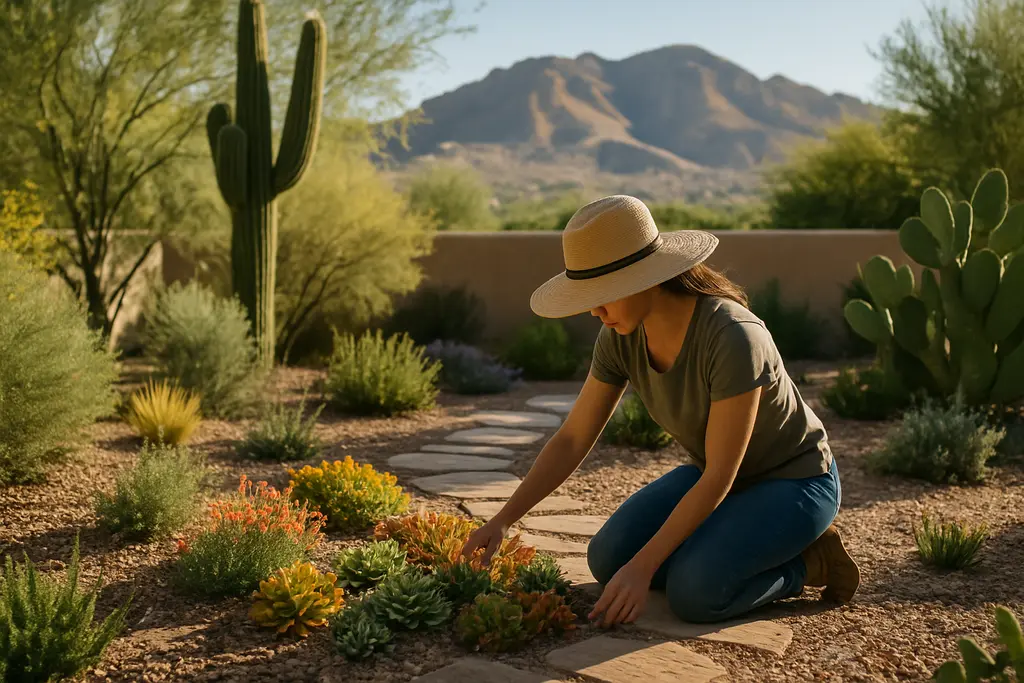
Low-water outdoor features are moving from a style preference to a practical planning issue for many homeowners in the Southwest. The case is not that every lawn should disappear or that every yard should look the same. The stronger argument is that outdoor spaces need to perform under tighter water conditions, changing municipal rules and everyday maintenance limits.
As of June 16, 2026, about 90.9% of Arizona, Colorado, Nevada, New Mexico and Utah was experiencing drought conditions, while many parts of the region recorded water-year precipitation from near average to more than 10 inches below average between October 2025 and June 14, 2026, according to a Drought.gov update. That does not mean every property faces the same exposure, but it does make water demand a sensible part of outdoor design.
Why Low-Water Outdoor Features Matter In The Southwest
Outdoor areas in dry regions often carry two expectations at once: they should be attractive enough to support daily use, and they should be reasonable to maintain during hot, dry periods. Traditional turf can still serve a purpose where children play, pets need a soft surface, or a small green area is deeply used. The concern is not turf itself, but oversized or rarely used turf that requires regular irrigation without offering much daily value.
Planning Low-Water Outdoor Features Around Use
The first design question should be how the yard is actually used. A shaded sitting area, a compact play patch, a path to a gate, or a planting bed near a patio may each require a different surface. Replacing all planted areas with hard materials can create glare, heat and drainage problems, so the goal is balance rather than removal of everything living.
The most durable low-water outdoor features usually start with a use map. Note where people walk, where water collects, where afternoon sun makes seating uncomfortable and where maintenance has become a recurring frustration. That map can help separate areas that deserve investment from areas that can be simplified.
What The Evidence Says About Water Savings
The strongest research in the supplied material concerns water consumption. Oak Ridge National Laboratory reviewed Southern Nevada’s Water Smart Landscapes, also known as a Cash-for-Grass program, and found that participating homes reduced water consumption by about 20% after replacing turf with desert planting and ground-cover designs. The reported savings were sustained over many years, and the program cost was about US$1.88 per thousand gallons saved, based on the ORNL study.
What Those Numbers Do And Do Not Prove
Those findings support the idea that turf conversion can reduce household water demand. They do not prove that every project will save the same amount. A homeowner who already waters sparingly may see less change than a household with a larger irrigated lawn. A poorly planned conversion can also create new problems if grading, irrigation caps, drainage and plant establishment are handled casually.
This is where cautious budgeting matters. Rebates, where available, may reduce upfront costs, but they should not be treated as the only reason to proceed. Local programs can change, eligibility rules vary and installation quality affects whether a project remains useful after the first year. For Southwest-specific layout ideas, this related article on low-water outdoor design is a practical companion to the value discussion here.
Design Choices That Age Better Than Turf
Long-term value often comes from reducing weak points rather than chasing a trend. In outdoor design, weak points include plants placed outside their water tolerance, irrigation zones that are hard to inspect, surfaces that become slippery or uneven, and exposed seating areas that people avoid in the afternoon heat.
A sound plan usually combines several modest moves: reducing unused grass, using drought-adapted planting where appropriate, grouping plants with similar water needs, keeping paths wide enough for safe movement and making shade part of the design rather than an afterthought. None of those choices requires a showy result. The yard should be easier to live with, not just different in photographs.
Maintenance Records Can Support Future Buyers
Resale effects are harder to verify than water savings. The supplied research includes market claims around xeriscaping and property value, but buyer response depends on neighborhood expectations, design quality, plant health and local water pressure. A neglected gravel yard is not the same as a well-planned, shaded and walkable outdoor space.
Homeowners who are thinking about long-term value should keep records: rebate approval documents, irrigation changes, plant lists, invoices and maintenance notes. These records do not create a fixed price premium, but they can help a future buyer understand what was done and why. They can also make it easier to maintain the space correctly after ownership changes.
Project Planning, Safety And Maintenance Boundaries

Low-water work can look simple from the street, but some parts are better left to qualified professionals. Any work that affects grading near the home, drainage paths, retaining walls, buried utilities, irrigation tie-ins, exterior electrical systems or gas lines should be assessed by licensed or otherwise qualified trades. A do-it-yourself approach is more appropriate for lower-risk tasks such as comparing plant labels, documenting sun exposure, selecting movable planters or refreshing mulch where allowed by local conditions.
Tool choice also deserves restraint. Renters and homeowners should match tools to the task, read manufacturer instructions and use protective equipment. For a comprehensive guide on how to choose the right tools for projects, home project tool guidance can help readers think through whether buying, renting or hiring is the safer option.
- Confirm local water rules and rebate terms before removing turf.
- Check drainage before adding large areas of stone or compacted surface.
- Preserve safe walking routes with stable, even materials.
- Use professionals for buried utilities, structural changes and powered systems.
- Plan for plant establishment water, not just mature water needs.
Renter-Friendly And Phased Options
Not every household can redesign a yard at once. Renters may be limited to container planting, movable shade and discussions with the property owner. Homeowners may benefit from phasing: first reduce the most wasteful irrigation zone, then improve shade, then address planting beds that need frequent replacement. Phasing can also reveal whether a design choice is pleasant to use before more money is committed.
Long-Term Value Of Low-Water Outdoor Features
The long-term value of low-water outdoor features is strongest when water savings, comfort and maintenance all point in the same direction. A yard that uses less water but becomes unpleasant, unsafe or hard to care for is not a successful investment. A yard that reduces irrigation demand while adding usable shade, safer paths and clearer maintenance routines is more likely to hold its appeal.
For Southwest homeowners, the most defensible approach is evidence-based and local. Drought data supports paying attention to water demand. Program research supports the potential for lasting water savings after turf conversion. Property value claims should be treated with more caution because buyer preferences and neighborhood norms vary. The practical goal is not a perfect yard. It is an outdoor space that works under dry conditions, fits the household and avoids unnecessary risk.