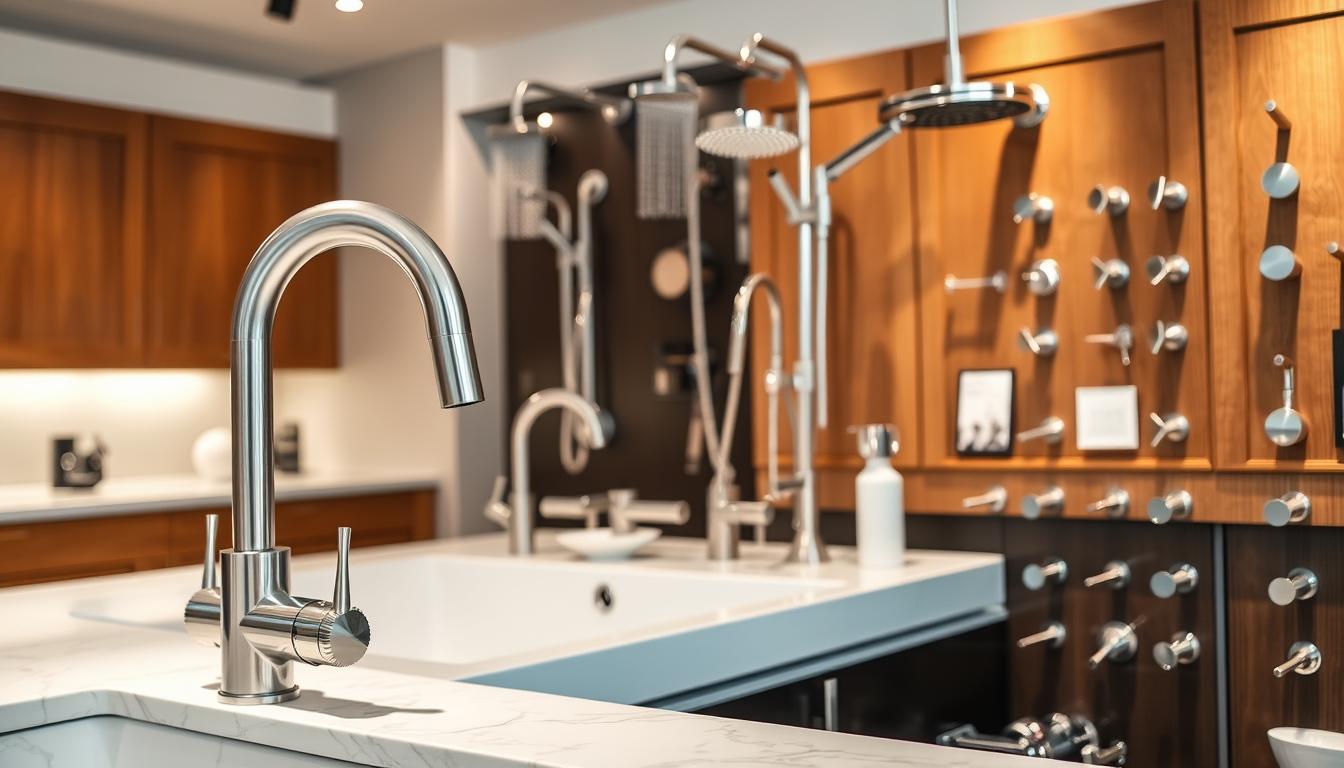
Picking out faucets and sinks is like the first debate in home renovation. Everyone is drawn to the shiny promises in the showroom.
But when you face a 6 AM shower with pathetic water pressure, performance is what wins the general election. The Instagram look is not enough for your daily needs.
In this guide, we’ll look at the engineering behind fixtures. We mix renovation stories with data. Our goal is to find what makes a fixture reliable, not just pretty.
Think of me as your skeptical, yet informed, plumbing expert. We’re focusing on function, not just style.
Ergonomics and reach zones for luxurious everyday use
If your faucet were a political candidate, its height and swivel range would be key. They promise either freedom or constant compromise. This isn’t just about looks. It’s about the deal your spine makes with your sink every time you wash a pot.
Let’s look at the first point: spout height. A low spout makes you bend over for every task. But Kohler’s 21-inch model stands tall. It lets you fill a stockpot without struggling with your countertop.
The standard 9-inch clearance often feels like a bad deal. You’re always bending over, making sacrifices for comfort. For true luxury, think about reach zones. This is the key geometry of your daily tasks.
Next, consider swivel functionality. A faucet with only a 90-degree sweep neglects sink corners. But a 360-degree swivel unites every part of the basin. It doesn’t require you to move your whole body.
Now, let’s talk about the pull-down sprayer. It’s the sink’s secret weapon. Its success depends on hose length and magnetic docking. A short hose, like Brizo’s 10-inch sprayer, is good for small tasks. But for big cleanups, you need longer reach.
Moen’s 68-inch hose makes cleaning easier. It turns a small task into a quick job. The magnetic dock is reliable. It keeps your sprayer in place without any hassle.
This table shows how different faucets meet different needs. It highlights how different specs suit different ways of working.
| Brand & Model | Spout Height | Swivel Range | Hose Length | Ideal For |
|---|---|---|---|---|
| Kohler Professional | 21 inches | 360 degrees | 60 inches | Serious cooks, large pots |
| Moen Arbor Motionsense | 10.5 inches | 140 degrees | 68 inches | Families, deep cleanup |
| Brizo Litio | 9.2 inches | 360 degrees | 10-inch spray head | Compact sinks, precise tasks |
| Delta Trinsic | 8.6 inches | 120 degrees | 54 inches | Standard daily use |
Lastly, let’s talk about faucet finishes. Choosing between matte black and polished chrome is more than just looks. It affects your daily workflow.
A polished chrome finish shows every water spot and fingerprint. It needs constant cleaning. But matte black or brushed nickel is more subtle. They let your kitchen work without constant fuss.
The right ergonomic setup does more than prevent back pain. It makes your sink a smooth workstation. It’s about function that feels like freedom.
Sink choices workstation apron and integrated stone pros and cons
Your kitchen sink is like the Oval Office of your home. The apron-front sink is the charismatic face, while the integrated stone model is the behind-the-scenes policy wonk. This choice affects your daily life, cleaning routines, and even your faucet’s abilities.
The apron-front sink, also known as a farmhouse sink, is all about nostalgia and making a bold statement. It sticks out from the cabinet like a stage, drawing admiration. But, it has some operational quirks.
Water often splashes over its exposed front when you scrub hard. The deep basin is great for soaking pots, but reaching the bottom can be awkward. Cleaning around the front apron requires extra effort, like maintaining a public image.
Integrated stone sinks, on the other hand, are the quiet technocrats. They’re carved from the same countertop material, creating a seamless look. There’s no lip or rim to trap crumbs or grime. Wiping spills directly into the basin feels efficient, like passing a bill with bipartisan support.
This seamless design, though, requires a special budget. The fabrication and installation costs are significantly higher. You’re paying for custom craftsmanship and precision fitting.
Your sink’s form dictates your faucet’s function. Most apron sinks use a standard three-hole deck configuration. This gives you flexibility for a separate sprayer or soap dispenser. Integrated stone sinks often opt for a sleek single-hole faucet to maintain the minimalist look.
This is where universal design principles quietly enter the committee hearing. Does your sink choice create barriers or clear them? An apron sink’s higher front can be challenging for someone seated or of shorter stature. An integrated sink’s flush profile offers easier access, promoting an inclusive kitchen environment.
| Feature | Apron-Front (Farmhouse) Sink | Integrated Stone Sink |
|---|---|---|
| Aesthetic Impact | Bold, rustic statement. The centerpiece of the kitchen. | Sleek, minimalist, and seamlessly cohesive. |
| Installation & Cost | Easier retrofit, but requires cabinet modification. Moderate cost. | Complex, custom fabrication. High initial investment. |
| Cleaning & Maintenance | Front apron collects splashes; rim can trap debris. | Seamless design allows easy wipe-down; no grime traps. |
| Faucet Compatibility | Typically uses standard 3-hole deck. Flexible for accessories. | Often uses single-hole or wall-mount for clean look. |
| Universal Design Consideration | Higher front apron may pose reach barriers for some users. | Flush profile improves accessibility and ergonomic reach. |
So, which candidate gets your vote? If your kitchen is the public stage where design makes a dramatic opening statement, the apron sink is your nominee. If your priority is a frictionless, efficient workflow where form follows function, the integrated stone sink is the policy expert.
Remember, the best choice marries your aesthetic desires with the practical realities of cleanup, food prep, and inclusive universal design. Your sink should work as hard as you do, without filibustering your daily routine.
Showering experience thermostatic valves body sprays steam and drainage
The heart of a top-notch shower system isn’t the fancy showerhead. It’s the smart valve you can’t see. It’s like the blueprint for your daily shower, guiding everything else. A great shower is a controlled, multi-sensory treat, not a wild ride like a toilet flush.
The thermostatic valve is the unsung hero. It’s not just a simple mixer. It’s the water supply’s central control, keeping temperature steady. With wax or thermal actuators, it adjusts instantly to pressure changes, keeping your water at the perfect temperature. This means no more sudden hot or cold shocks.
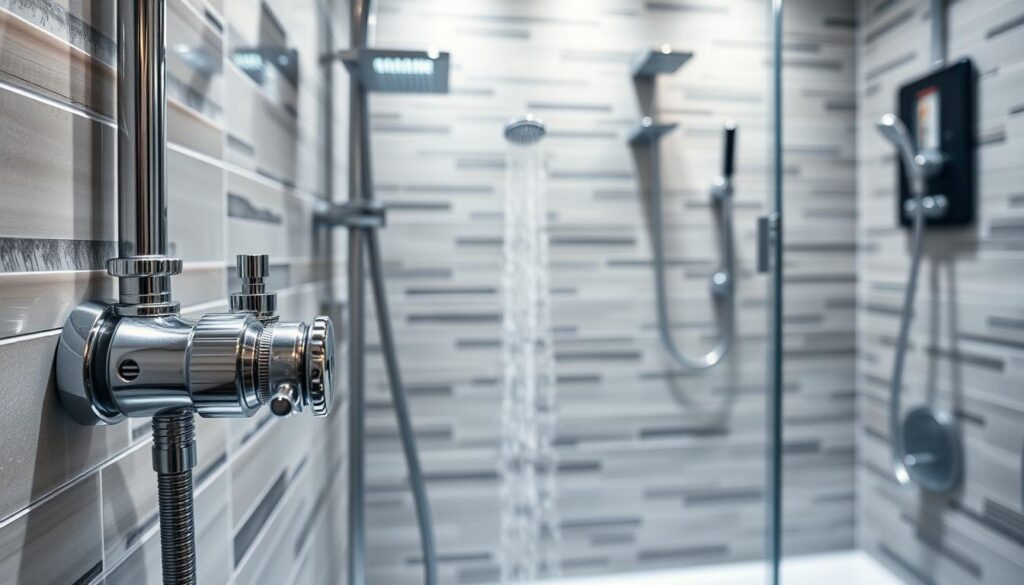
Now, let’s look at the rest of the team. Body sprays are like the backbench MPs of your shower wall. They’re useful if placed right, but useless if not. Each spray needs its own water line and enough pressure, so plan carefully.
The steam generator is the luxury item. It turns your shower into a steam room, a top spa experience. But it needs a pro install, a sealed area, and good ventilation. It’s a treat for your senses, but it costs both upfront and in energy use.
The Minister of Drainage is often overlooked. A great shower needs a good drain system. A standard 2-inch drain can’t handle the water from multiple showerheads and sprays. You need a bigger drain or a linear one for your shower floor.
| Component | Political Analog | Key Consideration | Utility vs. Theater |
|---|---|---|---|
| Thermostatic Valve | The Constitution / Central Bank | Precise temperature & pressure control; requires quality rough-in. | Pure Utility (Non-negotiable) |
| Body Sprays | Backbench MPs / Special Interest Lobbyists | Strategic placement is everything; each needs its own supply line. | Can be Both |
| Steam Generator | Luxury Entitlement Program | Needs sealed enclosure, dedicated circuit, and ventilation. | Primarily Theater (Pinnacle Luxury) |
| Drainage | Minister of Infrastructure | Capacity must match total water output; linear drains recommended. | Critical Utility (Avoids flood zones) |
Creating a luxury shower system is all about systems thinking. Before choosing finishes, do a shower cabinet audit:
- Define the Core: Pick a thermostatic valve from a trusted brand (like Moen, Kohler, or Grohe) first.
- Map the Coalition: Decide on the number of spray points (overhead, hand shower, body sprays) and ensure your water heater and pipes can supply them all simultaneously.
- Plan the Exit Strategy: Specify a drain solution that meets or exceeds the total projected flow rate of all components.
- Account for Luxury Programs: If adding steam, wire and plan for the generator unit (often located in a nearby closet or bench).
When these elements work together, you get more than a shower. You get a daily, reliable, personal retreat. The tech should fade away, leaving only the experience.
Tubs sculptural moments freestanding vs built in insulation and weight
Before you fall for a bathtub’s sculptural curves, think about the congressional-style hearings needed. Consider floor reinforcement, heat retention policies, and the true cost of that photogenic moment. It’s not just another fixture. It’s the bathroom’s central piece of political art, and your choice is a vote for an entire design platform.
On one side, you have the freestanding tub: the charismatic independent candidate. It makes a dramatic, unapologetic statement. It promises a sculptural moment worthy of a magazine spread. Like a political outsider, it operates on its own, often requiring significant floor space and a dedicated following.
Opposing it is the built-in tub: the reliable party-line candidate. It’s efficient, cooperative with your existing walls, and a master of space-saving coalition building. Its platform is practicality and integration, but critics risk labeling its aesthetics as, well, bureaucratic.
So, let’s open the committee hearings. First on the docket: weight and structural integrity. A freestanding soaker, like a cast-iron or stone resin model, is a heavyweight champion. Its mass conveys quality and thermal mass. But that mass demands a floor that can bear the load. We’re talking about a possible need for structural reinforcement—your home’s very own bipartisan infrastructure bill. A built-in tub often distributes its weight more forgivingly across framing members.
Next, the subcommittee on insulation and heat retention. Here, the built-in candidate often runs a stronger campaign. Encased in a framed deck, it benefits from air pockets and surrounding materials that act as a thermal barrier. Many freestanding tubs, for all their beauty, are political islands. Their exposed sides can lead to rapid thermal defection. Your luxurious soak cools faster, a clear hit to both comfort and energy policy.
The final audit is a cost-benefit analysis of the sculptural promise. What is the true value of that Instagram moment? The freestanding tub’s price isn’t just its sticker cost. It’s the square footage it commands, the possible plumbing reroutes, and the forever commitment to cleaning around its entire perimeter. The built-in tub invests its capital in space-saving efficiency and typically superior heat retention. Its return is measured in long-term functionality.
>The pragmatist prioritizing comfort, efficiency, and clean lines.
| Criteria | The Freestanding Candidate | The Built-In Candidate |
|---|---|---|
| Statement | High drama, sculptural centerpiece. | Subtle, integrated, and tidy. |
| Space Policy | Demands open floor real estate; can dominate a room. | Efficient coalition-builder; fits standard alcoves. |
| Insulation & Heat | Often weaker; sides exposed leading to faster heat loss. | Generally stronger; surrounded by insulating materials. |
| Weight & Installation | Heavy; may require floor reinforcement. Plumbing access can be complex. | Weight is distributed. Installation is more standardized. |
| Best For | The bold statement-maker with ample space. |
Digging into the data behind the enamel reveals a clear trade-off. The freestanding tub is an exercise in expressive form. The built-in is a study in integrated function. Your vote ultimately depends on your domestic policy goals. Is the sculptural moment the most important political achievement, or does a warm, efficient, and long-lasting soak win your electorate? Is it worth it? Only your blueprint—and your budget—can cast the final ballot.
Water efficiency codes flow rates and performance expectations
The debate in plumbing is like ‘can you have your cake and eat it too?’ On one side, there are strict codes and flow rates for water efficiency. On the other, people want a shower that feels like a storm. Let’s break down the rules.
Water efficiency codes are like the laws of your home’s plumbing. They’re not just suggestions. The EPA’s WaterSense standard requires a max flow of 1.5 gallons per minute (GPM) for showerheads and faucets. Some places allow up to 2.0 GPM. But what does that really feel like?
Is 1.5 GPM just a weak trickle? Not anymore. Modern tech uses air injection and laminar flow. These methods mix air with water, making a powerful spray that feels great while saving water. A high-quality WaterSense faucet can outdo an old, wasteful one in satisfaction.
This is where saving water meets daily luxury. The codes and flow rates set the rules. Smart design fills in the details. You’re not losing out; you’re getting a better system.
Ignoring these standards means wasting money. The EPA says one drip per second wastes over 3,000 gallons a year. That’s like money leaking from your wallet and the aquifer. Performance is about precision, not just pressure.
Can a fixture be both eco-friendly and satisfying? Yes, it’s possible. It’s the result of seeing water efficiency codes and flow rates as a starting point for better design. Your shower’s joy and your environmental care can now coexist in harmony.
Healthy home filtration recirculation and leak detection
Water quality and security are now top priorities in homes. We’re not just talking about pipes and pressure anymore. We’re discussing a domestic intelligence network focused on purity, efficiency, and defense.
Think of filtration as border control, recirculation as public transit, and smart leak detection as your intelligence agency. Each plays a key role in your home’s water security. Forget about looks for now. This is about building a strong foundation.
Filtration is like border control. Your water has already been treated, but it travels a long way to your tap. It can pick up unwanted things like lead or chemicals. A whole-house filtration system acts as a checkpoint.
It’s not just about clean water. It’s about balance. A filter that slows down water too much is not good. Modern systems work with smart homes to keep an eye on water quality and pressure.
Hot water recirculation is like public transit. It saves water by keeping it hot and ready to go. It’s efficient and saves money.
But, it must follow local plumbing codes. These rules help ensure the system works right. It makes hot water fast and efficient.
Smart leak detection is like your home’s intelligence agency. It catches leaks early, preventing big problems. Systems from brands like Phyn or Uponor watch for changes in water flow.
They can tell if it’s a leak or just a running toilet. They can even shut off the main supply automatically. This is like having a team watching over your home.
These systems work together like a team. Filtration keeps the water clean, recirculation makes it efficient, and leak detection keeps it safe. Together, they make sure your home’s water flows well everywhere.
| System | Primary Function | Key Benefit | Relevance to Codes & Flow Rates |
|---|---|---|---|
| Water Filtration | Remove contaminants (sediment, chemicals, microbes) | Improved health, taste, and appliance longevity | Must meet NSF standards; high-restriction filters can reduce fixture flow rates below code minimums |
| Recirculation Pump | Keep hot water in pipes ready for immediate use | Eliminates water waste, provides instant hot water | Installation must follow plumbing codes for pump placement and pipe sizing; maintains high flow rate at point of use |
| Smart Leak Detector | Monitor water usage patterns and pressure for anomalies | Prevents catastrophic water damage, lowers insurance costs | Often requires electrical code compliance for power; monitors flow rates 24/7 to establish normal baselines |
| Integrated Smart System | Combine filtration monitoring, recirculation control, and leak detection | Complete water management via smartphone app | Must comply with multiple code families (plumbing, electrical, data); optimizes system-wide flow rates dynamically |
Setting up these systems means thinking about more than just looks. You need the right setup for filters and pumps. This is like planning a big project.
The goal is to make your home safe and luxurious at the same time. This approach to water management is like planning a spa experience. It’s about creating a space that feels effortless.
Your home’s water should be smart. From the filter to the leak detector, it’s all about prevention. This is about making sure your home stays safe without any problems.
Universal design lever handles clearances and anti scald safety
Universal design is like the law of your home. It makes sure every lever and space is for everyone. It’s not just for some; it’s for all, from kids to seniors, and those with injuries.
Levers are more than looks. They’re a big step up for accessibility. You can use them with your elbow or fist. Some, like the Delta Pivotal, even show if water is hot or cold with lights.
Clearances are key too. They’re not just empty spaces. They let wheelchairs and walkers move freely. This turns tight spots into places of freedom.
Anti-scald tech is a hero in your bathroom. Thermostatic valves keep water safe, which is super important. They stop water from getting too hot, keeping everyone safe.
Think about shower systems too. Zero-threshold entries are more than stylish. They remove tripping hazards. And grab bars can be stylish, not just useful.
This all leads to a home that works for you. It’s the invisible effort of good design. Universal design combines beauty, function, and respect for all.
Coordination with millwork counters splash and lighting locations
This part of your renovation focuses on teamwork. Your faucet finishes need to work well with cabinet hardware, countertops, and lighting. It’s like putting together a team where everyone speaks the same language.
Your faucet is like the leader. Cabinet hardware is like the team that helps decide how things look. If you have a matte black faucet, you might choose black pulls or brass accents.
Mixing metals is like working with a team. Pick one metal for your faucet finishes and hardware. Use another metal for special touches. This keeps things looking good and interesting.
The countertop and backsplash are like the Senate. They set the scene for your metal choices. Cool marble might go well with chrome or nickel faucet finishes. Warm wood tones could match brushed gold or copper.
Lighting is like the judge. It can make your choices look great or not so good. Where you place the lighting is key. A polished chrome faucet might look better under certain lights.
| Finish Type | Cabinet Hardware Partners | Countertop Allies | Lighting Requirements |
|---|---|---|---|
| Matte Black | Black iron, oil-rubbed bronze, dark woods | White marble, concrete, quartz with veining | Warm, layered lighting to prevent flat appearance |
| Brushed Gold | Brass cabinet pulls, unlacquered brass accents | Carrara marble, warm limestone, walnut butcher block | Soft ambient light to enhance warmth without glare |
| Polished Chrome | Stainless steel, nickel, clear glass knobs | Granite, dark quartz, high-gloss lacquer surfaces | Directional task lighting to create reflective sparkle |
| Mixed Metals | Dominant metal matches faucet, secondary for accents | Neutral backgrounds (gray, white, beige stone) | Multiple light sources to highlight different textures |
The backsplash is the last piece of the puzzle. It can either bring everything together or cause trouble. A simple subway tile lets your faucet finishes shine. A bold tile can be a bit of a rebel.
Getting it right means everything works together smoothly. Your eye should move easily from one thing to the next. When it all comes together, the space feels unified and beautiful.
Order of operations blocking rough in submittals and field checks
You’ve debated ergonomics and admired sculptural tubs. Now, it’s time for the real work: installation. Blocking and rough-in are like committee hearings. Missing a key plumbing spec can kill your project.
Submittals are like legislative reviews. They check every detail with your contractor. Spending around $250 for professional help is smart. It’s like having a seasoned whip ensure your sink’s setup is approved.
Field checks are the final vote. You inspect the installed product against the approved submittal. Does the thermostatic valve work as promised? Is the drain aligned right? This is where theory meets reality.
Ignoring these steps can lead to costly delays. Your design needs a perfect execution. Make sure your plumbing specs are precise. Then, your kitchen or bath will pass without any issues.