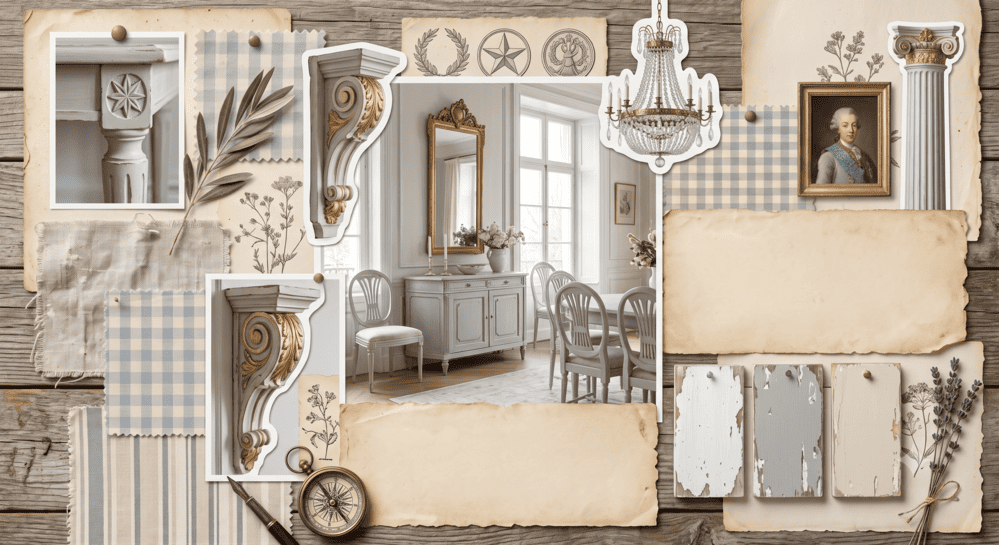
King Gustav III ascended to the Swedish throne in 1771, initiating a profound shift in the cultural and architectural trajectory of the nation. Prior to his rule, European courts heavily favored the Rococo aesthetic, characterized by asymmetric curves, elaborate ornamentation, and a sense of playful excess. The young king spent significant time in Paris right as the French aesthetic began transitioning away from Rococo. He witnessed the birth of Neoclassicism at the court of Versailles. This new movement drew heavy inspiration from the archaeological discoveries at Pompeii and Herculaneum, favoring straight lines, geometric symmetry, and motifs referencing ancient Greece and Rome.
Gustav developed a deep affinity for this disciplined, orderly aesthetic. He returned to Stockholm with a clear vision to reinvent Swedish design and elevate his nation’s cultural standing across Europe. He commissioned local architects and craftsmen to replicate the sophisticated environments he admired in France. The resulting movement would eventually bear his name, becoming a distinct and enduring design language that outlasted his brief reign and continues to influence residential architecture today.
Adapting French Neoclassicism For The Nordic Climate
Replicating the exact opulence of Versailles proved impossible in Scandinavia. The Swedish court lacked the immense financial resources of the French monarchy. The geographic and climatic realities of Northern Europe demanded a radically different approach to interior spaces. France enjoyed abundant sunlight and a relatively mild climate. Sweden endured long, dark winters where natural light became a precious commodity.

The heavy, dark woods and gilded surfaces common in French Neoclassical furniture absorbed light, making Swedish rooms feel oppressive during the winter months. Craftsmen needed a functional solution. They began painting furniture and architectural paneling in pale, reflective tones. This adaptation birthed the signature look of Gustavian design. Builders swapped exotic imported woods like mahogany for native species like pine and birch. These softer woods carved easily but lacked a rich grain, making them perfect candidates for painted finishes. The combination of economic constraints and environmental demands stripped away the excesses of the French style, leaving behind a refined, restrained interpretation.
| Design Element | French Neoclassicism | Swedish Gustavian |
| Primary Wood | Mahogany, Walnut, Ebony | Pine, Birch, Beech |
| Finish | High-gloss French polish, heavy gilding | Matte paint, light washes, limited gilding |
| Color Palette | Deep reds, emerald greens, heavy golds | Pale grays, soft blues, chalky whites |
| Ornamentation | Expensive bronze mounts (ormolu) | Hand-carved wooden rosettes and fluting |
The Science Of The Color Palette And Light Reflection
Color selection in Gustavian interiors served a strict functional purpose: maximizing luminosity. The palette relies entirely on soft, muted tones that mimic the shifting light of the Swedish landscape. Crisp white acts as the foundational color, applied generously to ceilings, moldings, and window surrounds to bounce available light around the room.
Moving beyond stark white, the most recognizable colors include pale watery blues, soft sage greens, and pale yellow ochre. These hues share a specific chalky, desaturated quality. Painters achieved this look by mixing raw earth pigments with lead white and linseed oil. The resulting finishes lacked the high-gloss sheen of modern enamels, offering a matte, velvety texture that diffused light softly rather than reflecting it harshly. A distinct “Gustavian gray” emerged as a dominant choice for furniture and floorboards. This gray often features subtle undertones of blue or green, changing its appearance depending on the time of day and the angle of the sun. The restraint shown in color application creates an atmosphere of profound calm and visual quietness.
Architectural Symmetry And Interior Detailing
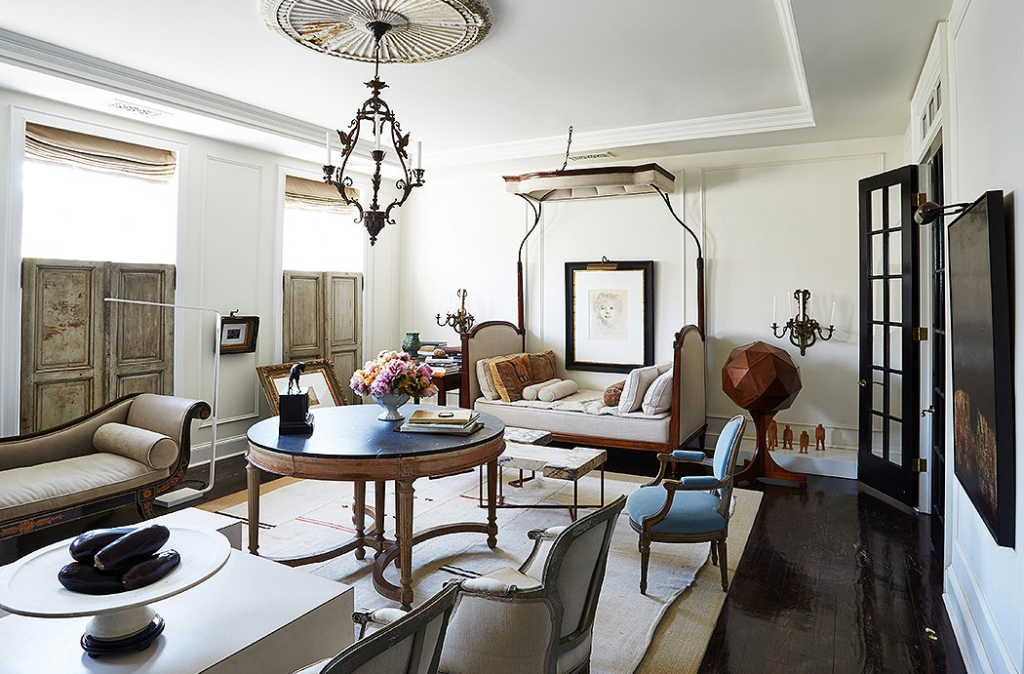
The architectural bones of a Gustavian room rely heavily on classical proportions. Symmetry governs the placement of doors, windows, and primary furniture pieces. A prominent heating source often serves as the central axis, with matching seating arrangements flanking it on either side. Walls feature distinct paneling systems, usually divided into a lower dado and an upper field. These panels display carved or painted borders featuring repeating Neoclassical motifs like the Greek key, intertwined ribbons, or simple reeding.
Ceilings frequently feature decorative plasterwork, executed with far less complexity than earlier Baroque or Rococo designs. Tall, multi-paned windows dominate the exterior walls. Builders positioned these windows to capture the maximum amount of southern light. Mirrors became an integral architectural component rather than mere decoration. Craftsmen installed large pier mirrors between windows or above mantels to reflect the outdoors and double the impact of candlelight during the evening. Fluted pilasters and columns, directly referencing ancient Roman temples, frame doorways and visually support the ceiling, adding a sense of verticality and structural rigor to the interior architecture.
Heating the home required a distinct architectural feature known as the kakelugn. These tall, cylindrical masonry stoves, covered in ceramic tiles, replaced inefficient open fireplaces. The internal baffle system forced hot smoke to travel through a maze of channels before exiting the chimney, capturing the heat in the masonry and radiating it slowly into the room. These stoves often featured pale glazes and Neoclassical detailing, serving as massive architectural focal points within the space.
Furniture Profiles And Signature Elements
Gustavian furniture maintains the straight lines and geometric forms of its French predecessor but exhibits a distinctly lighter visual weight. Chairs feature straight, tapered legs, often decorated with vertical fluting meant to resemble classical columns. The backs of seating furniture frequently utilize oval, shield, or square shapes, framed in carved wood and upholstered in simple fabrics. Carving replaces the expensive bronze mounts found on French pieces. Artisans carved motifs like rosettes, urns, laurel wreaths, and stylized wheat sheaves directly into the wood before painting it.
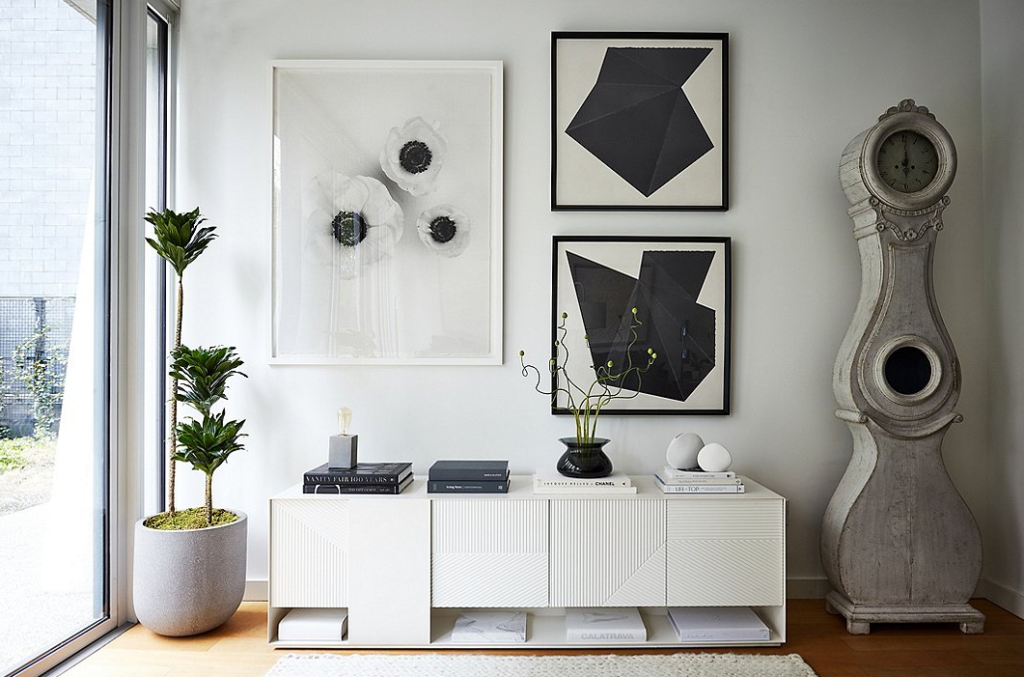
The drop-leaf table became a staple of the Swedish home during this era. These tables offered supreme functionality, expanding to accommodate large gatherings and folding down to preserve floor space when not in use. Another iconic piece from this period is the Mora clock. These tall case clocks feature a distinct, curvaceous silhouette resembling a stylized figure eight. Originally produced in the town of Mora to supplement agricultural income during harsh winters, these clocks became a central feature in both grand manors and modest country homes across the nation.
The Evolution Of Textiles And Upholstery
The textile choices in Gustavian interiors reinforce the overarching theme of relaxed elegance. French interiors relied heavily on elaborate silk damasks, heavy velvets, and complex tapestries. Swedish designers turned to simpler, locally produced fabrics. Linen and cotton became the primary materials for window treatments and upholstery. These fabrics offered a crisp, clean texture that paired perfectly with the matte painted finishes of the furniture.
Patterns remained simple and geometric. Classic checks, narrow stripes, and subtle plaids dominated the market. Weavers typically produced these patterns in two-color combinations, pairing a natural white or flax background with a single muted color like pale blue or soft red. The application of these fabrics remained equally restrained. Curtains hung straight down without elaborate swags or heavy fringes. Upholstery tightly covered chair seats and backs, emphasizing the carved wooden frames rather than hiding them under excessive padding. This straightforward approach to textiles contributed significantly to the airy, uncluttered feel of the rooms.
The Transition From Royal Courts To Provincial Homes
Design historians divide the Gustavian era into two distinct phases. The early period, known as High Gustavian, closely mirrored the French court. Pieces from this era often featured limited amounts of gilding and highly refined carving, created specifically for royal palaces and the homes of the highest nobility. As the style trickled down to the merchant class and provincial landowners, it underwent a process of simplification.
Local carpenters and rural craftsmen lacked the specialized training of the royal workshops. They interpreted the Neoclassical designs using the tools and materials available to them. This late or provincial Gustavian style is what most people recognize today. The carving became shallower and less intricate. The paint finishes became simpler, often relying on a single color rather than elaborate two-toned schemes. This provincial adaptation democratized the aesthetic, proving that the core principles of proportion and light could create beautiful spaces regardless of the budget. The slight imperfections and the visible hand of the maker gave the provincial pieces a warmth and approachability entirely missing from the rigid formality of the royal court.
The Science Of Distressed Finishes
Modern interpretations of this style place heavy emphasis on the distressed, chipped paint finishes visible on antique pieces. The original craftsmen did not intentionally distress their work. They applied smooth, opaque layers of paint to mimic the look of expensive stone or imported wood. The characteristic peeling and worn edges are the result of two centuries of use and shifting humidity. Natural expansion and contraction of the pine base caused the rigid oil paints to crack and flake off over time, revealing the raw wood beneath.
Today, achieving this authentic, aged appearance requires deep knowledge of finishing techniques. Artisans use layers of milk paint or chalk-based paints, applying different colors over one another. They then carefully sand through the top layers at points of natural wear, such as corners, handles, and seat edges, to expose the underlying colors. A final application of clear or tinted wax seals the surface and provides a soft, hand-rubbed sheen. This focus on texture prevents the monochromatic color schemes from feeling flat or sterile. The floors received equally distinct treatment. Soft pine floorboards were scrubbed repeatedly with a mixture of lye and white soap, a technique known as skurgolv. This process bleached the wood to a pale ash color and hardened the surface against daily wea
Integrating Gustavian Principles Into Contemporary Home Construction
The underlying philosophy of this 18th-century movement translates remarkably well into modern residential architecture. The emphasis on maximizing natural light aligns perfectly with current demands for bright, open living spaces. When planning a new residence, applying these historical concepts during the initial design phase yields profound results. Architects can incorporate the structural symmetry and the reliance on tall, well-placed windows to capture sunlight. Utilizing a pale, restrained color palette on the walls and floors establishes a calm foundation for the interior.
Incorporating built-in cabinetry with subtle classical detailing, like fluted pilasters or simple paneled doors, introduces historical resonance without overwhelming the space. The selection of materials plays a defining role. Wide-plank wooden floors treated with a white lye or soap finish replicate the raw, scrubbed pine floors of historic Swedish homes. For individuals seeking to build a residence that prioritizes timeless elegance over fleeting trends, focusing on high-quality custom home building ensures these architectural details are executed with absolute precision. The resulting environment feels historically rooted and entirely appropriate for modern living.
The Lasting Legacy Of A Uniquely Swedish Aesthetic
The Gustavian era officially ended following the assassination of King Gustav III and the subsequent shift in European design toward the heavier, more imposing Empire style. The principles established during those few decades never truly disappeared. The Swedish commitment to light, functionality, and unpretentious beauty evolved directly into the Scandinavian modernism that dominated the 20th century. Designers like Josef Frank and Carl Malmsten drew heavy inspiration from the simple lines and natural materials favored by the 18th-century craftsmen.
Today, the style experiences continued popularity across the globe. It appeals to a desire for spaces that feel clean and ordered but retain a sense of warmth and historical depth. The academic study of architectural movements often focuses heavily on France and England. Exploring the detailed history of this period through resources like the Metropolitan Museum of Art reveals how specific regions adapted overarching trends to suit their unique needs. The Swedish interpretation stands as a masterclass in adaptation. By prioritizing local materials, respecting environmental constraints, and stripping away unnecessary ornamentation, craftsmen created a design vocabulary that remains relevant, beautiful, and highly functional centuries after its inception.