Terracotta garden furniture has moved from occasional accent to a more visible choice for patios, decks and garden seating areas. The appeal is easy to understand: the color reads warmer than many greens and grays, yet it can still feel grounded beside planting, timber, stone and woven textures. For homeowners, the practical question is not whether the shade is fashionable. It is whether the color, material and finish will support daily use, weather exposure, storage needs and safe circulation outdoors.
Why Terracotta Garden Furniture Is Gaining Ground
Recent garden-furniture coverage has identified terracotta as a leading seasonal color, with Livingetc describing it as the garden furniture color trend of the season in its terracotta furniture coverage. That does not mean every patio should be rebuilt around one tone. It does suggest a clear design shift: outdoor furniture is being treated less as background equipment and more as part of the home’s visible finish palette.
What The Color Shift Signals
For many years, green furniture made intuitive sense outdoors because it echoed foliage. Current reporting from Ideal Home says green is being displaced by terracotta, blue and dark red among summer garden furniture colors, according to its garden furniture color trends report. The practical reading is that homeowners are becoming more comfortable with contrast. A clay-toned chair can stand out against lawns, pale paving or neutral siding, while still feeling connected to natural materials.
That shift has limits. A strong color can date faster than a neutral frame if it covers every major surface. If a patio already has brick, red-toned pavers or warm stucco, repeating the same family of color may either feel calm or too heavy, depending on scale and light. Sampling cushions, powder-coated metal swatches or ceramic planters against the existing surfaces is a low-risk step before buying a full set.
Where Terracotta Garden Furniture Works Best
Terracotta garden furniture often works best where the surrounding palette needs warmth rather than more contrast. It can soften gray concrete, pale gravel, light timber decking and black-framed doors. It can also bridge indoor and outdoor spaces when the home already uses clay, rust, sand or caramel tones inside.
For a small patio, terracotta garden furniture can be more successful as one controlled element: a pair of chairs, a bench cushion or dining chairs around a quieter table. On a larger terrace, the same color may work across a sofa group, but the surrounding finishes should be restrained enough to let the color breathe. This is not a rule of taste; it is a way to avoid visual fatigue after the first season.
Materials And Finishes That Suit Earthy Color
Color should not distract from construction. Outdoor furniture lives with UV exposure, wind, rain, soil, pollen and regular cleaning. A clay-toned finish on a weak frame is still a weak frame. Before choosing by color, inspect how the product is built, how cushions drain, how removable covers are cleaned and whether replacement parts or fabric covers are available.
Wood, Rattan, Stone And Metal Pairings
Terracotta sits naturally near wood and rattan because all three carry a warm, earthy character. The pairing can make a patio feel less stark, especially beside planting beds or stone walls. Wood, however, needs maintenance planning. Owners should ask how often the finish must be cleaned or resealed and whether the species is suited to the local climate. Woven furniture can be comfortable and visually light, but buyers should check whether the weave is intended for outdoor exposure rather than protected sunroom use.
Metal frames offer another path. A powder-coated frame in a clay or rust tone can create a crisp outline without relying on thick cushions for color. The risk is chipping or abrasion in high-use areas. Inspect welds, feet, hardware and folding mechanisms before purchase. If the furniture will sit on a windy balcony or exposed deck, weight and stability matter as much as appearance.
Finish Durability Before Style
Terracotta garden furniture also affects maintenance choices. Pale cushions may show dust, while darker clay tones can show fading if the fabric is not designed for outdoor use. The safest buying approach is to read care instructions before checkout, not after delivery. If the instructions require frequent indoor storage and the home has no dry storage area, the set may not be realistic.
Consider finish repair as well. A timber chair can often be cleaned and refinished if the owner is prepared for that work. A painted or coated metal frame may need touch-up products from the manufacturer. Cushions are easier to update than frames, so cautious buyers may choose neutral frames and use terracotta through replaceable textiles. That approach offers design flexibility without committing every structural piece to a trend color.
Planning A Safe And Usable Outdoor Setup
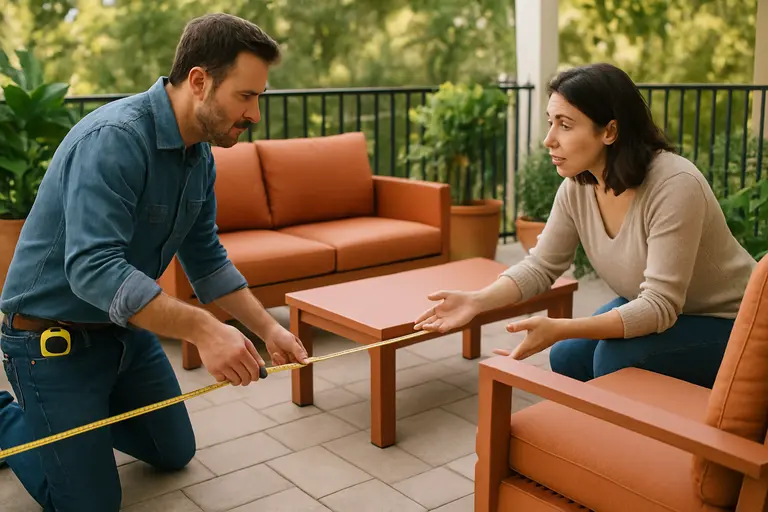
Good outdoor design includes movement, shade, storage and safe placement. Furniture that looks right in a product photo can become awkward if it blocks a door swing, narrows a path or sits too close to a grill. Before ordering, measure the patio with chairs pulled out, not tucked in. Dining sets need clearance for people to stand, serve and move without stepping into planting beds or down level changes.
Heat, Glare And Comfort
Warm colors can look inviting, but comfort depends on sun exposure, surface temperature and shade. Metal arms, dark cushions and stone tables may become uncomfortable in direct sun. Test similar materials at local showrooms if possible, or place the seating where an umbrella, pergola or tree canopy can manage afternoon exposure. For renters, freestanding shade can be useful, but it must be weighted according to manufacturer instructions and brought in during unsafe wind conditions.
Glare is another practical issue. A clay-toned chair beside pale paving may be pleasant, while a glossy tabletop facing strong sun may be difficult to use. Matte or textured finishes can be easier on the eyes outdoors. They may also hide minor dust better than very glossy surfaces, though every finish still needs regular cleaning.
Weight, Stability And Storage
Lightweight furniture is easier to move, but it may shift in wind. Heavy furniture can feel secure, but it may scratch decking or be difficult to store. Use glides or protective feet that suit the surface, and avoid dragging heavy frames across pavers, tile or composite boards. If furniture will be stored seasonally, confirm that it can pass through doors and fit the storage area before purchase.
Homeowners planning larger outdoor upgrades should separate design decisions from structural or utility work. Adding a gas line, new exterior electrical outlets, deck supports, hardwired lighting or major drainage changes should involve qualified professionals and local permit guidance. Furniture selection is usually homeowner-friendly; risky building systems are not the place for trial-and-error DIY work.
Terracotta Garden Furniture Choices For Real Homes
The strongest use of earthy color is deliberate rather than impulsive. Start with the fixed surfaces: siding, trim, paving, decking, fencing and planting. Then decide whether the furniture should blend, contrast or act as a modest accent.
Before You Buy
A practical buying checklist should include frame material, cushion care, storage, shade, wind exposure, cleaning effort and replacement options. Sit in the chairs if possible. Check seat height against the table. Confirm that feet will not damage the patio surface. Review return policies for bulky outdoor items, since color can look different in full sun than it does indoors or online.
Terracotta garden furniture is best understood as a warm finish choice with real design value and real maintenance tradeoffs. It can make an outdoor room feel more grounded, especially when paired with natural materials and controlled contrast. The smartest purchases will be the ones that fit the climate, the household’s storage habits and the way the patio is actually used week after week.


